I always invest in quality towels that stay soft and plush wash after wash. Nothing ruins a relaxing bath like wrapping yourself in a thin, stiff, scratchy towel.
But whenever I buy new towels, I am always puzzled about why some have borders and others don’t. Is the border purely decorative, a sign of quality, or does it serve a purpose? To discover more, I asked textile and cleaning experts to explain the truth behind my towel dilemma.
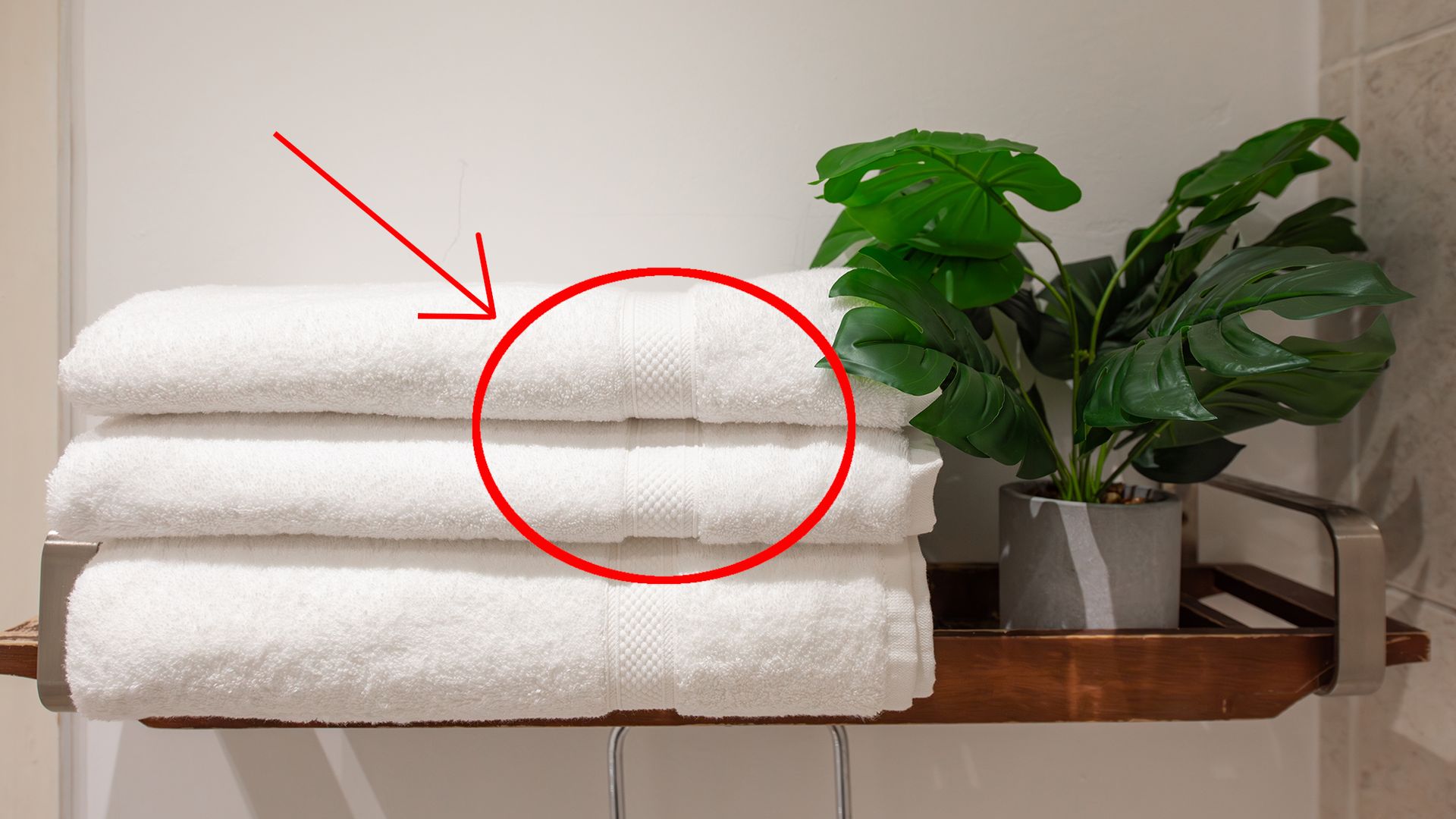
Apparently, the borders placed along the full width of towels near the top and bottom ends are called dobby borders. I’ll have to take you back in time to explain more.
According to Oguzhan Karlidag, founder at Lotus Linen, the name comes from the dobby weaving technique, which dates back to the 19th century. “It allowed weavers to create small patterns and textures directly onto fabric,” he says.
Over time, this decorative technique has become a common feature on towels.
Sofia Martinex, cleaning expert and owner at Sparkly Maid Austin, explains that because the dobby border is finished flat rather than being made of terry loops that help with absorbency, it gives towel makers the opportunity to add color and pattern variation.
I certainly think the extra patterning is appealing. It's what I'd expect to find on the luxury towels you receive in an elegant hotel or spa.
You might assume a dobby border serves a purpose, but Karliday says it is purely decorative , and some beautiful, high-quality towels don’t have one at all.
Source link