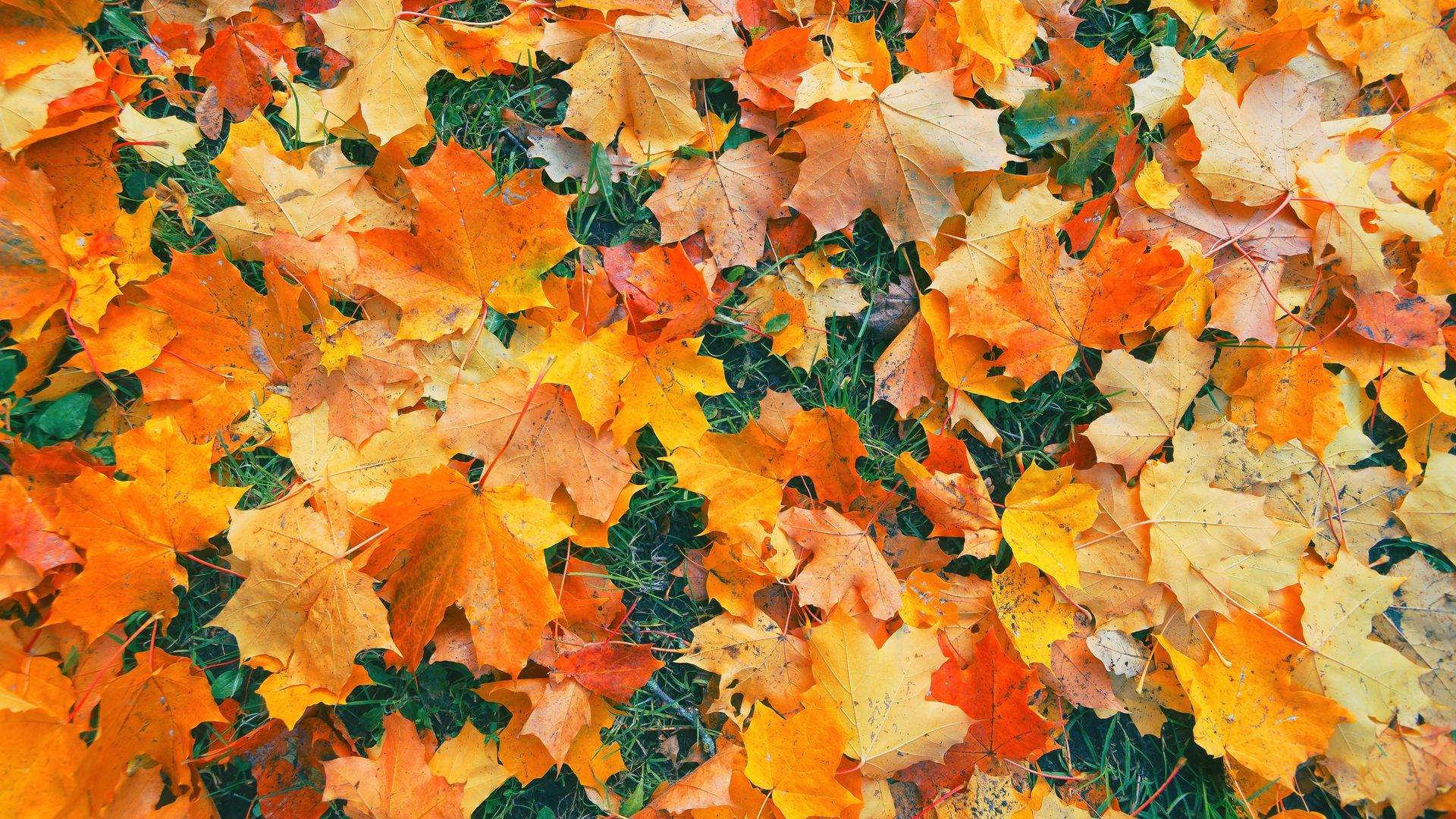
My backyard is looking spectacular with the autumnal tones of gold and russet leaves. And I don’t even mind as they drift onto my lawn, creating a beautiful carpet of color.
But while I’m happy for them to settle for a short while, I won’t leave them all through winter, because although I appreciate their current aesthetic, over time they’ll damage my lawn.
A light flurry of leaves is not so much of a problem, but once your lawn gets covered in a carpet of fallen leaves, it can harm its health if they are not removed.
A thick layer of leaves is an open invitation to fungal disease, as the decaying matter traps moisture, blocks airflow and starves the grass of sunlight. This dark and damp microclimate is the perfect environment for fungi to thrive.
The layer of fallen leaves acts like a blanket, holding in rain, dew and condensation. And once the leaves are left there for a prolonged period, snow mold, brown patch and leaf blight will develop.
If your lawn is lightly covered with leaves, you can leave them be. The wind may help disperse some, while the rest will decompose and add nutrients to the soil.
However, if your lawn is covered in a deep pile of leaves, there’s little chance of sunlight reaching the blades of grass, and the trapped moisture won't dry out. In this scenario, you need to grab a rake and remove the leaves to prevent disease from becoming rife.
Source link