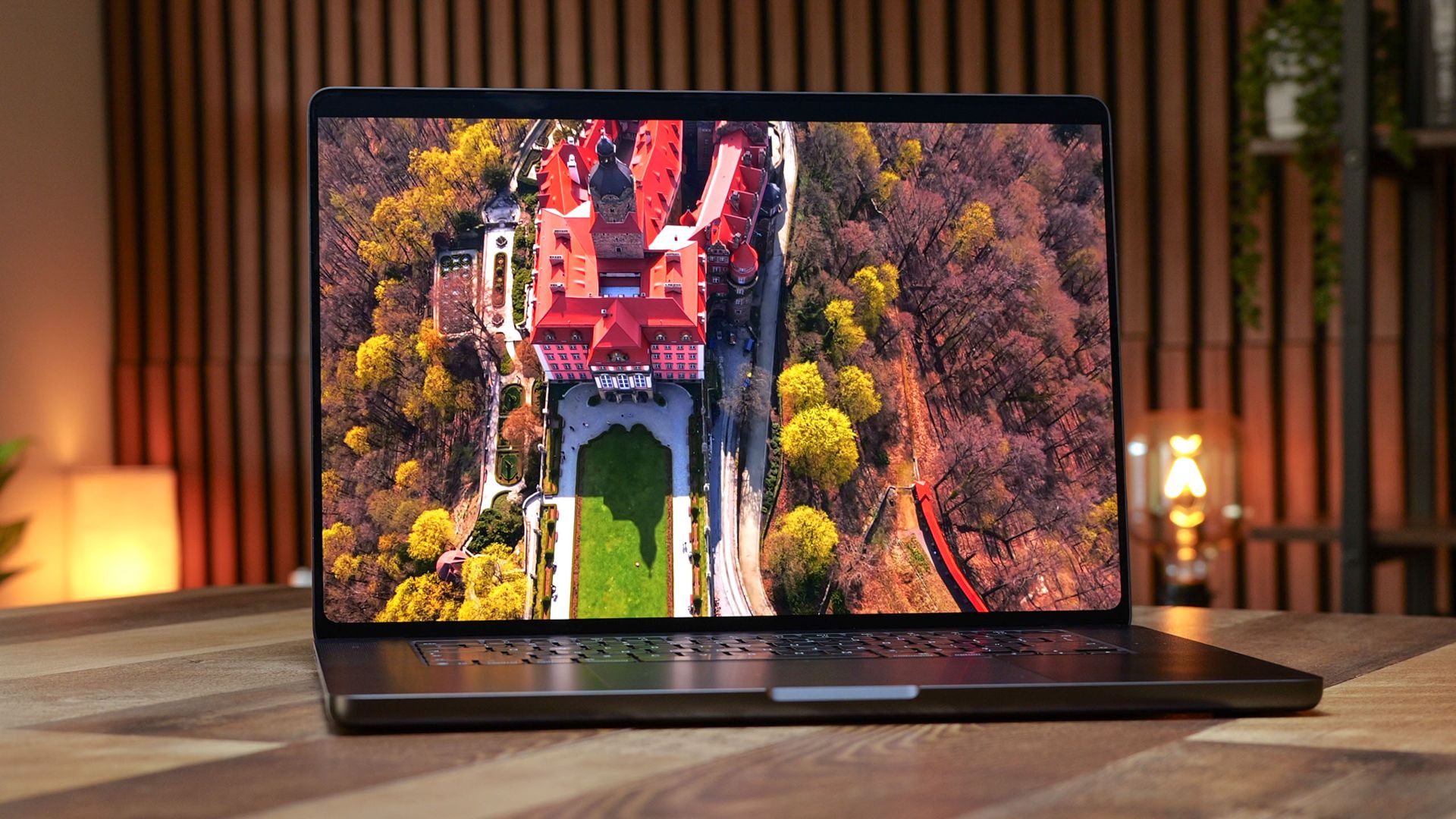
When Apple announced the new MacBook Pro with the PROLED XDR display, I started feeling nervous about the battery life.
In this new era of notebooks, the Cupertino crew has crammed a massive power-hungry OLED touchscreen into an even thinner chassis, and built a backlight for that Apple logo on the lid for good measure. Historically, you can’t do these and keep the battery life worry-free.
Well, after walking out of the testing lab, I have to admit I was wrong. The PROLED MacBook Pro doesn’t just match the endurance of its bulkier mini-LED predecessors — it rolls and smokes the entire Windows AI PC ecosystem in the process.
Let’s look at the raw data. The 16-inch MacBook Pro with PROLED XDR display (M5 Max) clocked in at an absurd 21 hours and 24 minutes on our continuous web-surfing battery test.
That isn’t just good; it effectively ties to the thicker, non-touch 16-inch mini-LED M5 Pro model. Meanwhile, the 14-inch PROLED with M5 Pro pushed out an incredibly respectable time at just shy of 17 hours. It’s within striking distance of the 14-inch mini-LED with M5 Max, but there’s definitely a gap (17:58).
Apple managed to integrate a drastically superior, brighter, touch-sensitive OLED panel, a glowing logo and thin out the chassis without triggering a battery life collapse.
But the real story here is the absolute bloodbath happening on the Windows side of the aisle.
Over the past few months, I’ve been following Nvidia’s RTX Spark laptops closely — testing one myself over the past month.
Source link