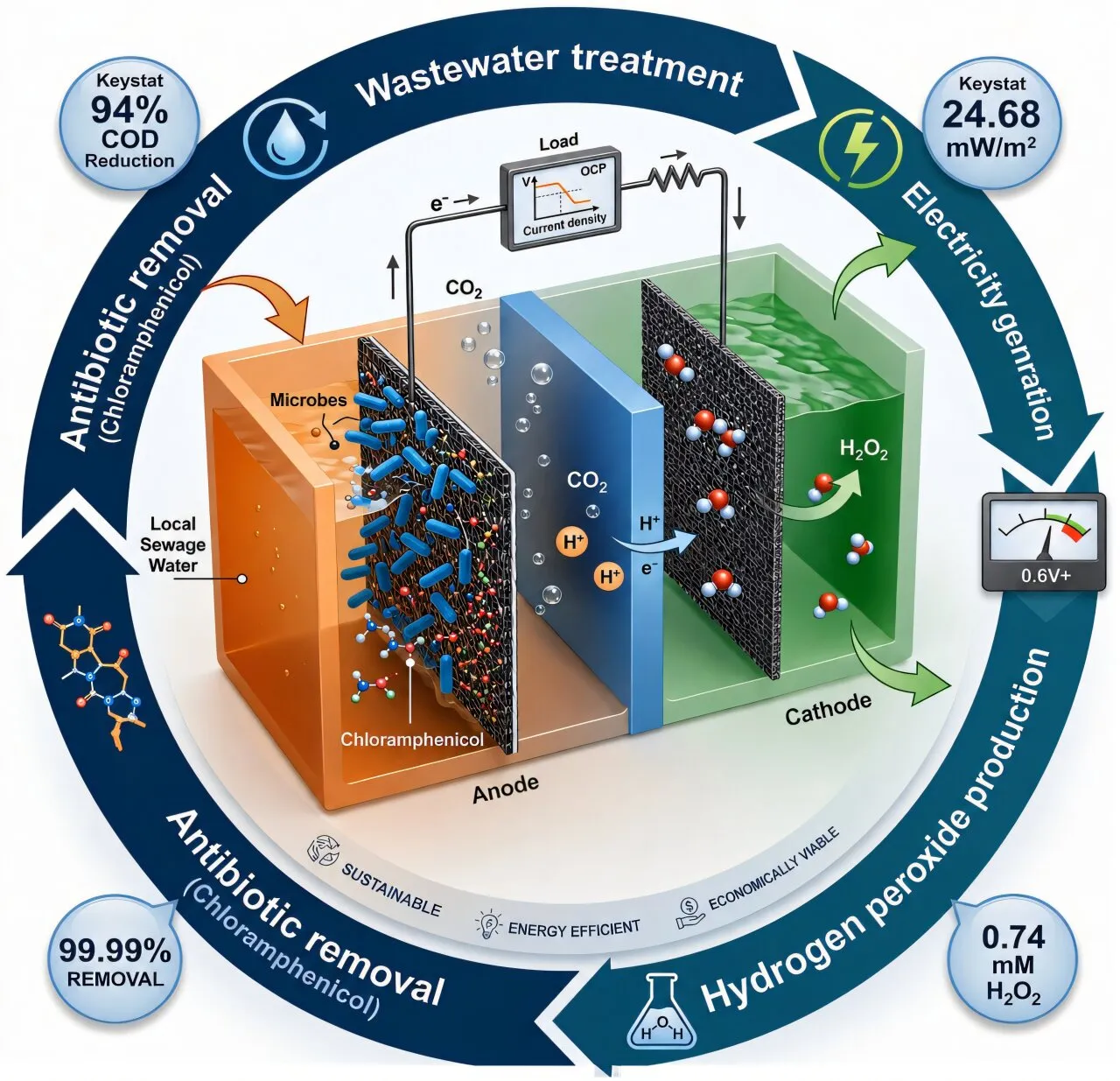
Researchers have built a single, binder-free electrode that turns a Microbial Fuel Cell (MFC) into a multi-tasking system. It uses bacteria in municipal wastewater to generate electricity while simultaneously degrading a stubborn antibiotic and producing a valuable industrial chemical.
Hungry bacteria digest organic waste in the wastewater and release electrons into the system. These flowing electrons help degrade 99.99 percent of the antibiotic within two days.
Rather than generating plain water at the counter electrode, the process diverts the chemical pathway to synthesize hydrogen peroxide alongside a modest electrical current. Hydrogen peroxide is a oxidizing and disinfecting agent used in healthcare, environmental management, household cleaning, and manufacturing.
This multi-tasking approach demonstrates how complex municipal sewage can simultaneously yield cleaner water, industrial chemicals, and renewable power.
“The designed MFC was not only for treating the wastewater but also coupled simultaneous antibiotic removal and hydrogen peroxide generation,” the researchers noted in the study paper.
Sewage is packed with organic matter and resilient pharmaceutical pollutants like chloramphenicol that treatment facilities fail to break down.
A team of researchers in India transformed this environmental hazard into a resource by using a novel microbial fuel cell equipped with a custom iron-nickel carbon nanofiber electrode. Through microbial fuel cells, wastewater can be treated to produce bioenergy simultaneously.
A microbial fuel cell normally uses bacteria that consume organic waste to generate electrons, which combine with oxygen at a second electrode to produce plain water.
Researchers altered this standard pathway using a custom binder-free electrode made of iron and nickel oxide-tipped carbon nanofibers on flexible carbon cloth.
Source link