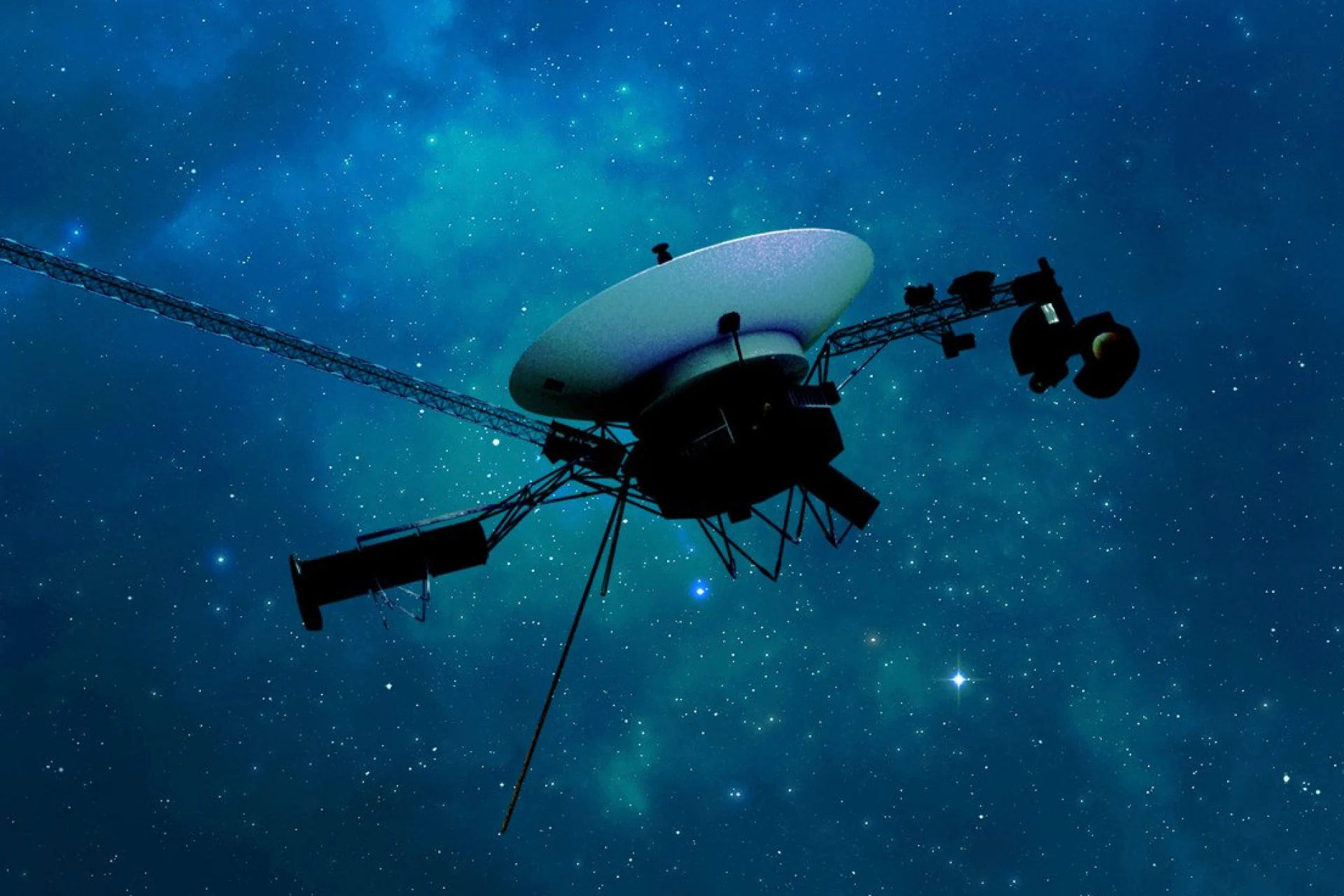
NASA’s Voyager 1 is on the verge of making history, but the aging spacecraft is having a little trouble keeping in touch with home. Just weeks before becoming the first human-made object to travel a full light-day away from Earth, the probe briefly went silent, and NASA engineers are still working to understand why.
NASA lost contact with Voyager 1 in mid-October after engineers failed to detect its radio signal during two communication attempts 24 hours apart. The signal reappeared a day after the second attempt, but engineers are still investigating what caused the outage, according to NASA.
Launched in 1977, Voyager 1 has traveled an astonishing 16 billion miles (26 billion kilometers) from Earth, but NASA engineers aren’t ready to let it go just yet. In a bid to extend the spacecraft’s already remarkable journey through interstellar space, the team recently pulled off a crucial power-saving maneuver that could keep the aging probe operational longer than originally expected.
NASA relies on its Deep Space Network (DSN), an array of giant radio antennas spread across different parts of the world, to communicate with its interplanetary spacecraft. On October 18 and 19, DSN was unable to detect a radio signal from Voyager 1 during two scheduled attempts that were 24 hours apart.
Communication with the spacecraft resumed a day later on October 20, and the team has managed to stay in touch with Voyager 1 since then. NASA engineers are still investigating the reason behind the communication loss.
The team did, however, determine that one group of Voyager 1’s thrusters went offline during the communication loss, which prompted its backup thrusters to turn on automatically.
Source link