Living on the Moon sounds fascinating, but of course it is not. The University of Pennsylvania has developed an insulating material designed for the harsh environments of long-term lunar missions.
Dubbed hybrid layered insulating film stacks (HyLIFS), the material combines high thermal insulation with mechanical durability. This kind of balance is rarely achieved by current space insulators like aerogels or standard multilayer insulation, which tend to be fragile or easily torn.
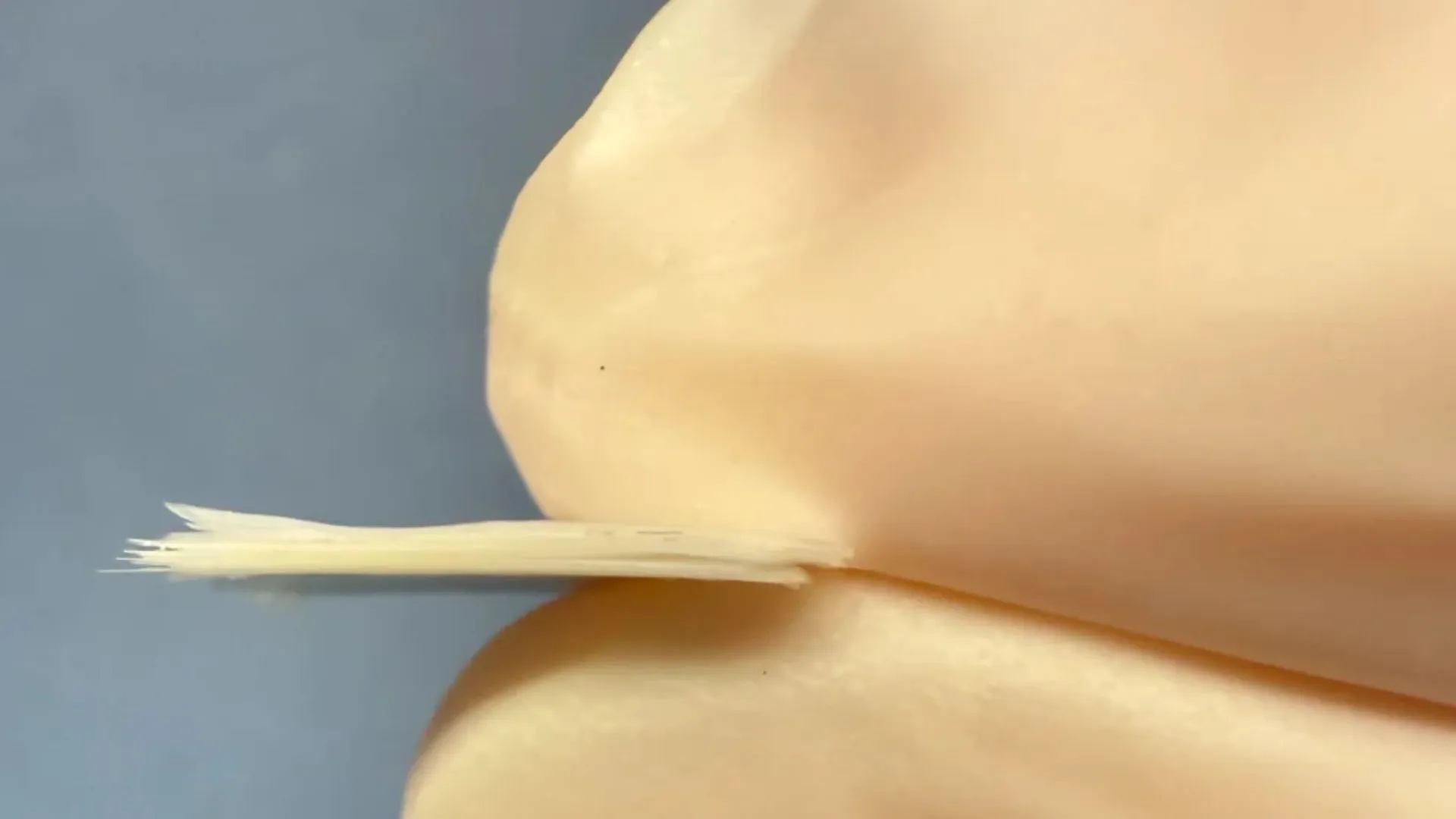
HyLIFS consists of hundreds of stacked, ultrathin Mylar sheets (the polymer used in emergency space blankets). Some layers are coated with a thin layer of aluminum oxide (alumina) to enhance stiffness and block infrared radiation.
When the humans return to the Moon to stay, keeping warm won’t be easy. Lunar temperatures swing wildly, dropping hundreds of degrees below zero during the long night before spiking above boiling at noon.
Space agencies mostly use lightweight insulators like aerogels and reflective foils to survive the vacuum of space, but they’re also exploring alternatives.
Researchers created a highly durable insulator with top-tier thermal performance by stacking Mylar sheets coated in aluminum oxide. The material retains its protective insulating power even under extreme compressive pressure.
“These stacks of Mylar can bend, withstand substantial compression, and maintain their insulating performance. Potentially allowing them to be packed, transported, and survive rough treatment over many years of use,” said Igor Bargatin, senior author and Associate Professor in Mechanical Engineering and Applied Mechanics (MEAM).
The material’s strength surprised even its creators. During lab testing, the thin stacks were repeatedly subjected to 20 megapascals of compressive stress.
Source link