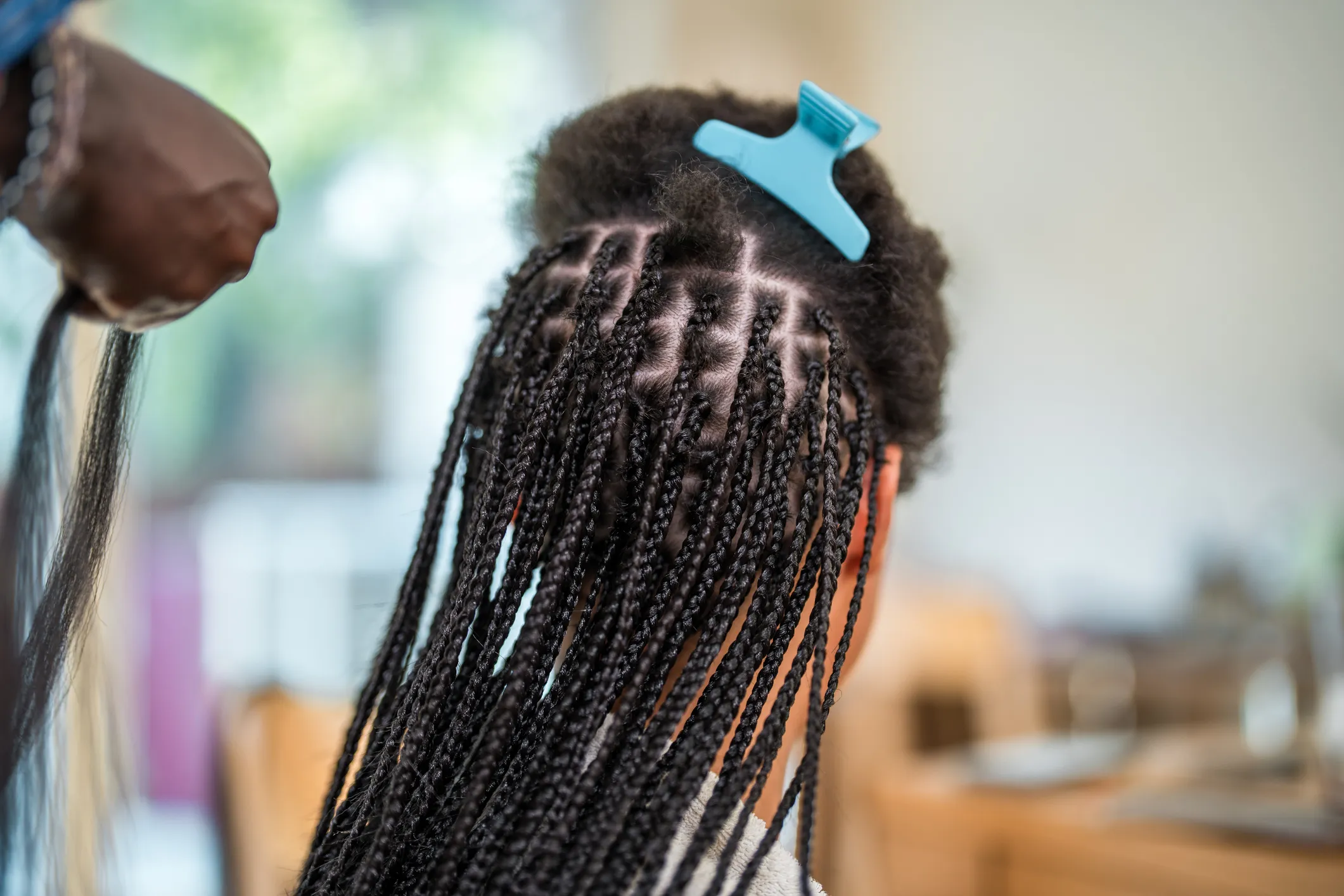
Aisata Diallo, 24, calls herself a lifelong braider. “I’ve always braided my hair growing up and, at some point in my college career, started braiding other people’s hair,” she said. At Northeastern University in Boston, she found limited access to braiders and textured-hair specialists, so she decided to fill that gap by starting a small business of her own.
“Throughout that experience, I was very close to some of the pain points in the styling process and complained about it constantly,” she said. Braiding is a manual task, and a single style can take eight hours to complete. Many professionals deal with issues like cramping and carpal tunnel syndrome after spending long days standing behind a chair weaving hair into patterns.
At first, Diallo said she didn’t know what to do about it. “I stopped braiding, and one of the reasons that I stopped braiding was due to the physical toll it has on your body.” She wanted to find a way to make braiding less painful and wondered whether new AI technology could automate some part of the process. Building hardware for braiding is expensive, difficult, and complex, which is one reason there have been few innovations in this space. The textured hair market has also long been overlooked by the mainstream.
Then, last year, she had an idea: Tressfecta, a company building products for textured hair. Its first project is a tool called Plait Pilot that helps braiders with the initial process of separating hair from packs before braiding begins.
Source link