In Belgium, the building blocks for a new space have been made with yesterday’s construction material.
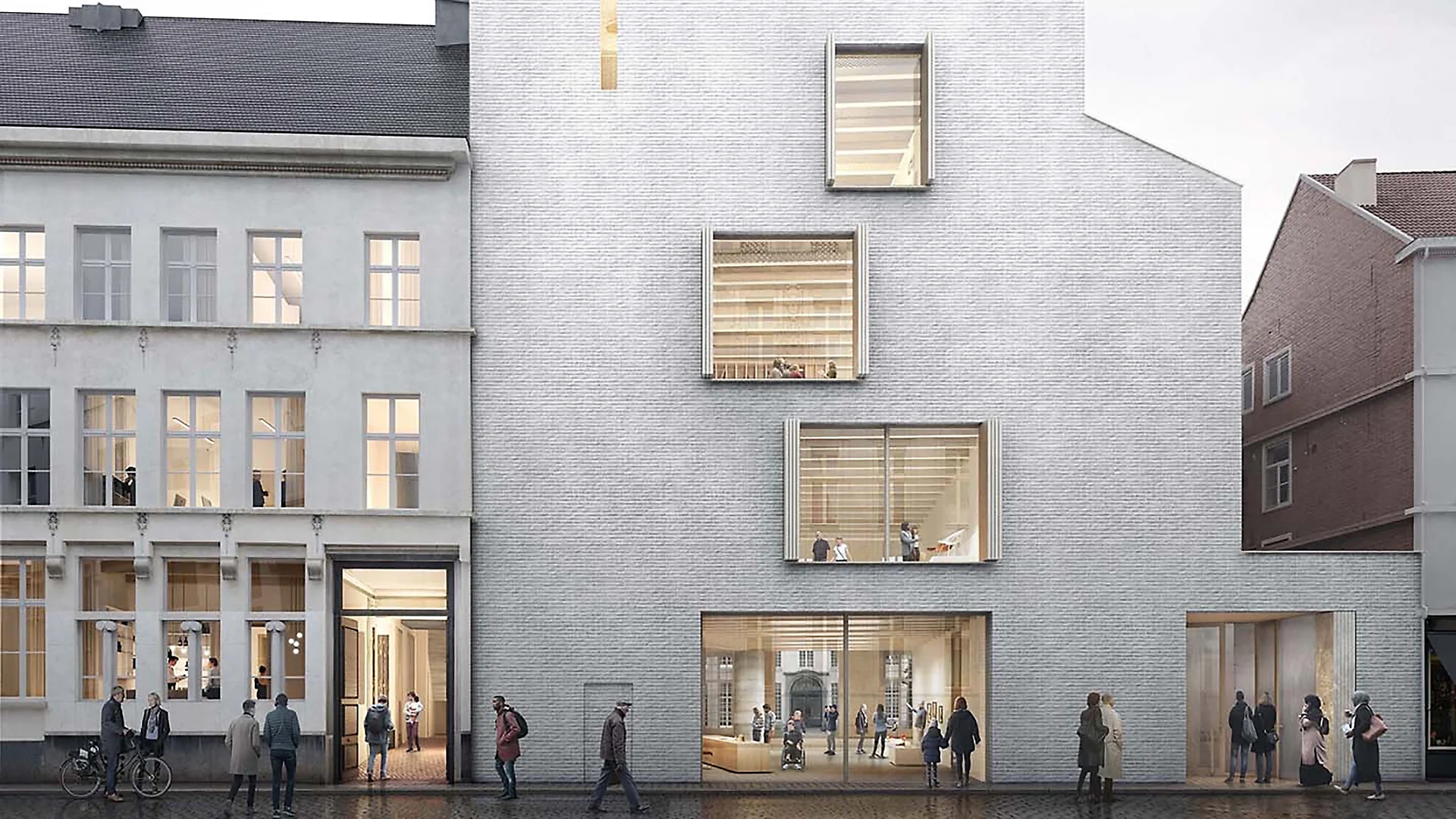
The white brick annex at the newly reopened Design Museum Gent, in Gent, Belgium, is made from locally sourced materials through a process that repurposes construction waste for less energy than firing a typical brick.
The Gent Waste Brick, developed by the Brussels-based construction company BC Materials, is made from 63% recycled municipal waste—mostly crushed concrete and construction glass—from the city of Gent.
That mix is combined with lime, sand, and other mineral ingredients to form the bricks. Instead of being fired in a kiln, they are pressed. Thanks to the lime, which absorbs carbon dioxide in the air, they harden on their own, avoiding the high temperatures and reducing the energy use typical of traditional brick firing.
BC Materials worked in partnership with the architectural practices ATAMA, Carmody Groarke, and RE-ST to test material mixes and production techniques to meet the technical requirements for facade use of the brick. After testing, they produced 82,000 of the bricks at Gent’s Arsenaal site, a former railway repair yard. The process exemplifies circular design, which aims to keep products and materials in use for longer by finding new uses for them instead of disposing of them.
The museum annex is a 2,200-square-foot wing. Inside, it’s a multipurpose space to host exhibitions and events; from the outside, it’s an attractive addition to the city’s skyline, with its neutral-colored brick and slanted roofline that mimics the pitch of some local rooftops.
Source link