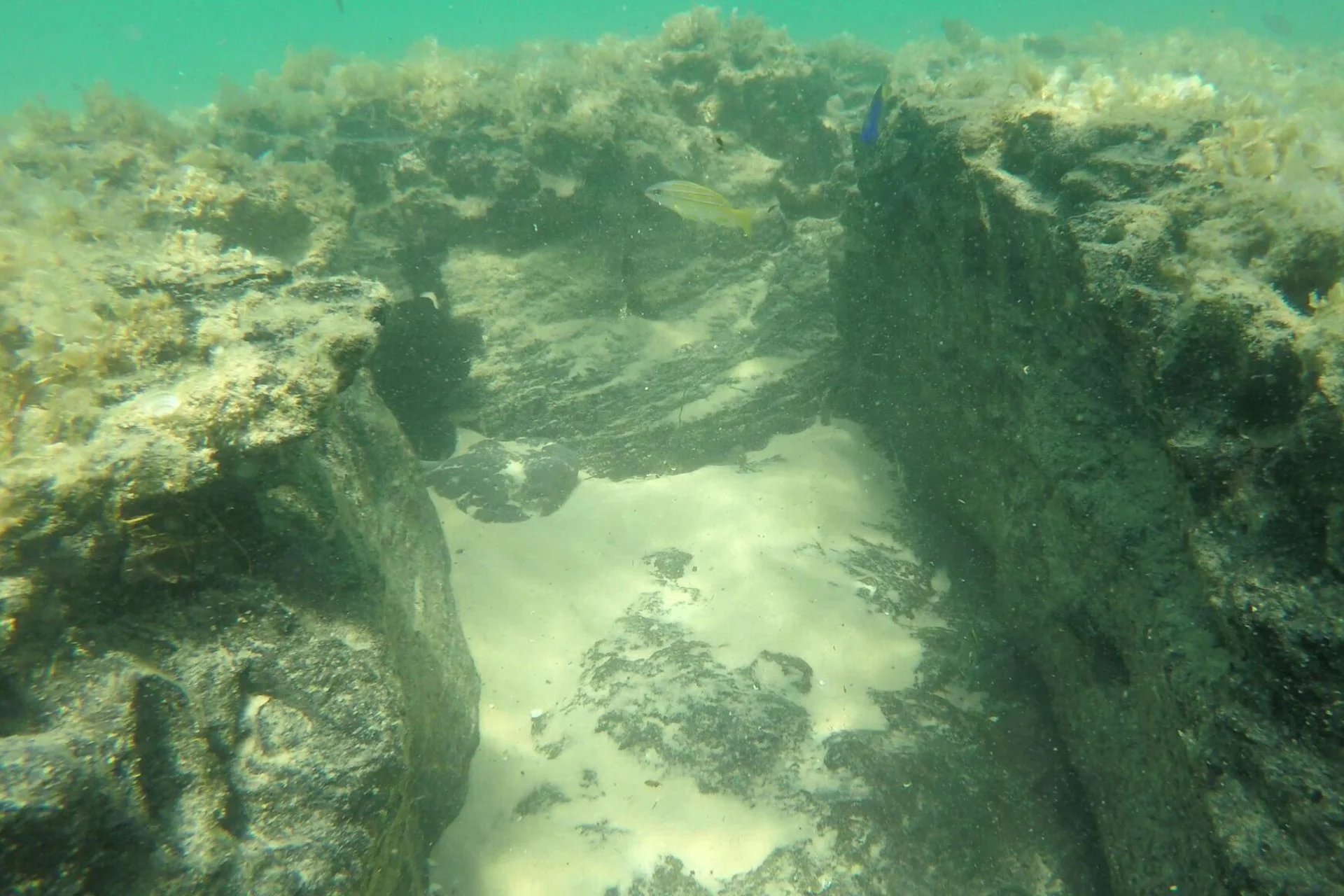
Beneath the shallow coastal waters of the Bazaruto Archipelago in Mozambique, researchers have discovered the remains of ancient forests that were submerged thousands of years ago—reborn as a thriving marine ecosystem.
The reefs had formed between 3,000 and 5,000 years ago from coastal land plants and trees and are primarily made of the compressed remains of coastal swamps and forests, according to researchers from the Bazaruto Center for Scientific Studies (BCSS) Ocean Observatory. The findings, detailed in a study published in Scientific Reports, suggest there may be more hidden reefs along the world’s coastlines that could serve as crucial carbon habitats.
Thousands of years ago, coastal forests grew on land that was later submerged as sea levels rose. The water washed away sediments and exposed a layer of peat, a type of soil made from partially decomposed plants that accumulates into carbon-rich deposits. This would later serve as a habitat for all types of marine life along sandy coastlines.
“This coastline has very little natural hard seabed, mostly shifting sand. When rising seas expose these old peat layers, they create rare, solid habitat where marine life can settle, hide and feed,” Mario Lebrato, chief scientist at BCSS and lead author of the study, said in a statement.
The team behind the recent discovery surveyed three peat reefs and a nearby true coral reef in the western Indian Ocean, comparing seabed cover, invertebrates, small fish, and larger animals such as sharks, rays, and turtles.
Although the peat reefs look nothing like coral reefs, they do share some wildlife and marine biodiversity.
Source link