If plants could talk, they might be able to help us better understand environmental conditions. A new sensor was designed to do just that by using AI to listen to and translate plant-speak into data humans can understand.
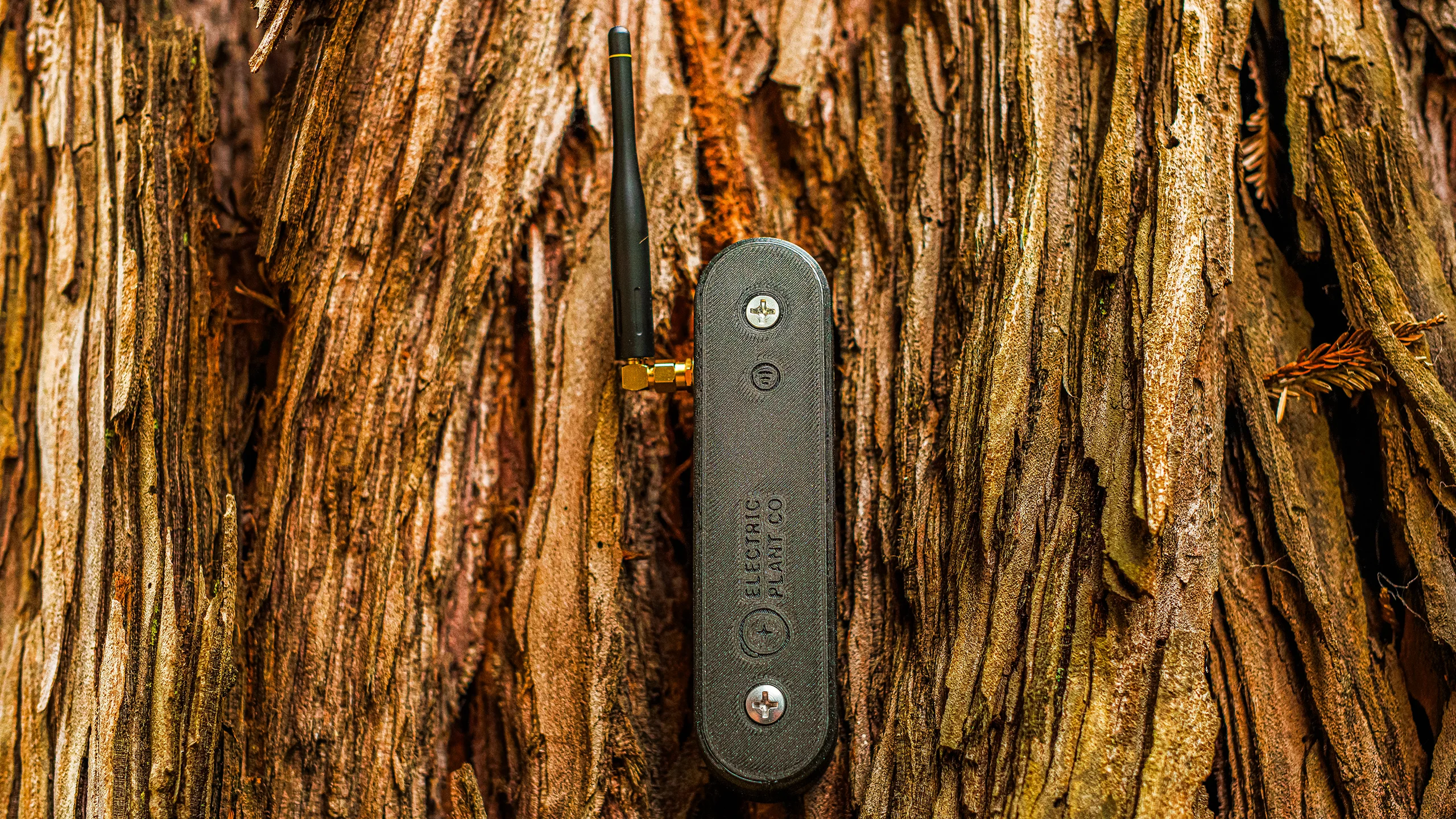
Bud, from Electric Plant Co., is a lightweight, low-cost handheld sensor that attaches to plants through two probes. It detects and interprets the electric signals that plants naturally produce. Two stainless steel screws hold the sensor in place, and it can be affixed to botanicals whose stem is at least an inch thick. When used on trees, it’s sensitive enough reach into the cambium layer, which divides the bark from the wood.
Like all living things, plants produce electricity, and the company says by tracking and decoding the electric signals that plants give off in response to environmental stimuli, the sensor can gather data about conditions such as hydration and stress. “I actually think of this as kind of a dongle,” Electric Plant’s cofounder and CEO, Justin Mast, tells Fast Company.
“The plant itself is the sophisticated technology,” Mast says. “Plants and trees have millions of little microreceptors that are processing information about the world around it and then they’re coordinating a lot of their physical responses through electrochemical signals, and so that’s what we’re tapping into and listening to.”
Other companies, too, are working to translate plant needs into plain language. One of them, Vivent Biosignals, a Switzerland-based plant intelligence company that also uses AI, announced it surpassed more than 2 million monitored plant days in July.
Source link