A team from the University of Texas at Austin and its partners is a winner of the 2026 Gizmodo Science Fair for shedding new light on mysterious red dots, a newly discovered class of astronomical objects.
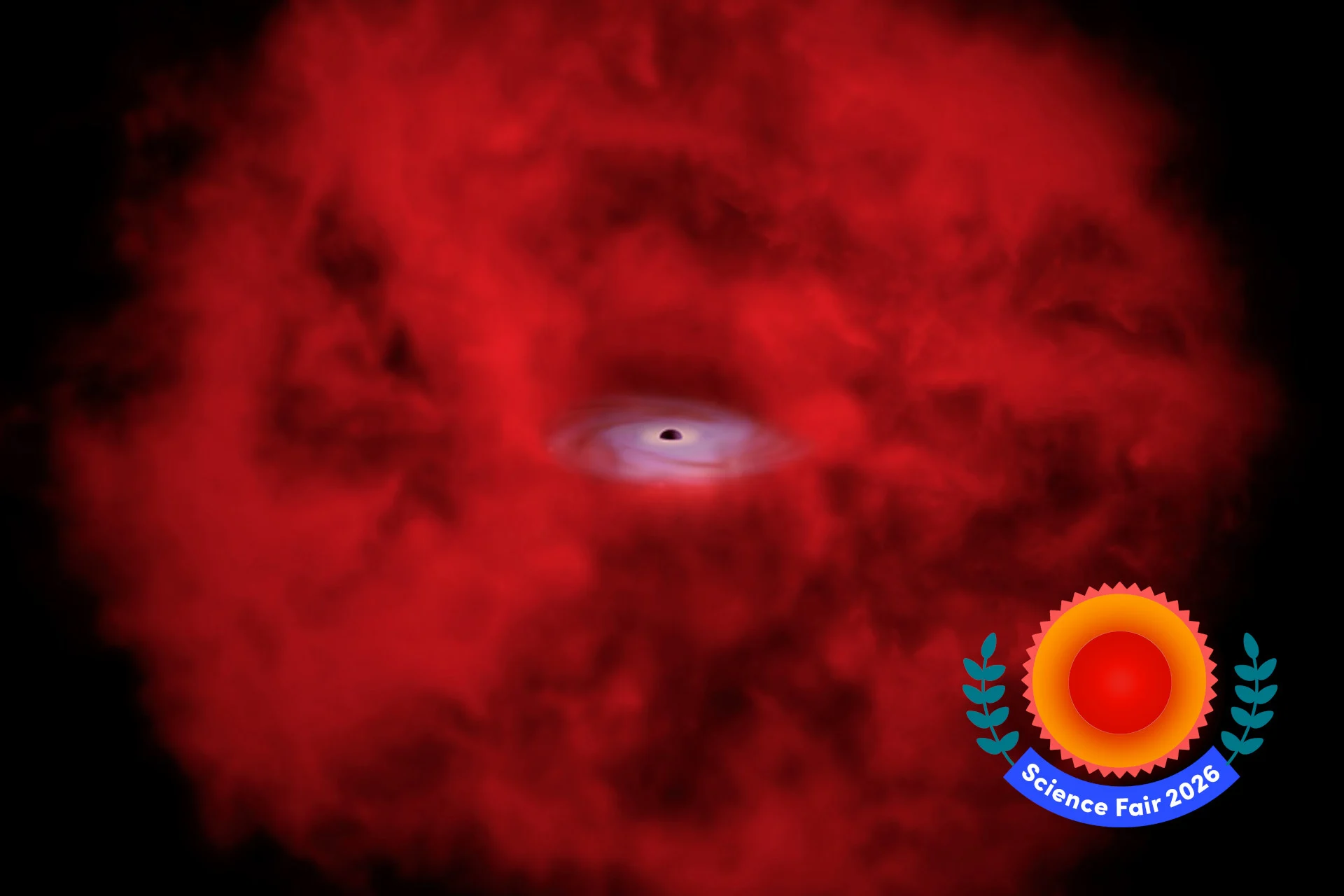
When the Webb space telescope first opened its eyes onto the early universe, it revealed something strange: luminous, red-tinted dots billions of light years away from Earth. And they were everywhere, appearing in almost every deep-field image. There was one problem, though: scientists had never seen those dots before and had no idea what they were. Their very existence, however, calls into question everything we knew about the distant cosmos.
Can astronomers identify a new class of objects found in the early universe, and what do these findings suggest about the formation of the earliest galaxies and black holes?
Vasily Kokorev, a researcher at the University of Texas, was first drawn to the little red dots for the mystery. “You don’t always get a chance to study something that people understand very little,” he told Gizmodo. “It’s very interesting and kind of refreshing…to speculate on the nature of these objects.”
Out of the hundreds of dots that showed up in Webb’s images, Kokorev and his team focused on just one lucky dot. The object, designated GLIMPSE-17775, appeared magnified due to gravitational lensing by a galaxy cluster. As a result, those 30 hours of telescope time gathered as much signal as nearly 80 hours of observation would have without the magnification.
Webb’s infrared sensitivity, combined with the cosmic magnifying glass, meant that astronomers got an extremely detailed look at GLIMPSE-17775.
Source link