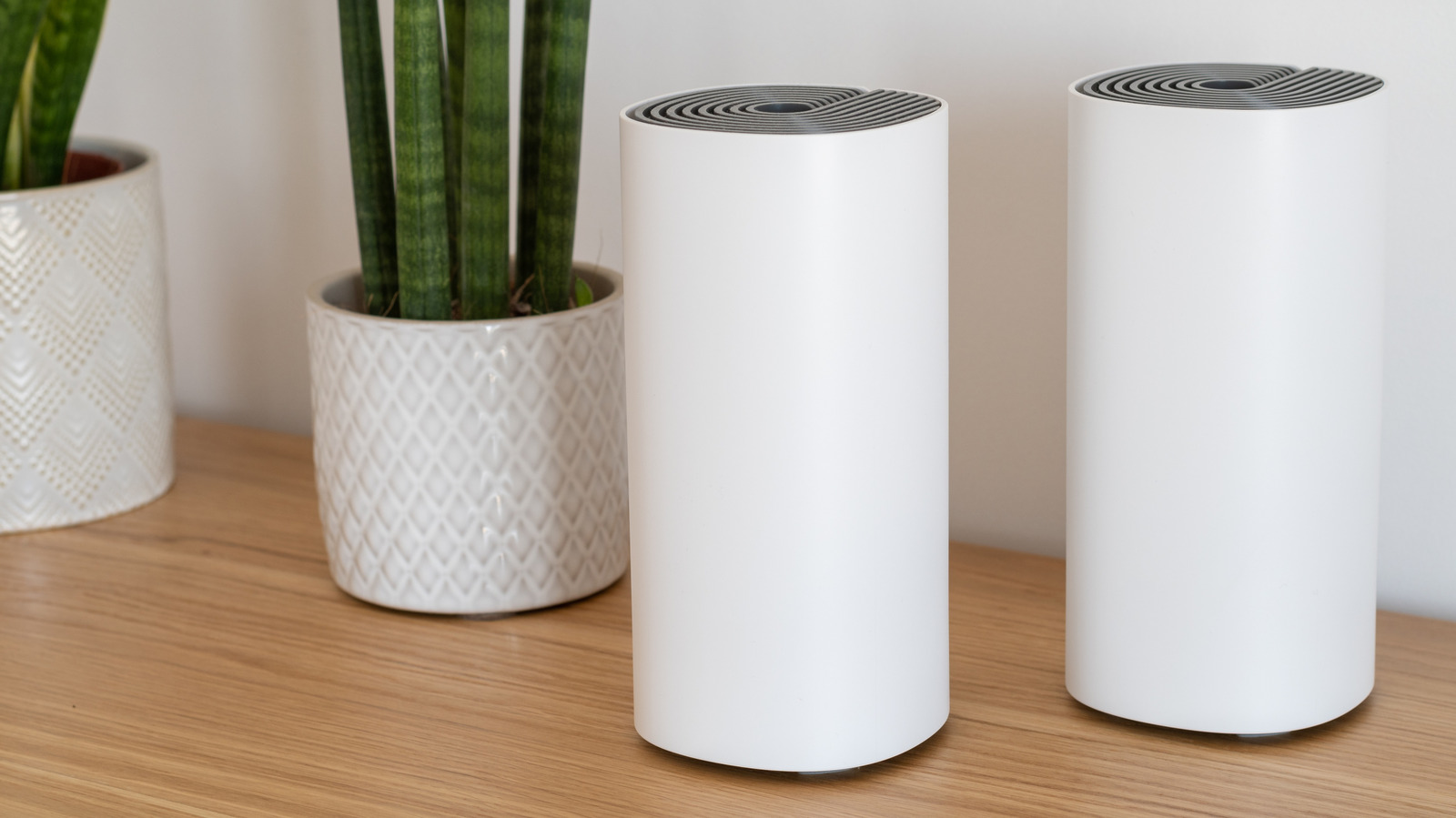
Mesh covers more ground, but a standalone router may be all you need.
Diving into Wi-Fi routers for the first time can be baffling. There are a lot of concepts to understand, and not just the differences between Wi-Fi 6 and 7. Speeds and features vary between models using the same specification, and it may not be clear which of your devices can (or should) connect to which frequency bands.
One of the biggest purchasing decisions is whether to go with a mesh Wi-Fi system or stick to a standalone router. Most people probably default to standalone products, since they're cheaper. In fact, given the price gap, it's important to have concrete reasons for stepping up to a mesh product.
The value of mesh systems mostly boils down to range and seamless roaming. In some situations, however, a standalone router may not only be acceptable, but preferable. Here's how to decide which option is right for you.
The main advantage of mesh Wi-Fi is range. In a mesh system, each satellite router acts as a sort of repeater for the gateway router that connects to your modem or fiber terminal. In theory, a relatively cheap kit like an Eero 7 two-pack can cover up to 4,000 square feet. If you need more coverage, you just add another compatible router. Conversely, standalone products have a fixed coverage radius unless you buy a Wi-Fi extender.
Unlike extenders, mesh systems enable seamless transitions. There are no separate SSIDs (network IDs) — they simply hand devices off from one unit to another based on how close they are.
Source link