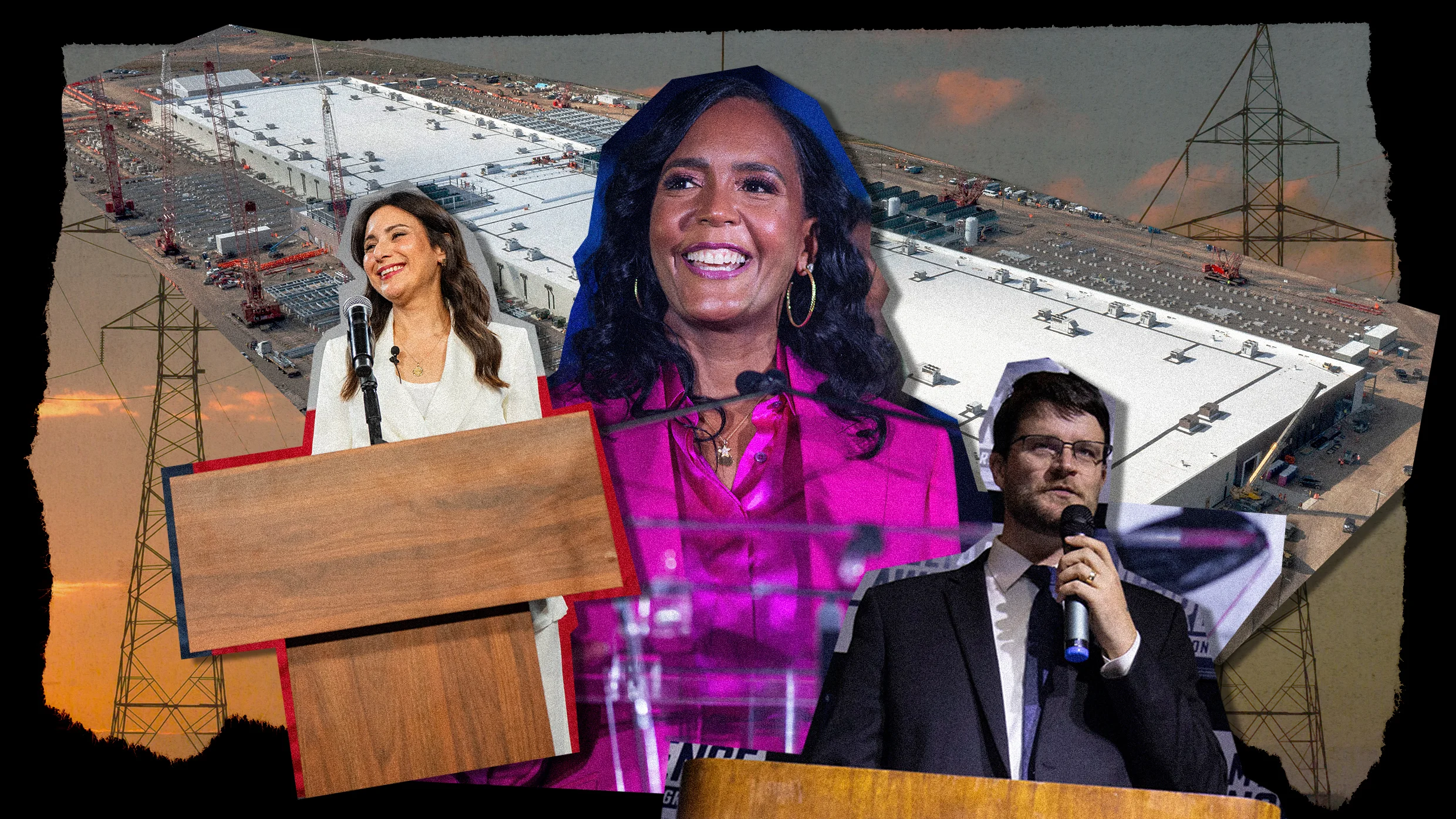
While results from the midterm elections are still coming in, as of November 4, 38 out of 39 restrictions on data centers had passed—from temporary moratoriums on new construction to full bans. And multiple candidates who made opposition to data centers a key part of their campaign also won.
Take the example of William Lawrence, the Democratic candidate for the U.S. House of Representatives in Michigan’s purple 7th Congressional District, which Trump narrowly won in 2024. Lawrence, a progressive community organizer and cofounder of the Sunrise Movement, was new to politics and faced a challenge running against the Trump-backed incumbent, Tom Barrett. In the primary, facing two establishment Democrats who had raised more money, Lawrence won in part because he vowed to fight data centers.
“He found an issue that connected with local residents across partisanship,” says Matt Grossman, director of the Institute for Public Policy and Social Research at Michigan State University. Recent polls say that seven in 10 Americans don’t want data centers to be built in their communities, for reasons ranging from potential impacts on electric bills to noise and water use.
” After going to local planning meetings to watch data center developers pitch projects, he said that it was an “abuse of power” in communities that didn’t have the resources to fight back. He also called for other controls on technology, including a pause on development of advanced artificial intelligence and mandatory safety requirements for AI.
Source link