In July 2024, Sequoia Capital's David Cahn estimated that the six hyperscalers would need to generate $600 billion in annual revenue to justify the planned investments. In September 2026, Goldman pegged the number at $1 trillion a year. It's been a little over a month since then, but Swiss investment bank UBS has raised the bar more than three times higher.
The six largest hyperscalers would need to generate roughly $1 trillion in incremental operating profit (earnings before interest and tax) by 2031 to achieve a 15% return on invested capital (ROIC). That would imply about $3.4 trillion in additional revenue at current cloud-computing margins, a recent UBS report said.
To put it in perspective, global spending on software services in 2026 is estimated at $1.5 trillion.
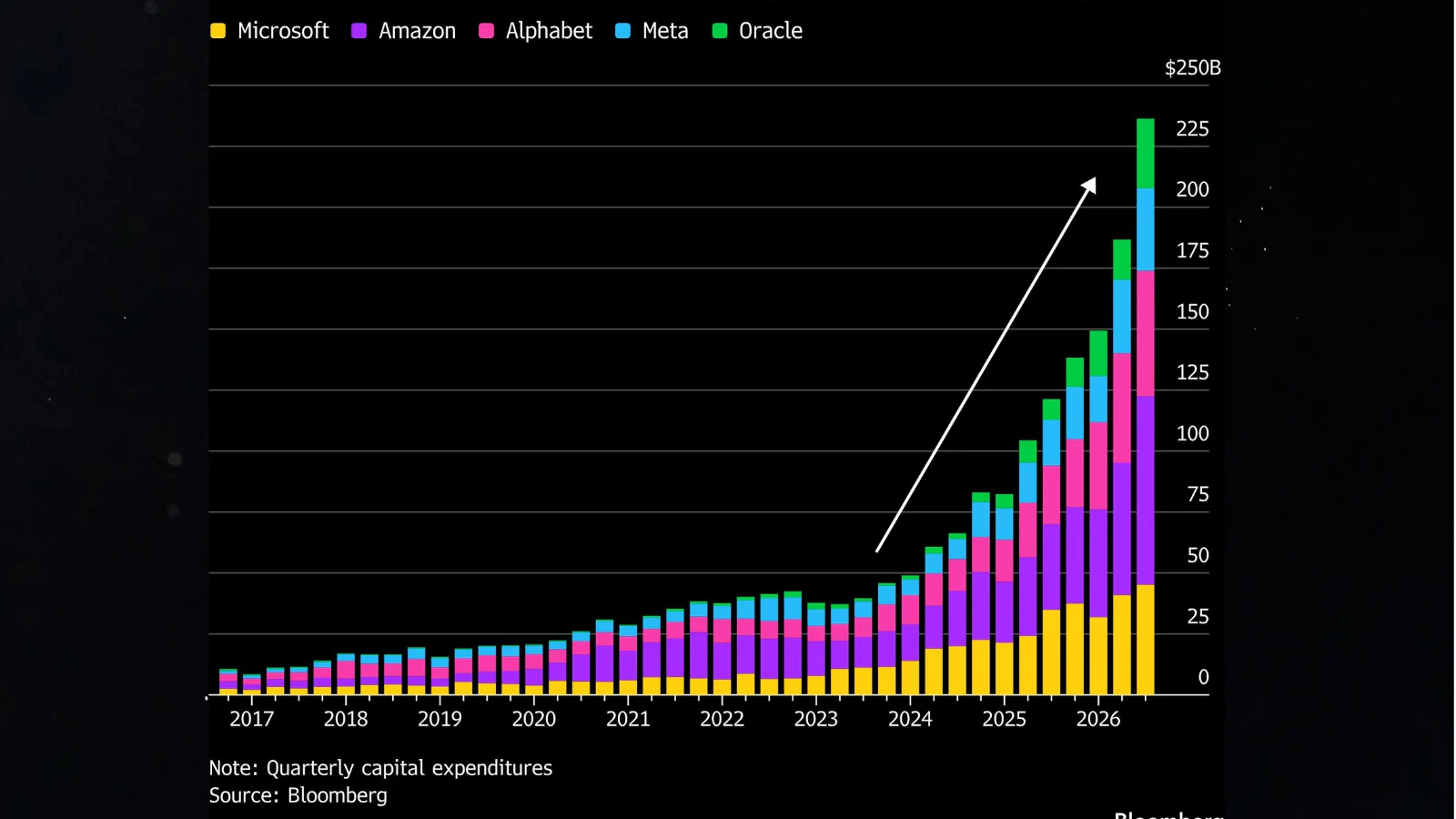
The calculation underscores the scale of the monetisation challenge facing companies such as Microsoft, Amazon, Alphabet, Meta, Oracle and other major AI infrastructure builders, which are collectively expected to spend unprecedented sums on data centres, chips and power infrastructure over the rest of the decade.
The hyperscalers may struggle to justify the valuations even if they reach the revenue target, because even a modest 15% operating profit margin is far below the current trend and below the 40% margin from software services that investors have gotten used to.
Compared to asset-light software, AI infrastructure requires massive spending on data centres, networking equipment, semiconductor hardware and electricity generation.
However, it may not be an impossible task given that most people in the world are willing to embrace AI provided it delivers the promised productivity boost.
Source link