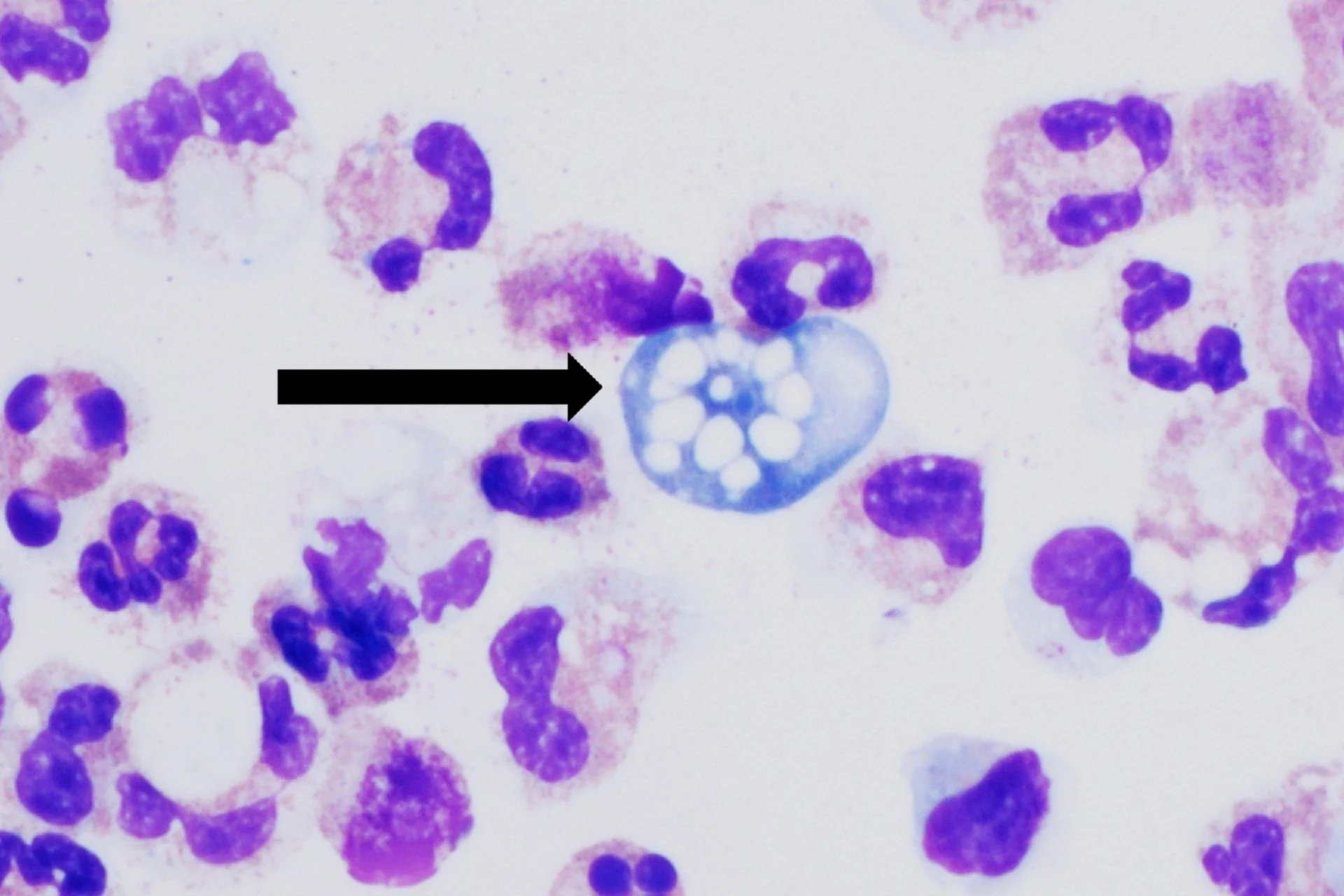
Naegleria fowleri, a.k.a. the brain-eating amoeba, can cause a rare, but nearly always fatal infection when it inadvertently enters people’s brains. Scientists at the University of California, San Diego, may have just found a new weapon that can stop the amoeba before it turns deadly.
In a study published earlier this week, UC San Diego researchers detailed their discovery of a compound isolated from marine bacteria that seems to be especially effective against N. fowleri. In lab tests so far, the compound appeared capable of killing various strains of the amoeba within hours while mostly sparing human cells. More work is needed to confirm its effectiveness and safety, the researchers say.
“Our findings identified a potent marine-derived compound and its potential target in N. fowleri,” they wrote in their paper, published Monday in the journal Marine Drugs.
N. fowleri is a shapeshifting amoeba that lives in soil and warm freshwater. It typically feeds on bacteria and isn’t dangerous to us when it’s simply ingested in water. When the amoeba enters our body through the nose, however, it can migrate to the brain. And once there, it can literally eat brain cells and spark massive inflammation, causing a severe infection called primary amebic meningoencephalitis, or PAM.
S. S. has gradually moved north. Studies have also shown that the amoeba is readily found in certain environments commonly visited by people, such as natural hot water springs at national parks.
Source link