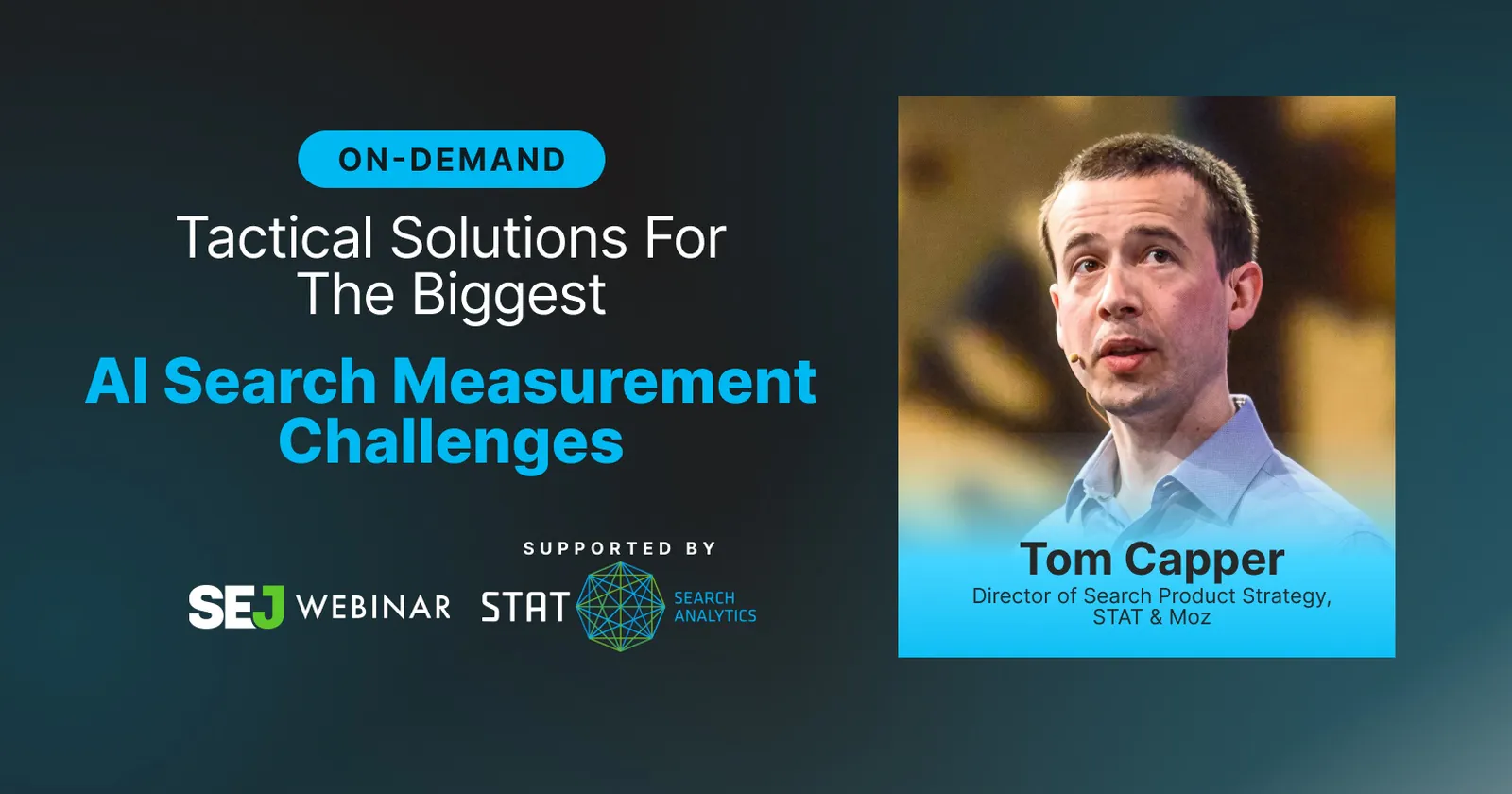
STAT’s Tom Capper explained how to measure AI search visibility, distinguish brand mentions from citations, and connect prompt tracking with business outcomes.
An AI answer can recommend your product without linking to your website. A customer might then search for your brand, visit directly, or buy offline. The purchase still matters to the business, even when analytics cannot connect it to the earlier answer.
That was the measurement problem Tom Capper, Director of Search Product Strategy at STAT, addressed in Tactical Solutions For The Biggest AI Search Measurement Challenges.
In this webinar, Capper explained why zero-click search was also an attribution challenge, not simply a traffic problem. His response was to measure visibility alongside business outcomes rather than expect clicks to describe the entire customer journey.
Capper illustrated the distinction with an AI-generated car recommendation. Audi was the brand being recommended, while the cited links pointed to other websites. A report focused only on whether Audi’s domain earned a citation would miss the recommendation itself.
The implication was practical: define the brand entities you want to track, including relevant sub-brands, rather than assume your domain captures every valuable appearance. Apply the same discipline to competitors so the comparison is meaningful.
“So yeah, citations have URLs. That’s still valuable tactical data, but I don’t think it should be your KPI. Mentions have entities.”
For his measurement approach, being mentioned or recommended was the outcome to understand; the cited URLs helped explain which sources might be shaping it.
Different answers to the same prompt do not make AI visibility impossible to measure.
Source link