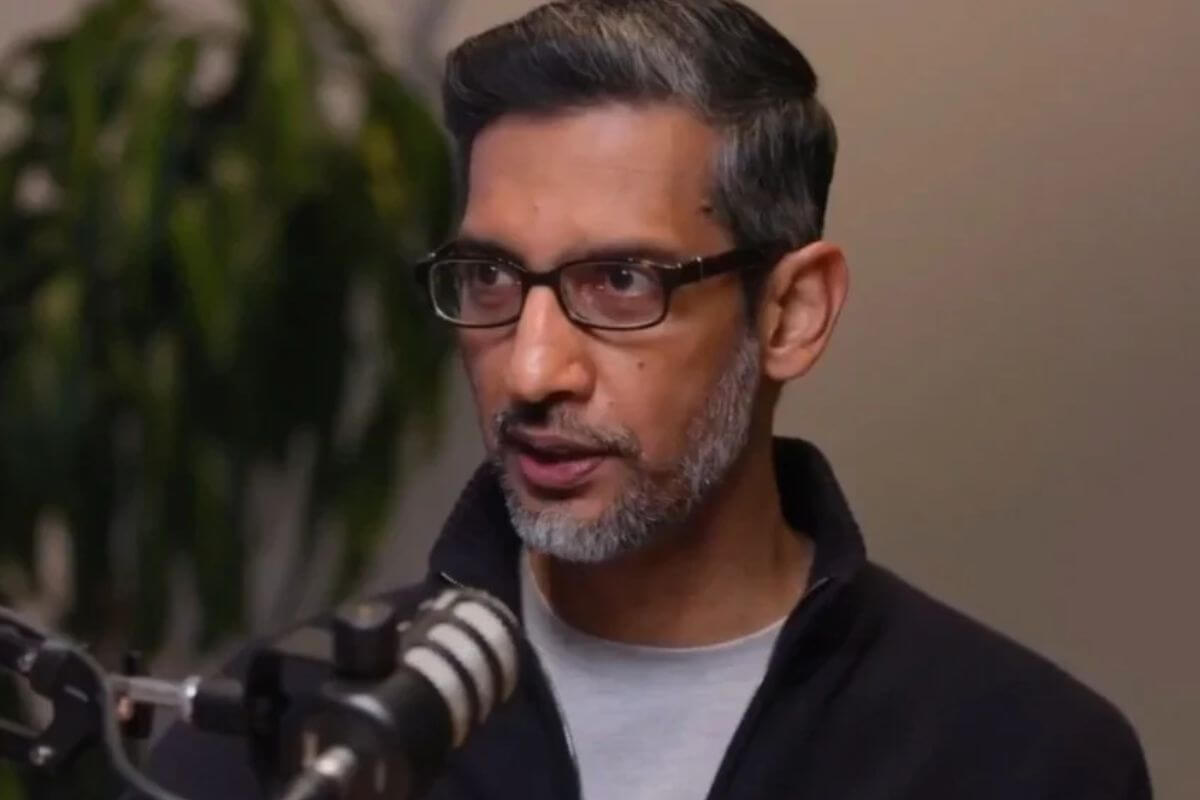
Google’s parent company, Alphabet, and its CEO, Sundar Pichai, who oversees Google’s new AI products, share insights into the current AI landscape and how the chipset shortage limits Google’s ability to expand cloud capacity for customers.
Despite the chipset disruption, Sundar Pichai prioritizes AI researchers at Google’s DeepMind to build more advanced AI models with greater capabilities while using existing capacity. Here is what we know so far:
On Google’s future plans, Sundar Pichai discussed current priorities and admitted that limitations could directly affect short-term revenue growth for Google Cloud Services.
Alphabet-owned Google now prioritizes AI research capacity. On Google Cloud capacity expansion, Sundar Pichai said the company is currently forgoing short-term revenue because of the computing trade-off required to support frontier AI models.
These AI models aim to reach the highest level of current capabilities. To do so, Google will need to acquire new infrastructure to train, run, and support this massive computing power.
Amid the ongoing chipset shortage, Google is struggling to set up chip servers and data-center space to run AI services. Pichai also shared that accommodating a new customer until 2027 amid this chip shortage will be “incredibly difficult to do.”
Pichai also pointed out that Google decides additional capacity for any business unit years in advance. Sundar Pichai set Google’s capacity for 2024.
While the chipset shortage is sparking global panic, Google’s Sundar Pichai is taking a different approach to capacity, saying the priority is to invest more in AI research through Google DeepMind.
Sundar Pichai shares that AI research at Google DeepMind is “non-negotiable” and a priority.
Source link