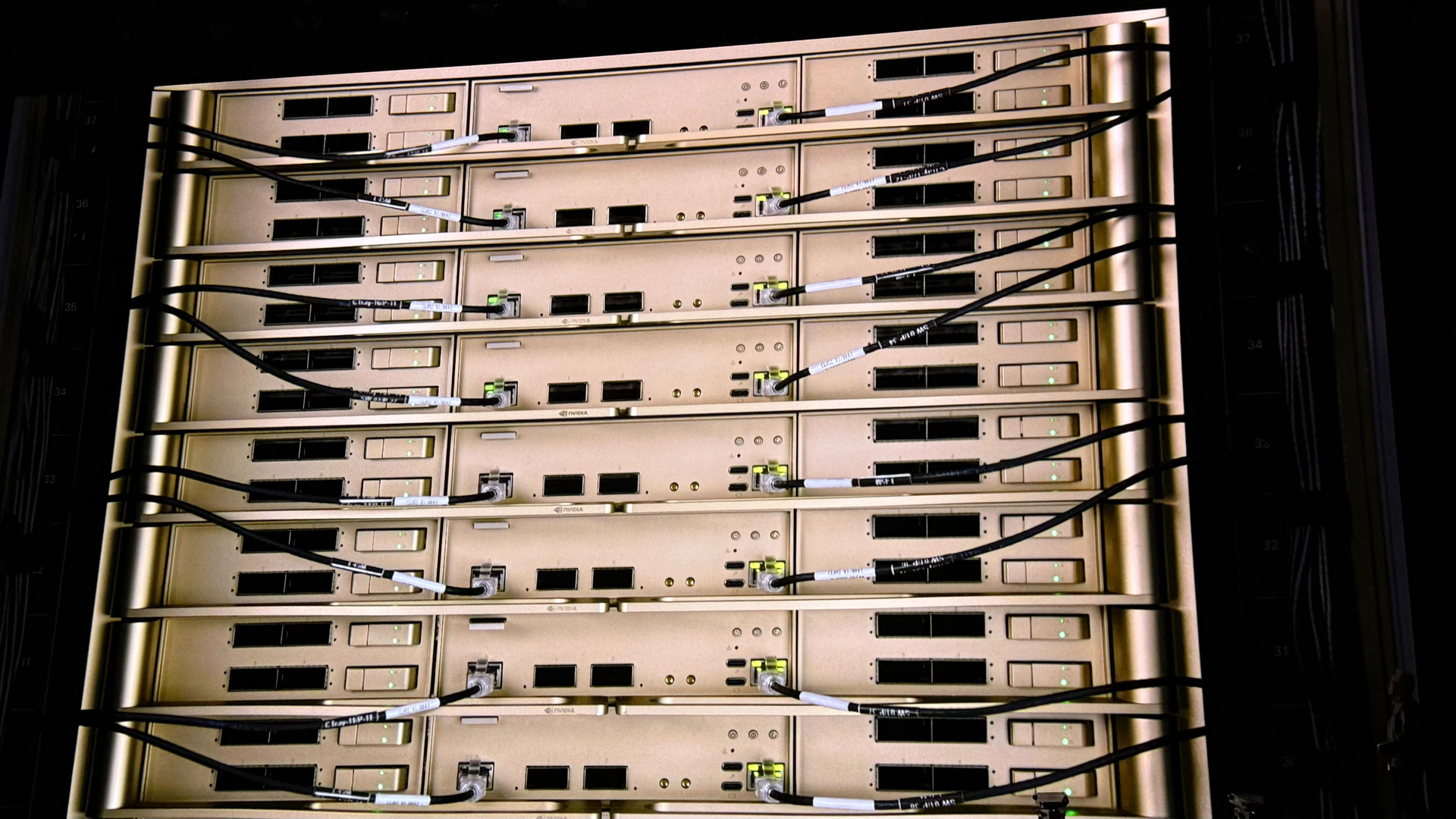
SpaceX/xAI is developing a custom version of Nvidia's Vera Rubin NVL72 rack-scale AI system that replaces conventional NVLink cable assemblies with a massive 84-layer printed circuit board (PCB), in part for use in orbital data centers, reports SemiAnalysis. The system is codenamed Kessel and retains 36 Vera CPUs, 72 Rubin GPUs, and nine NVLink switch trays, but introduces a different solid-state interconnect architecture. While SpaceX/xAI will continue to buy Nvidia hardware directly from the company, Elon Musk's company will source other components independently, which could give it greater control over its hardware supply chain.
- Desktop GPU Roadmap
- Nvidia's Enterprise GPU Roadmap
- Testing DirectStorage with GPU decompression
- The GeForce RTX 30-series upgrade matrix — does your Ampere GPU need an upgrade in 2026?
- Rubin in-depth
- The Stout Owl: The ultimate Noctua G2 PC
The Kessel system retains the fundamental configuration of Nvidia's Vera Rubin NVL72 platform, which comprises 72 GPU packages distributed across 18 compute trays and nine NVLink switch trays. However, instead of Nvidia's conventional arrangement with internal NVLink cable cartridges, SpaceX plans to position compute and switch trays back-to-back around a passive PCB midplane. The architecture resembles a smaller version of Nvidia's Kyber design with 576 AI GPUs (albeit in 144 packages), which also relies on a PCB-based interconnect rather than conventional cable assemblies, SemiAnalysis notes. Interestingly, the design is aimed at both terrestrial and orbital deployments, according to the analysts.
Arguably the most distinctive feature of Kessel is its 84-layer PCB midplane, which uses ultra-low-loss M10 copper-clad laminates (CCLs).
Source link