This article has been reviewed according to Science X's editorial process and policies. Editors have highlighted the following attributes while ensuring the content's credibility:
Researchers from the Yong Loo Lin School of Medicine, National University of Singapore (NUS Medicine), have identified four proteins in the blood that could potentially help identify people at higher risk of worsening cerebrovascular disease, cognitive decline, serious heart- and stroke-related events, and mortality.
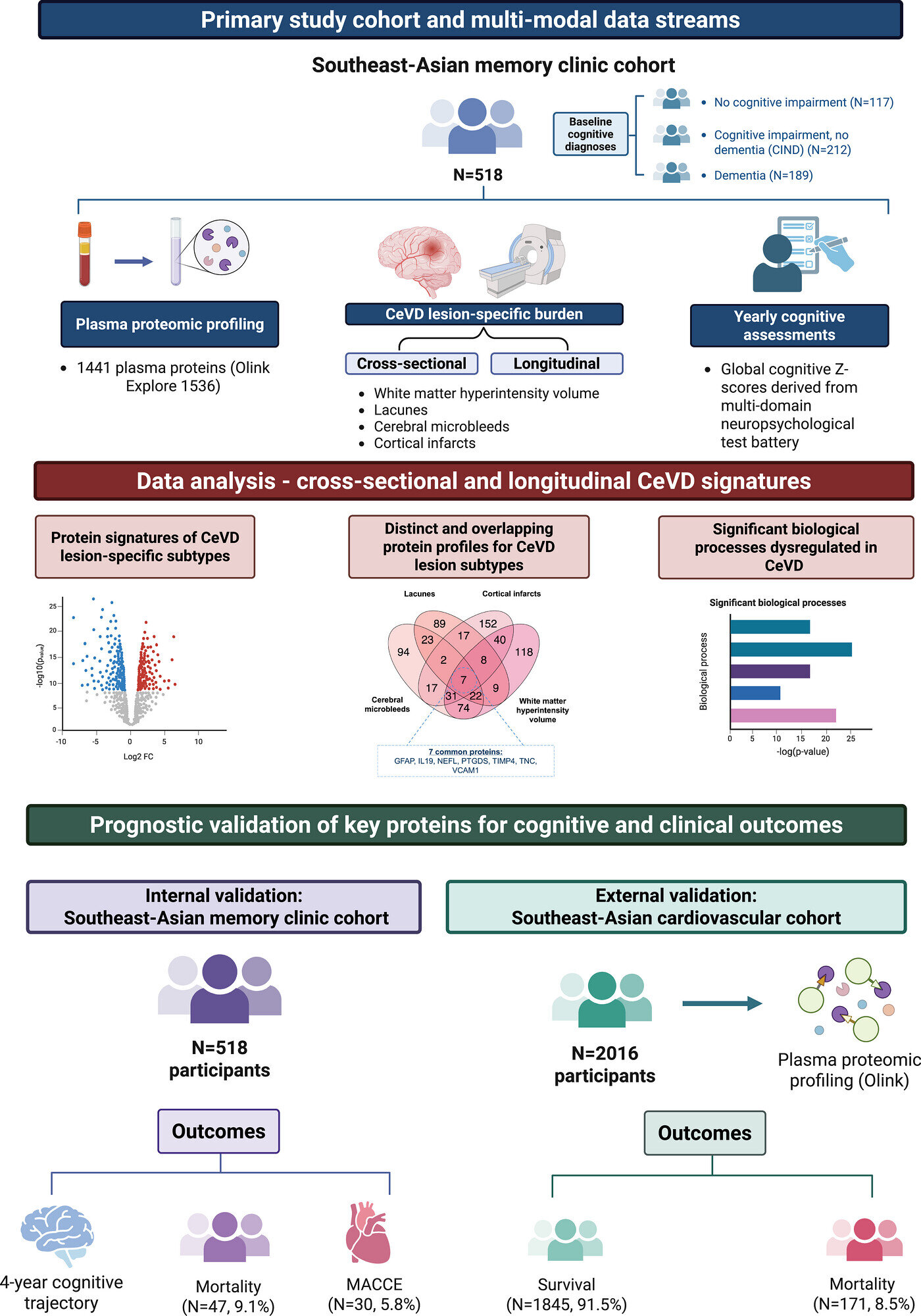
Published in Alzheimer's & Dementia: The Journal of the Alzheimer's Association, the study analyzed more than 1,400 proteins in blood samples spanning two Singapore-based research cohorts. The researchers identified novel blood protein signatures that were consistently associated with cerebrovascular disease and poorer health outcomes. Cerebrovascular disease affects the brain's blood vessels and can cause small areas of tissue injury, microbleeds and white matter damage, contributing to stroke, cognitive decline and dementia. The study is the first to track its progression using large-scale protein profiling in a longitudinal Southeast Asian cohort, addressing a gap in research involving Asian populations.
Professor Christopher Chen, deputy chair of the Healthy Longevity Translational Research Programme (TRP) at NUS Medicine, who led the study, said, "Cerebrovascular disease is an important contributor to cognitive decline and dementia, particularly in our Asian population. By identifying blood proteins linked to changes in the brain and future cognitive and cardiovascular outcomes, we hope to move toward more precise ways of identifying people at risk and intervening earlier."
Chen is also from the Department of Pharmacology at NUS Medicine, director of the Memory Ageing & Cognition Centre, National University Health System (NUHS), and senior consultant in the Department of Psychological Medicine, National University Hospital.
Source link