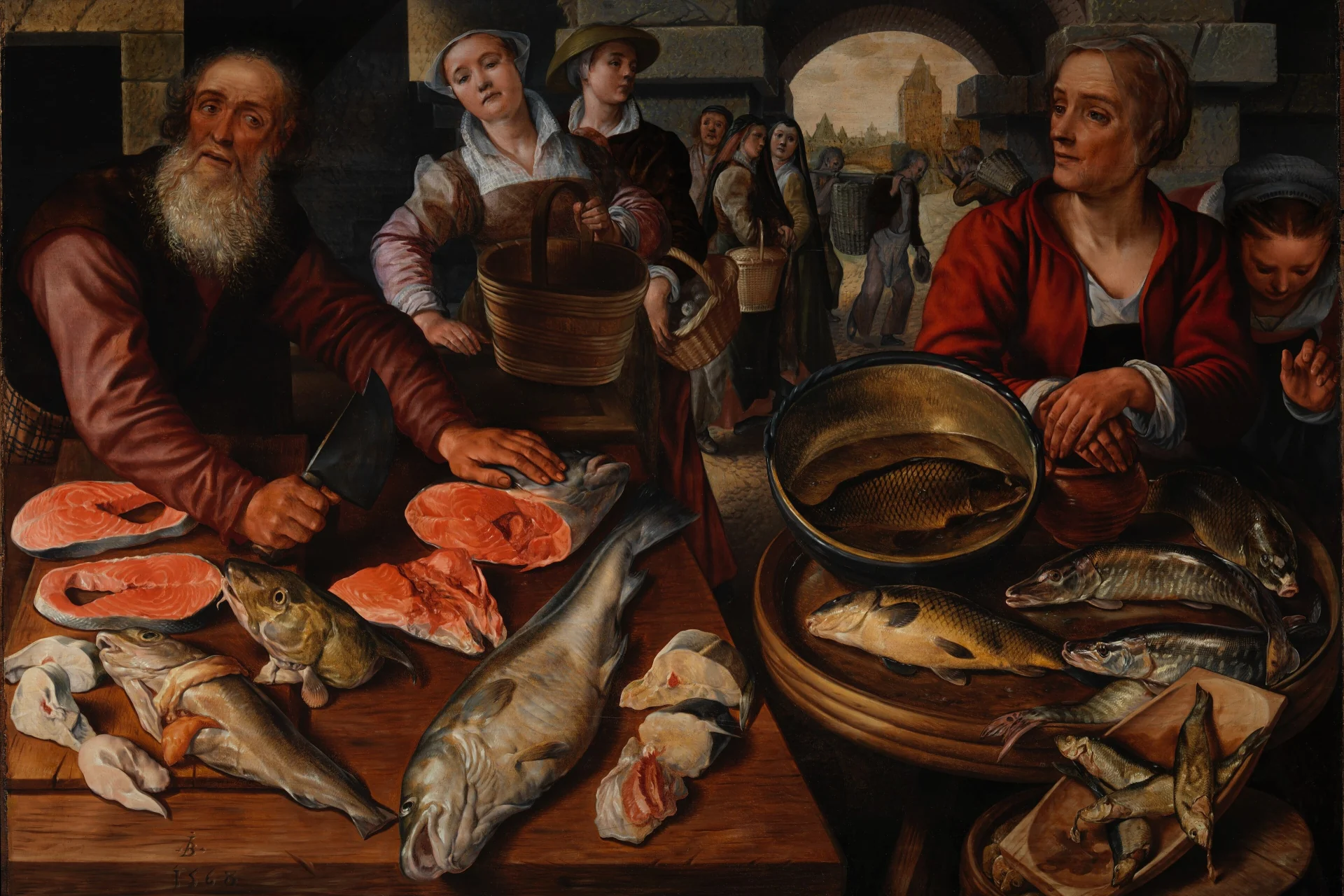
You are what you eat. Also, what you eat might be how old your bones will look hundreds of years from now.
A new paper, published in npj Heritage Science, found a surprising blind spot for radiocarbon dating: fish in freshwater. Specifically, the natural carbon-14 content in lakes and rivers and how that ends up in fish is “much more complicated to correct for” than terrestrial food sources, the paper notes. Uncorrected for, radiocarbon dates for fish-eating humans can be off by up to 1,000 years, although the margin likely varies by region. The team found the effect present in six out of 27 people buried at some of Denmark’s 140 medieval monasteries.
“The results make it abundantly clear that this is a major problem,” Kaare Lund Rasmussen, the paper’s first author and an archaeometrist at the University of Southern Denmark, said in a statement. “And not just in Denmark, but probably across the rest of Europe too.”
Since its introduction in the 1940s, radiocarbon dating has become a hallmark of archaeological research. Living organisms absorb the radioactive isotope carbon-14 into their tissues, simply by existing. The isotopes start to decay when that organism dies, according to an explainer by the University of Chicago, where chemist Willard Libby developed this technique. By counting how many carbon-14 atoms remain, scientists can estimate how long the organism has been dead—hence, its “age.”
“This sounds simple,” the team wrote in the new paper, but there are various complications related to the environment in which an organism mostly lived.
Source link