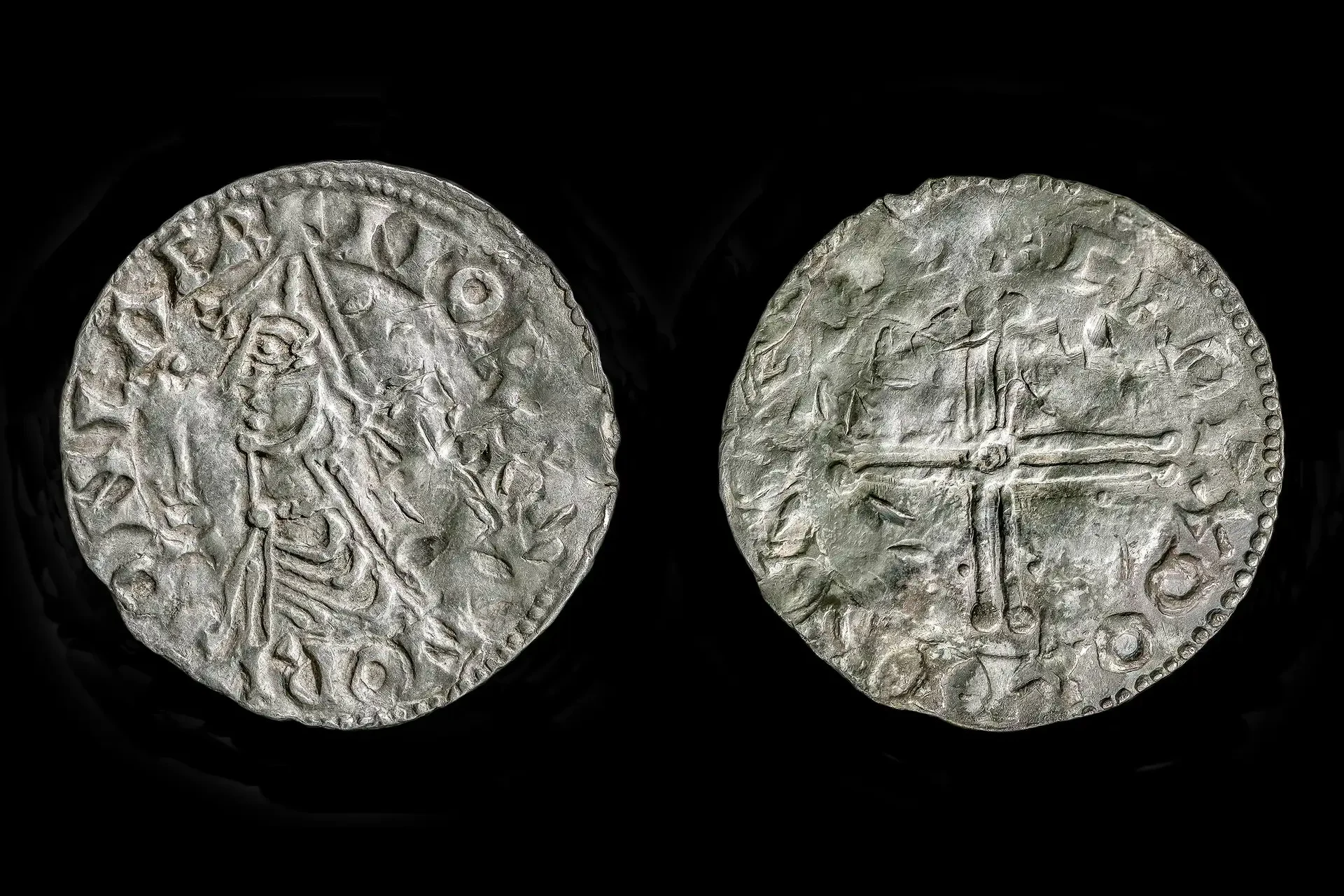
Earlier this year, Norwegian metal detectorists struck the archaeological equivalent of gold: an enormous hoard of Viking Age coins. Since then, excavations have raised the total number of coins to 5,500—including one particularly special coin that may have witnessed the reign of an iconic monarch in Norwegian history.
In a recent announcement, the University of Oslo’s Museum of Cultural History reported the discovery of a coin with the inscription ONLAF R+ NORMANORV, or “Olaf, King of the Norwegians.” On one side is a left-facing bust wearing a conical battle helmet, while a cross and a Christian acclamation are inscribed on the reverse. If the interpretation is correct, the coin would be a much-awaited addition to the few historical artifacts directly linked to Olaf Haraldsson, whom the university describes as having had a greater effect on Norway’s “political, religious, and legal history than any other Norwegian king” in the 11th century.
“It was a very special moment,” Anne Skogsfjord, an archaeologist at the museum involved in the excavations, said in the announcement. “I realized that we had found a national treasure.”
Olaf Haraldsson ruled over Norway from 1015 to 1028. According to the museum, Olaf was integral to Norway’s conversion to Christianity. Relatedly, coins issued during his reign were symbolic of his authority as a “Christian king of European standing,” Gullbekk said in the latest statement. In fact, it’s very likely that Olaf himself chose the design of these coins—perhaps he was even present when they were struck, he added.
Source link