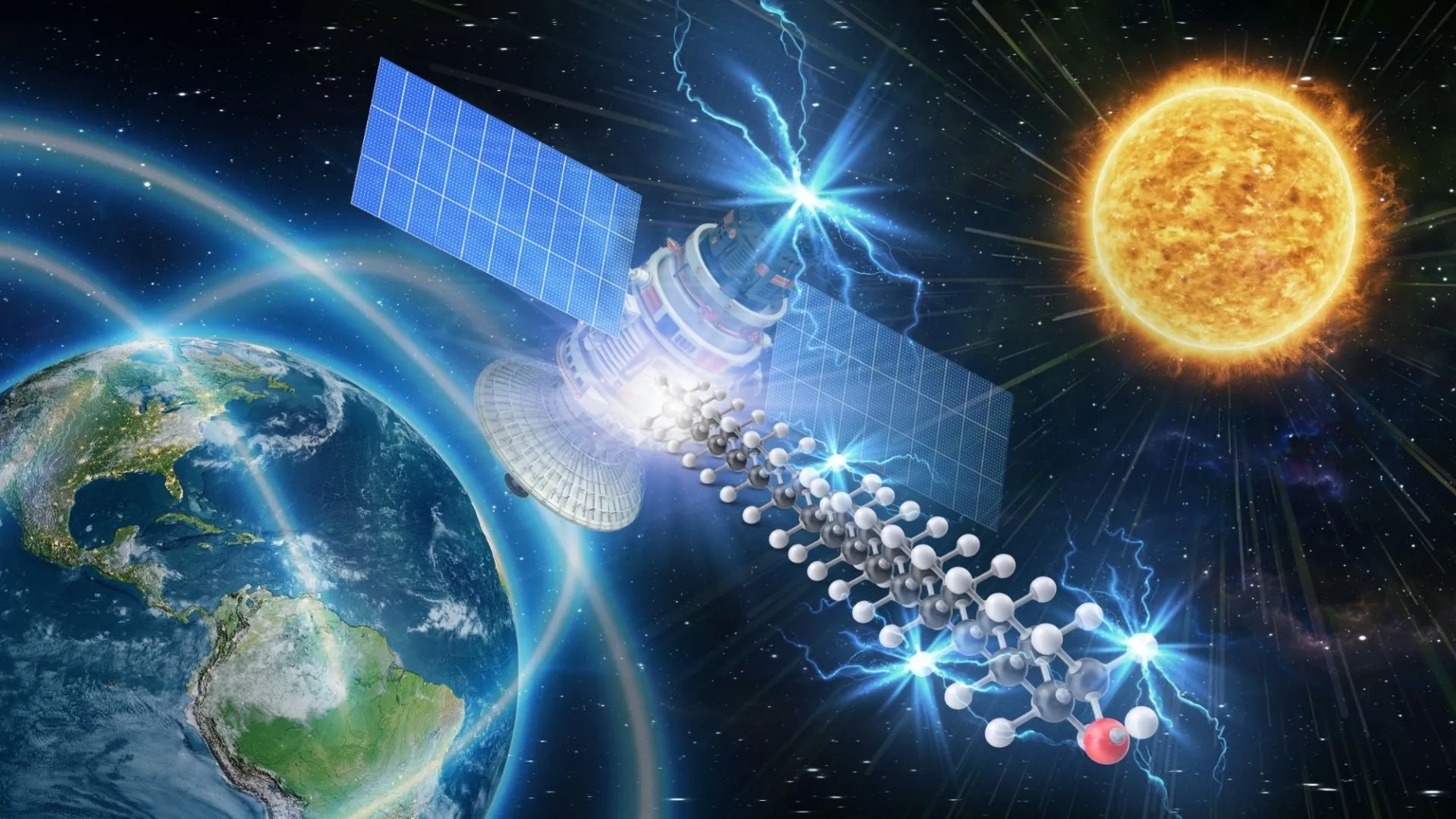
Human experts working alongside agentic AI are building the foundation for lighter, longer-lasting satellites. Scientists at Pacific Northwest National Laboratory (PNNL) are accelerating the development of “radiation-hardened” (rad-hard) materials using Super Intelligence (SI) and automation.
These materials are built to withstand high-radiation environments, such as space and nuclear reactors. Radiation-induced failures in these components can delay or cancel missions, making radiation hardening important for decade-long operations.
“Space is a highly energetic environment, with heavy ions and other particles bombarding our devices. Agentic workflows come at a time when there is a need for better rad-hard testing techniques,” said scientist Erin Barker.
Researchers are studying layered aluminum gallium nitride and gallium nitride chips that power satellites, communications, radar, and power systems.
Before a microchip ever tastes the void of space, it is manufactured in a clean facility where even a single stray speck of dust could mean instant failure.
Once launched into space on a satellite, that delicate microchip enters a dangerous environment filled with constant, invisible radiation. Galactic cosmic rays, heavy ions, and near-light-speed electrons pepper the cosmos.
One bad exposure can scramble a satellite’s memory, send a spacecraft off course, or completely kill an expensive weather or communications mission.
Testing how materials handle space environments has long been a slow and tedious process. To prevent these orbital catastrophes, PNNL researchers are changing how we shield space electronics.
This new work accelerated the development of radiation-hardened microchips using a multi-agent AI system named SciLink. This intelligent software hierarchy evaluates microscopic radiation damage in just a few hours.
Source link