Researchers at Stanford University and collaborating institutions have developed a photonic chip that can separate partially coherent light into distinct, mutually incoherent beams, potentially helping cameras, microscopes and telescopes capture information that conventional imaging can miss.
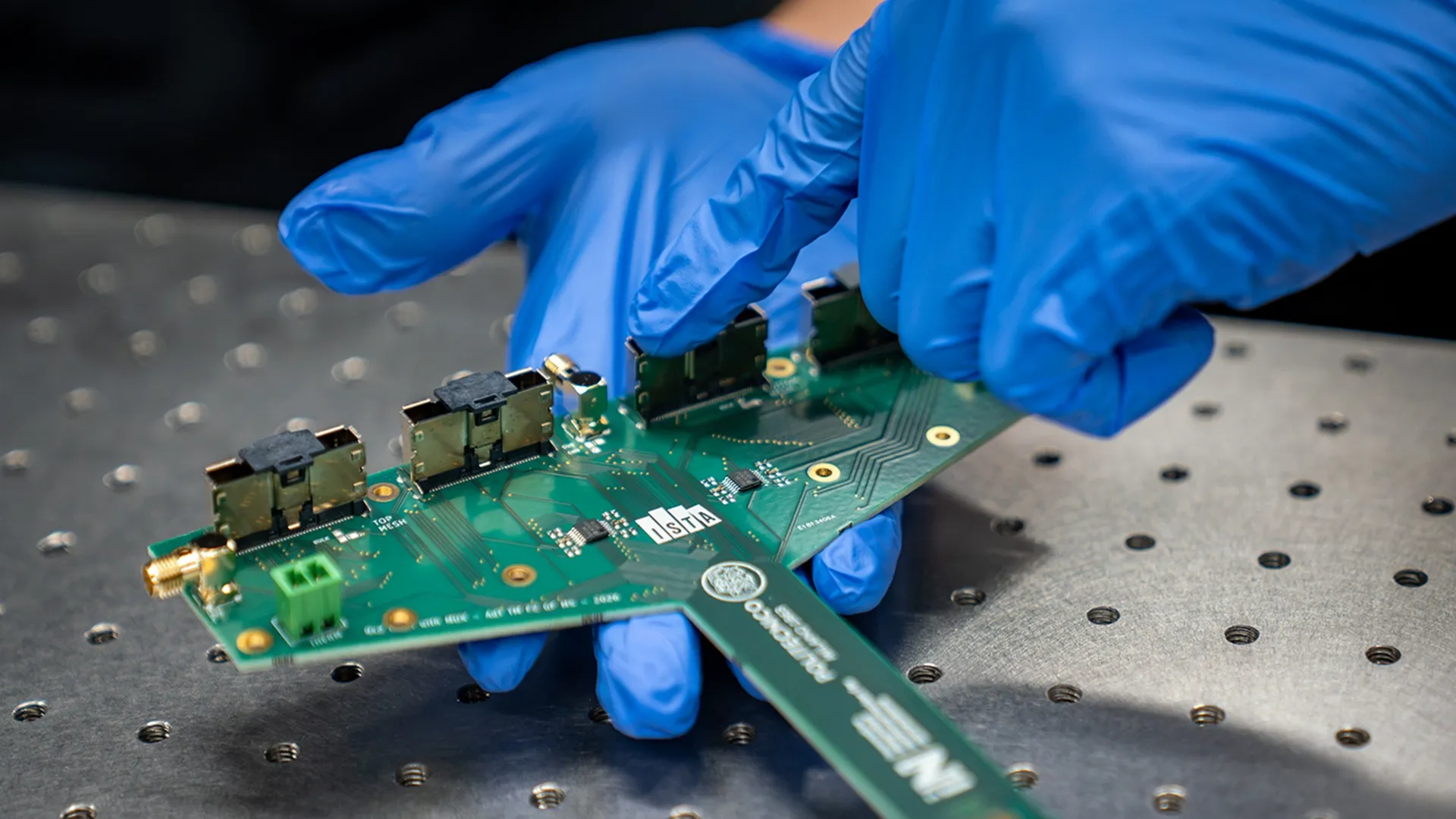
The fingernail-sized device uses a network of light-processing components and an optimisation algorithm to identify and physically separate the underlying coherence modes within a mixed optical field.
The advance, published October 30 in Nature Photonics, demonstrates a capability that researchers had proposed theoretically decades ago but had not previously achieved experimentally.
Most conventional optical systems are designed around coherent light, such as laser beams, whose waves maintain a stable relationship with one another. Ordinary light sources, by contrast, produce light with varying degrees of coherence. When multiple contributions overlap, their combined intensity can conceal information about the underlying optical field.
The new photonic light analyser could help recover some of that information by separating the field into its distinct coherence modes.
The researchers built the device using a silicon photonic circuit containing a network of interferometers. These components guide and manipulate light on a chip, much like electronic circuits process electrical signals.
The team fed two independent infrared lasers into the chip, creating a partially coherent mixture. The device used a self-configuring network and an optimisation algorithm to identify the dominant coherence modes in the incoming light.
Rather than simply separating the original laser sources, the chip diagonalises the light field’s coherency matrix. This produces orthogonal modes that are mutually incoherent, even when the original beams overlap spatially.
Source link