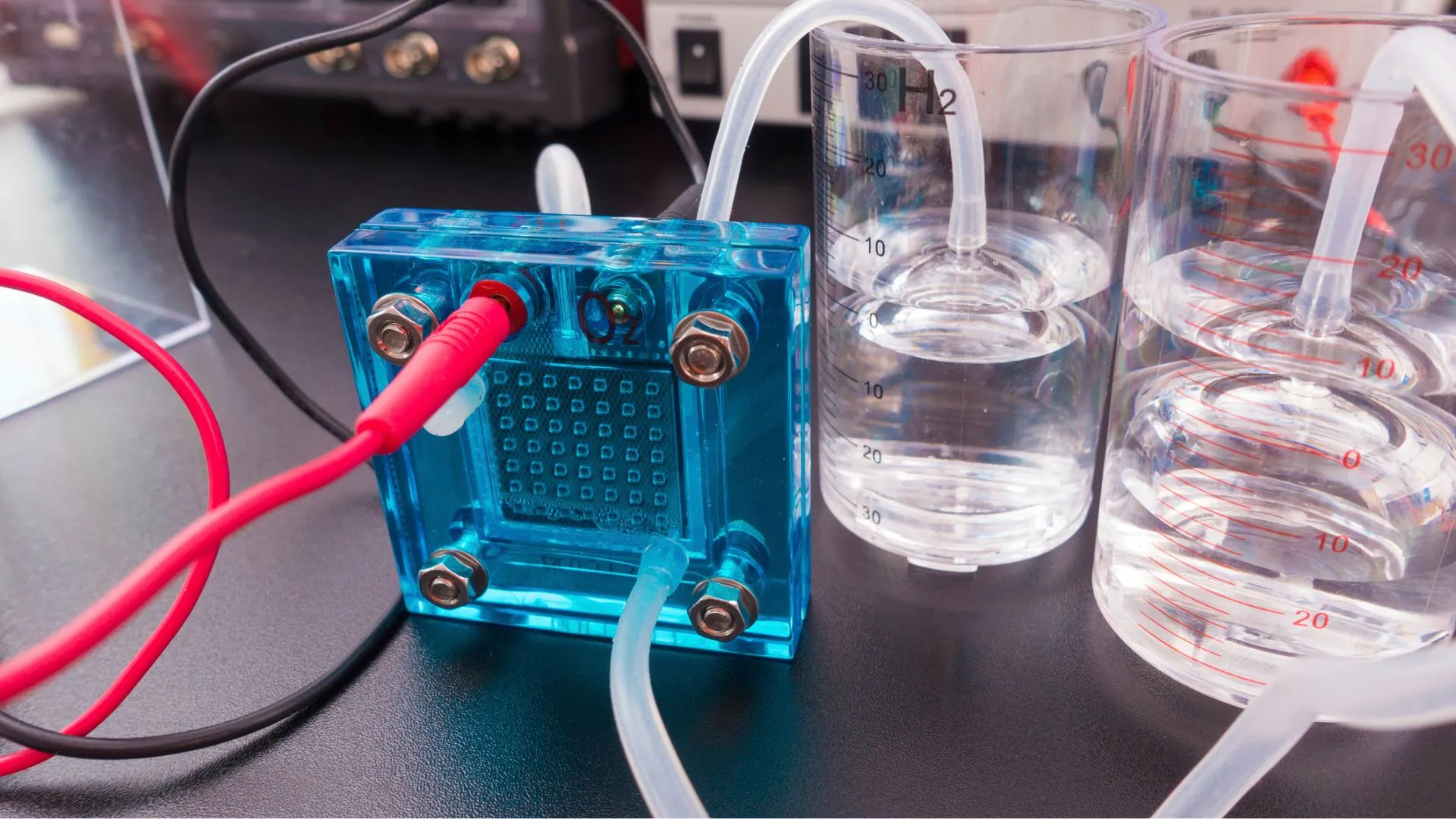
Scientists have found a way to produce clean green hydrogen using little more than sunshine and water. A team in South Korea has built a solar-powered device that splits water molecules completely on its own. By doing so, it has set a world record in efficiency for organic water-splitting devices. Plus, it runs without any external electrical supply.
Traditionally, hydrogen production has relied on natural gas, which releases carbon dioxide in the process. In this regard, solar-powered devices offer a truly zero-emission alternative. However, such devices struggled to generate enough voltage on their own and required outside electricity.
“Photoelectrochemical (PEC) water splitting offers a direct route to solar hydrogen, but organic semiconductor-based photocathodes have been limited by insufficient photovoltage and interfacial instability,” said the researchers in the study.
Now, a research team at the Ulsan National Institute of Science and Technology (UNIST) has tried to solve this bottleneck. The researchers have designed a tandem device that stacks two light-absorbing layers on top of each other.
9%. That marks the highest figure ever recorded for an organic semiconductor photocathode operating without an applied electrical bias. 23 volts. Single-layer organic materials cannot reliably reach this target. In the past, stacking two layers to boost voltage caused rapid degradation. The standard connector, a material known as PEDOT:PSS, is highly acidic and vulnerable to water, meaning it quickly damages the neighboring components. The UNIST team replaced this corrosive link with an entirely new hybrid layer. They combined molybdenum oxide with an organic molecule called 2PACz.
Source link