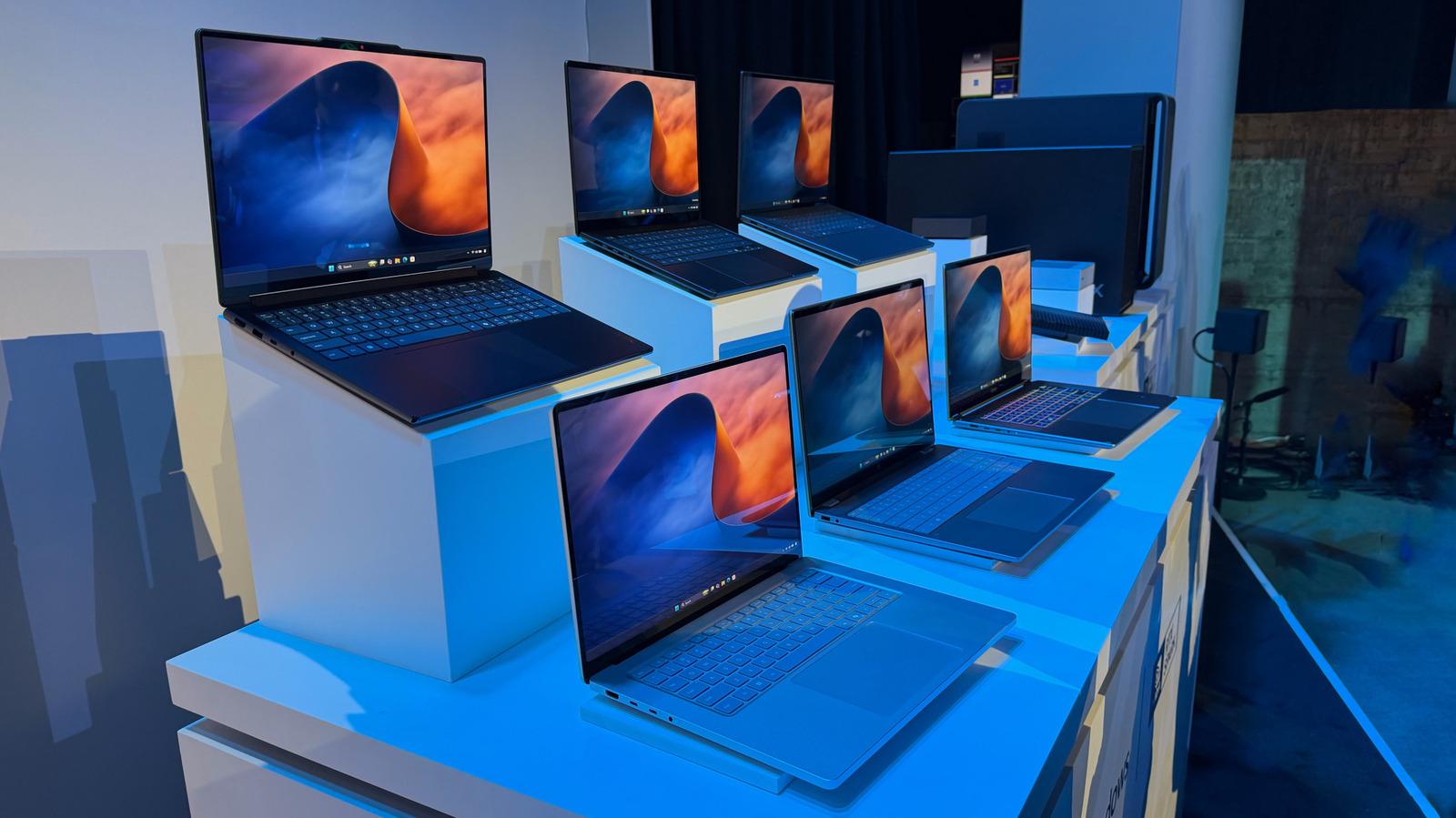
Last week, I spent two days hearing how Microsoft and NVIDIA are "reinventing the PC" with RTX Spark, the new system-on-a-chip powering the Surface Laptop Ultra and several other Windows PCs this fall. It's the first time we've seen powerful Arm CPUs joined together with NVIDIA's Blackwell GPU technology and up to 128GB of ultra-fast unified memory on a single chip. Theoretically, RTX Spark should allow for thin-yet-powerful laptops (and a few small desktops) that can handle AI tasks locally, as well as tackling content creation and gaming. So sure, I suppose NVIDIA and Microsoft have a reason to gloat a bit.
But, just like the launch of Snapdragon-powered Copilot+ systems two years ago, it was hard to ignore the elephant in the room: RTX Spark is clearly a response to Apple Silicon and the transformational changes it brought to Macs six years ago. Apple's chips are also made up of a powerful Arm CPU, capable GPU and fast unified memory, and they span the company's lineup from the tiny Mac mini to the super-powerful Mac Studio and 16-inch MacBook Pro. With RTX Spark, Windows users finally have a way to see the benefits of an efficient Arm-based SoC on high-end PCs, while the recent batch of Qualcomm chips covers the low-end and mid-range.
There weren't many surprises at Microsoft's AI launch event (featuring the Surface Laptop Ultra), or at NVIDIA's RTX Spark Editor's Day, which I attended alongside other media and analysts. Both companies want to sell us a future where we can run AI models and agents right from an RTX Spark-powered Windows laptop, something that seemed clear since the chip was announced at Computex .
Source link