Researchers at the University of Maine have developed a new method to recover high-value metals, including copper and aluminum, from contaminated powder mixtures. This breakthrough could strengthen the country’s “Made in USA” manufacturing goals.
These high-value materials are used to make precision-engineered parts, such as biomedical implants, aircraft components, battery materials, and cutting tools. Recognizing that material loss is a major challenge across critical sectors, the Maine researchers set out to address the issue.
“We’re trying to solve a significant materials-loss problem that occurs during the production of high-value components and products across critical sectors, such as aerospace, energy storage, tooling, biomedical devices and electronics,” said Bashir Khoda, lead researcher and associate professor of mechanical engineering.
He noted that the new procedure could make manufacturing more robust by helping address uncertainty in the supply chain for critical minerals, which affects cost, availability and production resilience.
In the study, researchers focused on recovering metals from powder mixtures that are often discarded because of cross-contamination during handling processes.
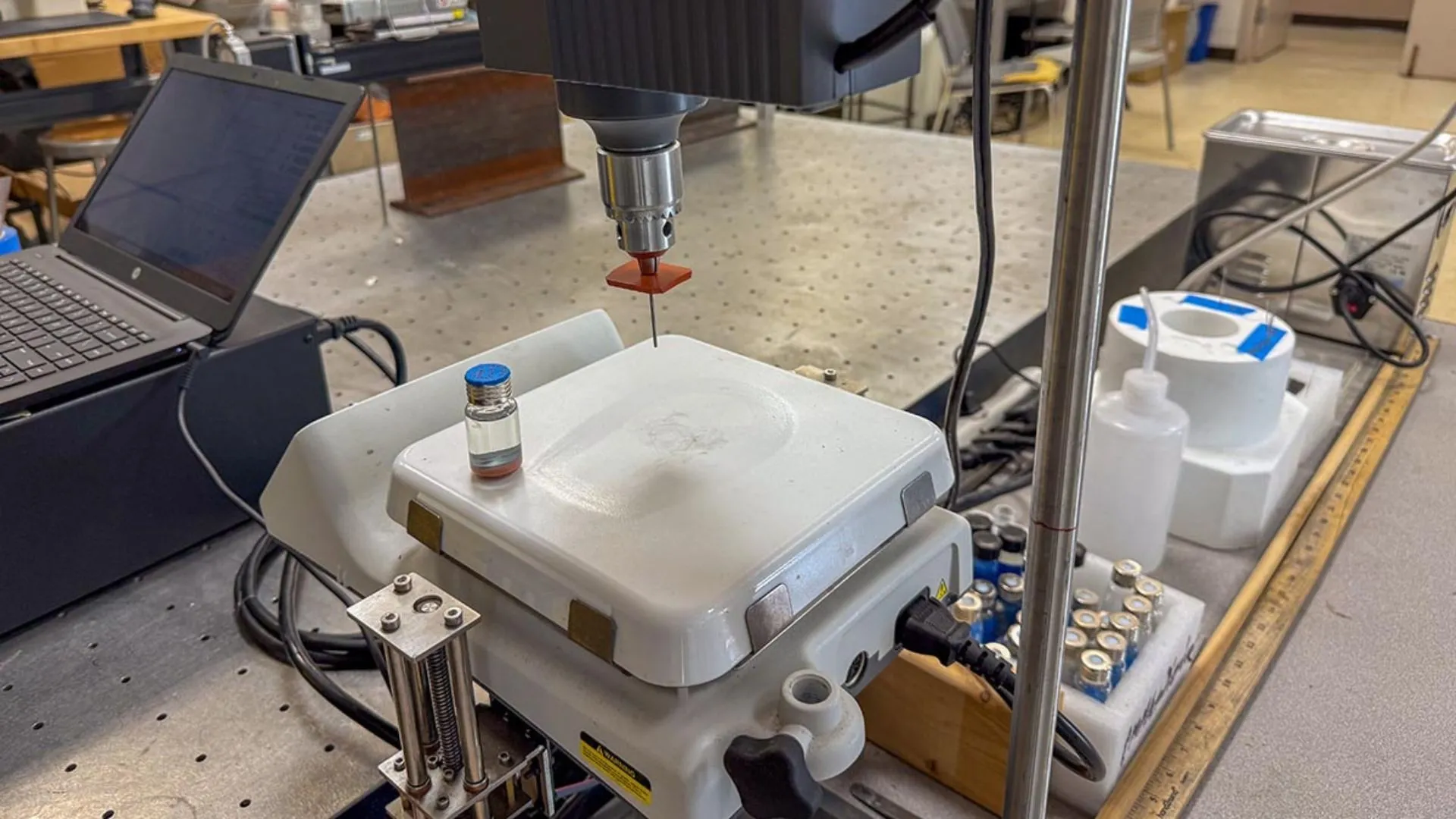
Using a new method called shear-assisted particle entrapment (SHAPE), researchers mixed two critical metals in a liquid suspension. They placed the mixture in a spinning machine at variable speeds to separate the individual particles. The team then captured the isolated particles on a thin polymer film.
During the experiments, the team tested aluminum and copper microparticles ranging from 0 to 25 micrometers in diameter. The team suspended the particle mixture in a liquid and exposed it to rotational speeds ranging from 200 to 1,500 revolutions per minute (rpm).
Source link