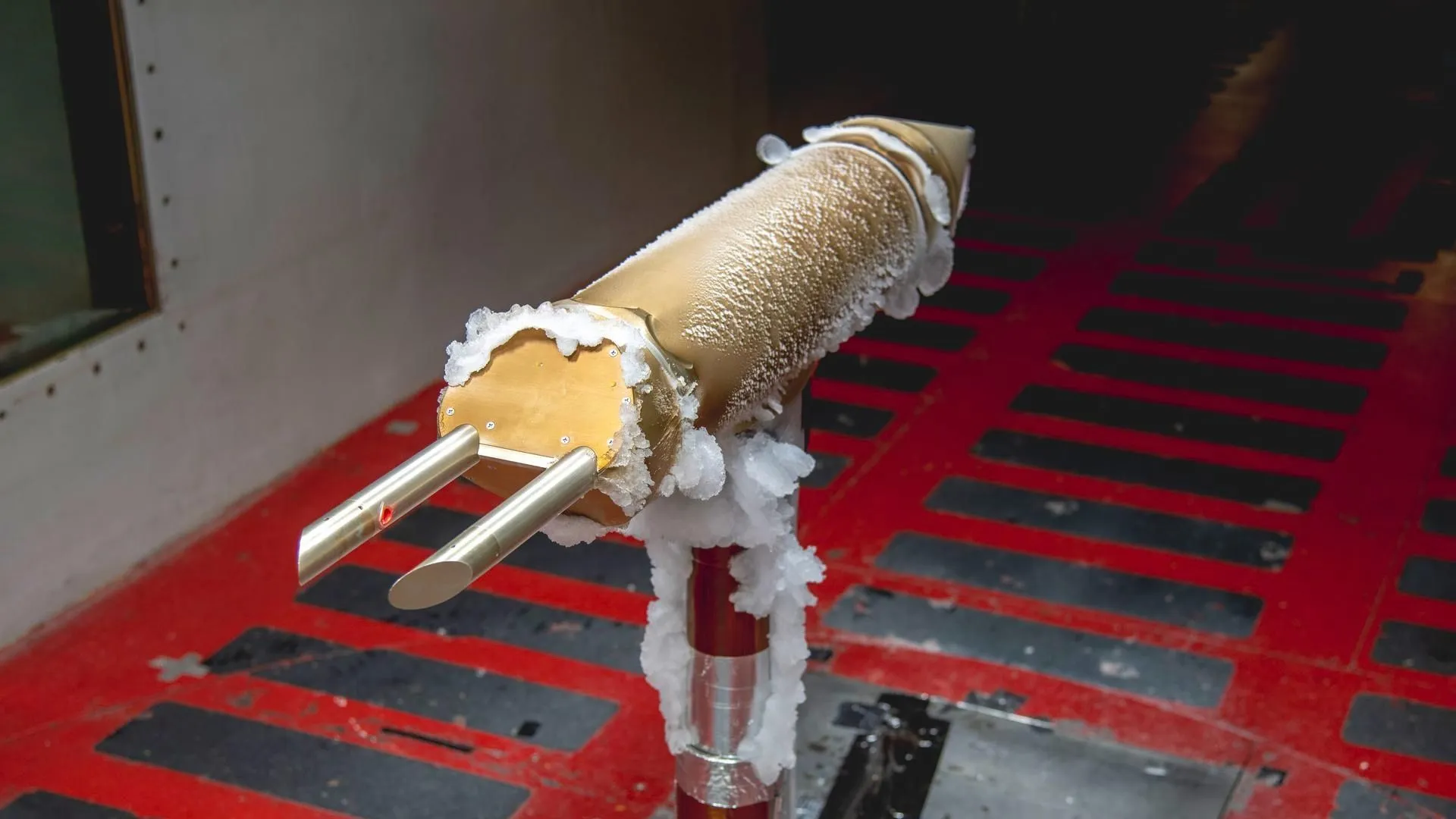
NASA’s Glenn Research Center is using its Icing Research Tunnel to study “supercooled large droplet icing.”
In aviation, tiny things can trigger massive trouble. High above the clouds, ultra-chilled liquid water that refuses to freeze poses a hidden hazard to passing aircraft. Known as supercooled large droplet icing, this rare phenomenon happens when large drops remain liquid in sub-freezing temperatures. The moment these droplets slam into a plane’s wing, they flash-freeze.
That’s why NASA researchers are upgrading their legendary Icing Research Tunnel to crack the physics behind these treacherous airborne traps. Mapping these droplets could help improve airplane design tools and protect pilots during dangerous weather conditions.
Aircraft icing is one of the major severe cold-weather hazards. In some extreme situations, it can even rapidly escalate. Even with certified ice-protection systems engaged, ice can still accumulate on unprotected surfaces. This unexpected buildup can threaten lift and flight controllability before crews recognize and respond to the danger.
Standard cloud droplets measure only 2 to 100 microns wide, allowing standard aircraft de-icing systems to manage them easily. Supercooled large droplets present a far greater threat because they can reach sizes up to 2,000 microns. Instead of simply freezing on contact, these oversized drops splash across the aircraft surface. That liquid splatter slides past protected wing edges and coats vulnerable, unprotected areas in ice.
To fix the blind spot, NASA engineers are testing advanced optical “probes” inside their specialized wind tunnel. These probes can capture drops larger than 45 microns and calculate their sizes instantly, replacing hours of grueling image processing.
Source link