Seen from Earth, the Moon looks so bright and peaceful. But on closer inspection, the lunar surface is etched with crinkles that also happen to be active faults—whose appearance and behavior may be more unexpected than scientists thought.
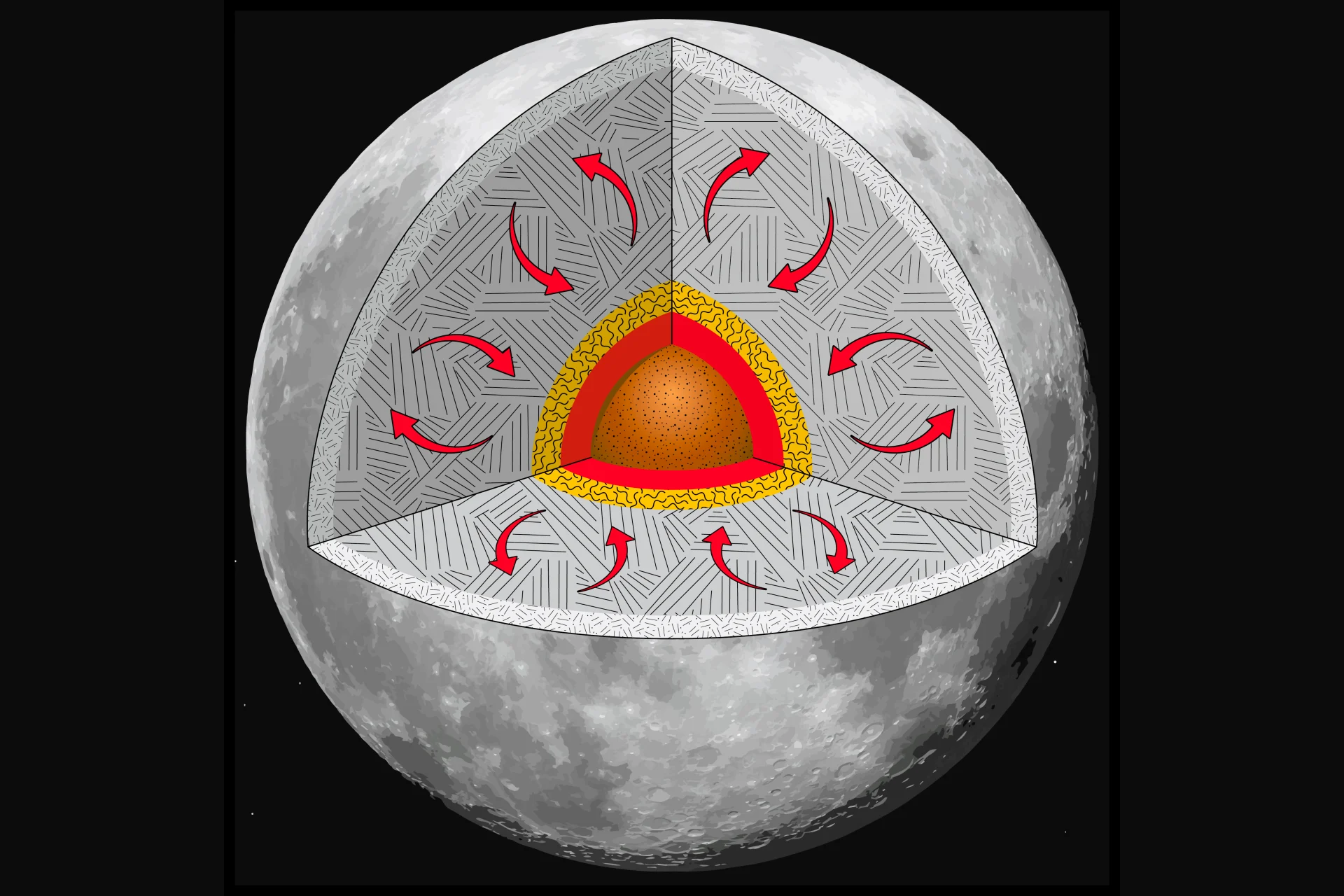
In a study published yesterday in The Planetary Science Journal, scientists report the identification of more than 10,000 young faults across the lunar surface. The team referenced images from NASA’s Lunar Reconnaissance Orbiter Camera (LROC), specifically its images of ridges and long, curvy structures called lobate scarps. These features form as a result of a celestial body’s contraction, in this case the Moon. From the analysis, the researchers concluded that the moon’s radius has shrunk by roughly 148 feet (45 meters) in the past 400 million years. 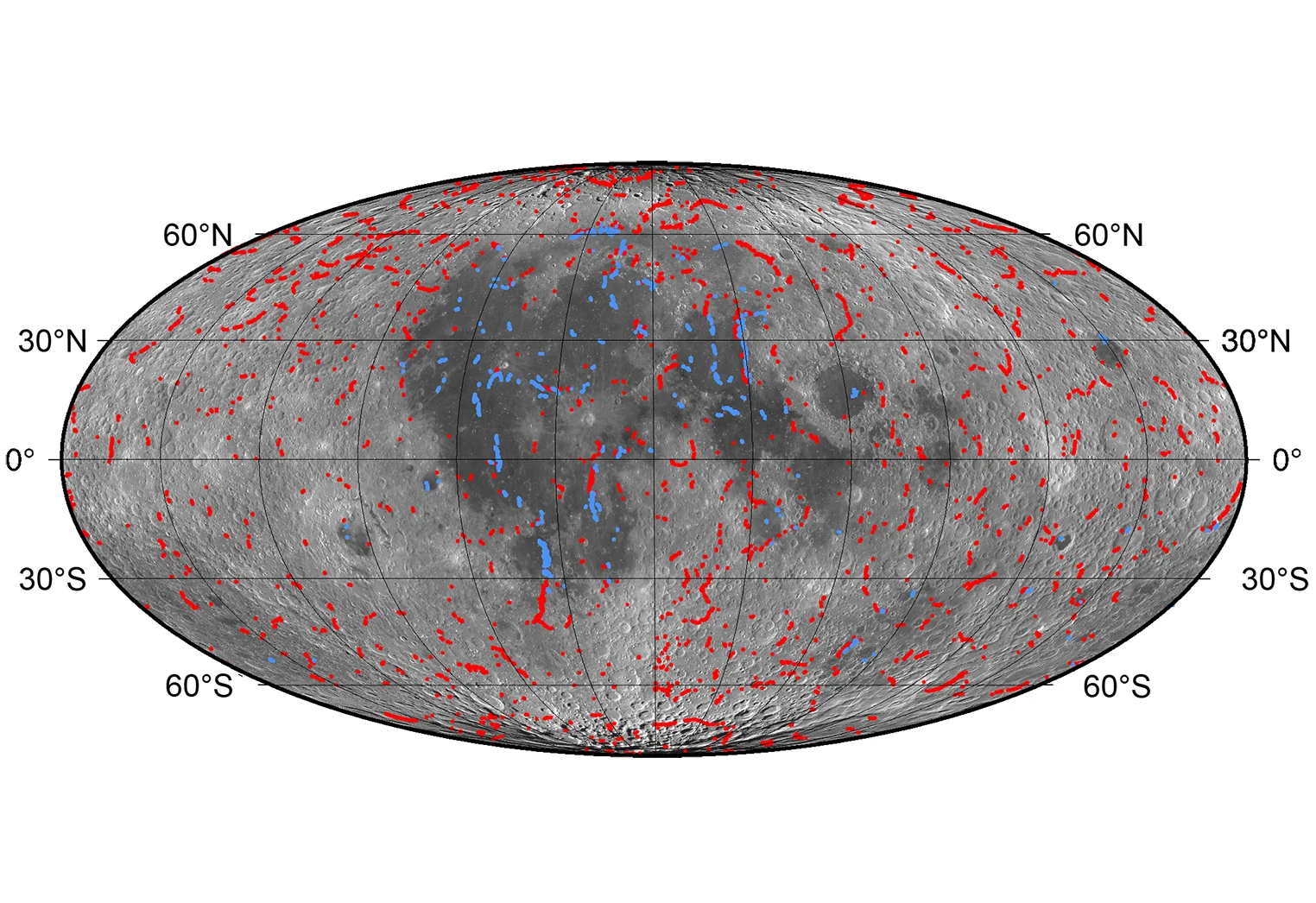
Global map of the moon centered on the nearside. The red lines show the locations of over 8,900 lobate scarps, and the blue lines show the locations of over 2,000 small mare ridges. Credit: NASA/ASU/Intuitive Machines/SmithsonianThis kind of change isn’t unique to the Moon; similar shrinkage is also happening to Mercury. But the lunar surface is like a singular, unbroken shell, which means moonquakes or new faults can pop up anytime, anywhere, according to a statement from the Smithsonian National Air and Space Museum, where study author Tom Watters serves as a senior scientist emeritus.
Scientists generally believe that the Moon had a violent birth; the details vary, but the gist is that stuff, or even one particularly large object , crashed into the Earth billions of years ago, and our planet spat hot debris back into space, which coalesced into the Moon.
Source link