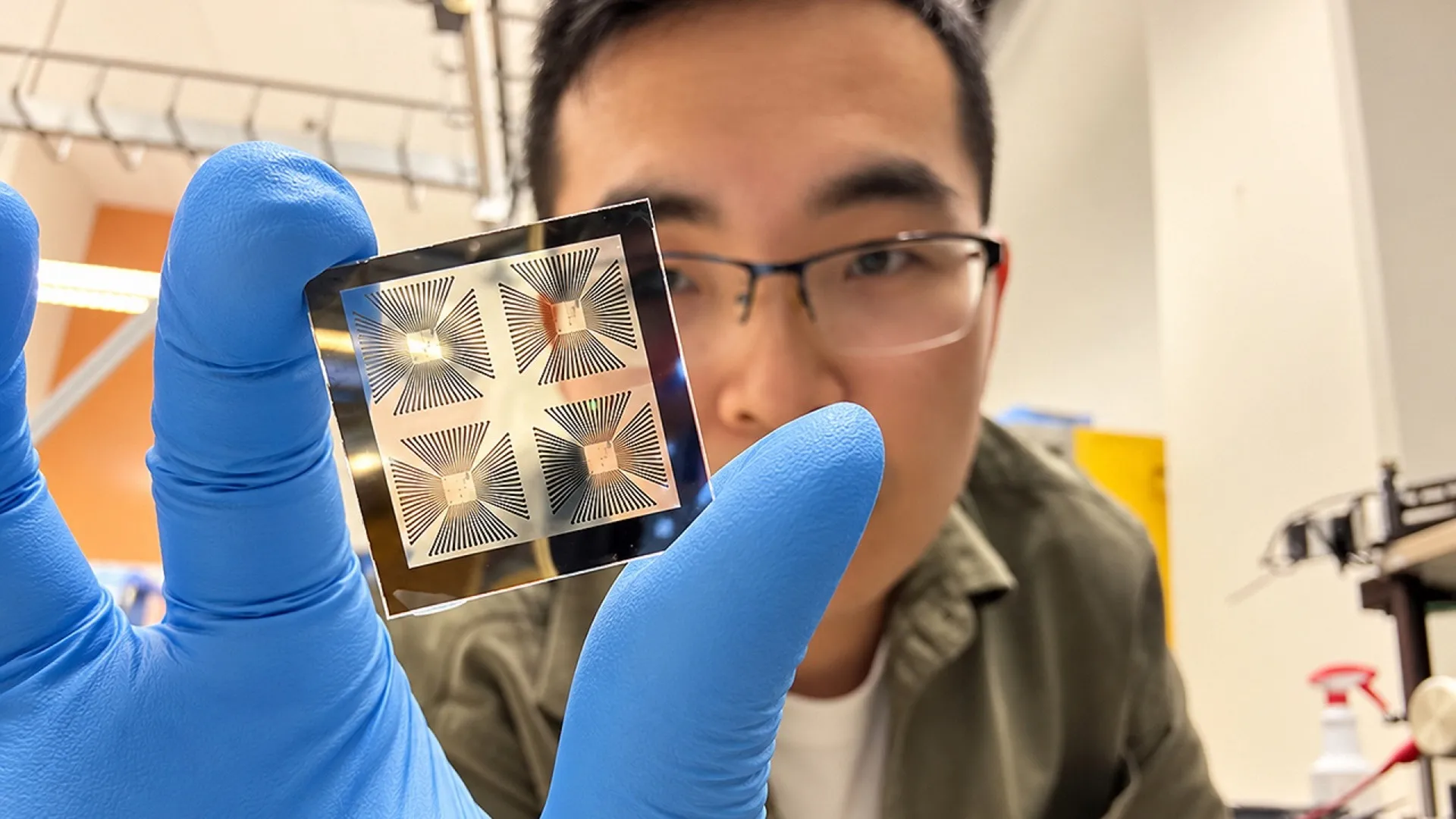
Researchers at Cornell University have developed a chip-based system that creates and controls hydrogen microbubbles on demand. By directing the bubbles to manipulate fluid flow, the technology could pave the way for applications such as targeted drug delivery.
In the experiments, they tapped the power of ultrasound, sound waves, to energize the bubbles set within a 3-millimeter area on a chip for manipulating the flow of liquids. The device produced these bubbles on a grid of electrodes that makes the electrical control possible.
The newly built system can be programmed in real time, and researchers are now able to produce individual bubbles exactly when and where they want, control their size and number, and steer them electronically. They exert control over the bubble movements, individually as well as in larger groups. This allows them to direct the flow of liquid as desired.
According to the researchers, the technology could have medical applications, as it opens the door to creating reconfigurable microfluidic devices that may enable precise drug delivery.
”With this bubble array, we can control the bubble size, numbers and position in real time, so we can program the flow direction,” said Zhiyuan Zhang, author of the new study published in Science Advances.
Zhang used a chip fabricated at the Cornell NanoScale Science and Technology Facility, consisting of nine tiny electrodes arranged in a square that generate bubbles between 10 and 100 micrometers.
To create a single hydrogen bubble, he split the water molecule by using electricity. The bubble grew larger if the voltage was applied for a longer duration.
Source link