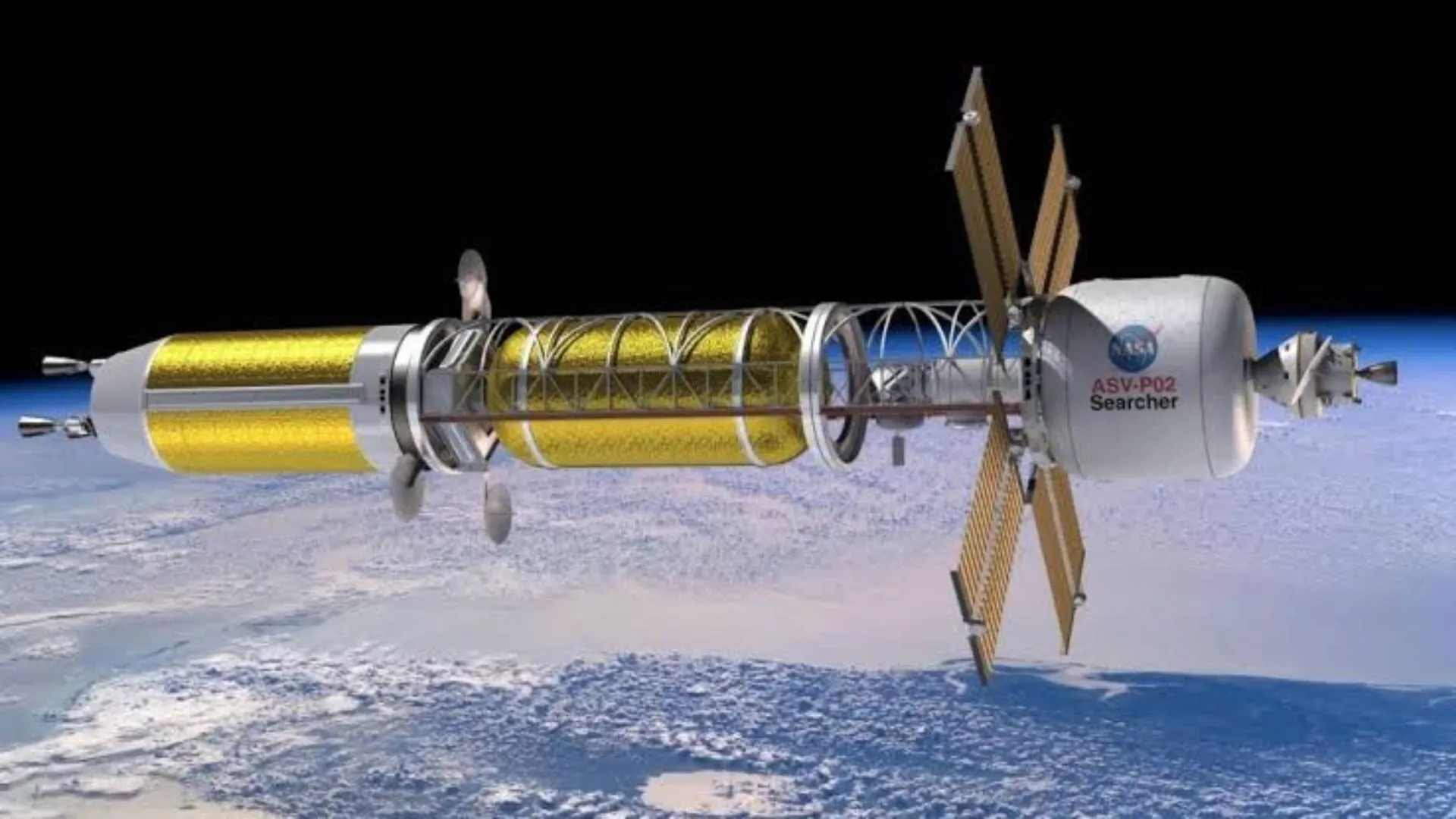
Deep-space exploration is trading chemical rockets for nuclear fission. To expand human presence beyond Earth, NASA and the U.S. Department of Energy (DOE) have signed a comprehensive agreement to build, test, and deploy next-generation space nuclear reactors.
The strategic pact establishes an end-to-end framework covering nuclear fuel production, advanced research, launch integration, and operational safety.
NASA Administrator Jared Isaacman and U.S. Energy Secretary Chris Wright signed the deal at the Science: A Golden Age Summit in Washington, formalizing a shared effort to secure American leadership in deep-space exploration.
“We are entering the ‘Nuclear NASA-era,’ which represents a major transformation for space exploration,” said NASA Administrator Jared Isaacman. “Nuclear power will allow us to go farther, operate longer, and field more capable spacecraft and instruments than ever before. The work we’re doing today is laying the foundation for the fission-powered spacecraft of tomorrow and opening an entirely new frontier for exploration and discovery.”
NASA and the U.S. Department of Energy are advancing a suite of nuclear technologies designed to support long-term space exploration. The 2028 Space Reactor-1 Freedom mission will test operational fission capabilities in deep space along a trajectory toward Mars. It is expected to establish a foundation for the 2030 Lunar Reactor-1 surface power system designed to sustain Moon bases through periods of complete darkness.
Radioisotope power systems are also expanding NASA’s reach, with the 2028 Dragonfly rotorcraft using a radioisotope generator and 24 heater units to study habitability on Saturn’s moon Titan. Similar radioisotope heater units will protect sensitive instruments aboard the European Space Agency’s Rosalind Franklin rover as it searches for evidence of life in the freezing Martian environment.
Source link