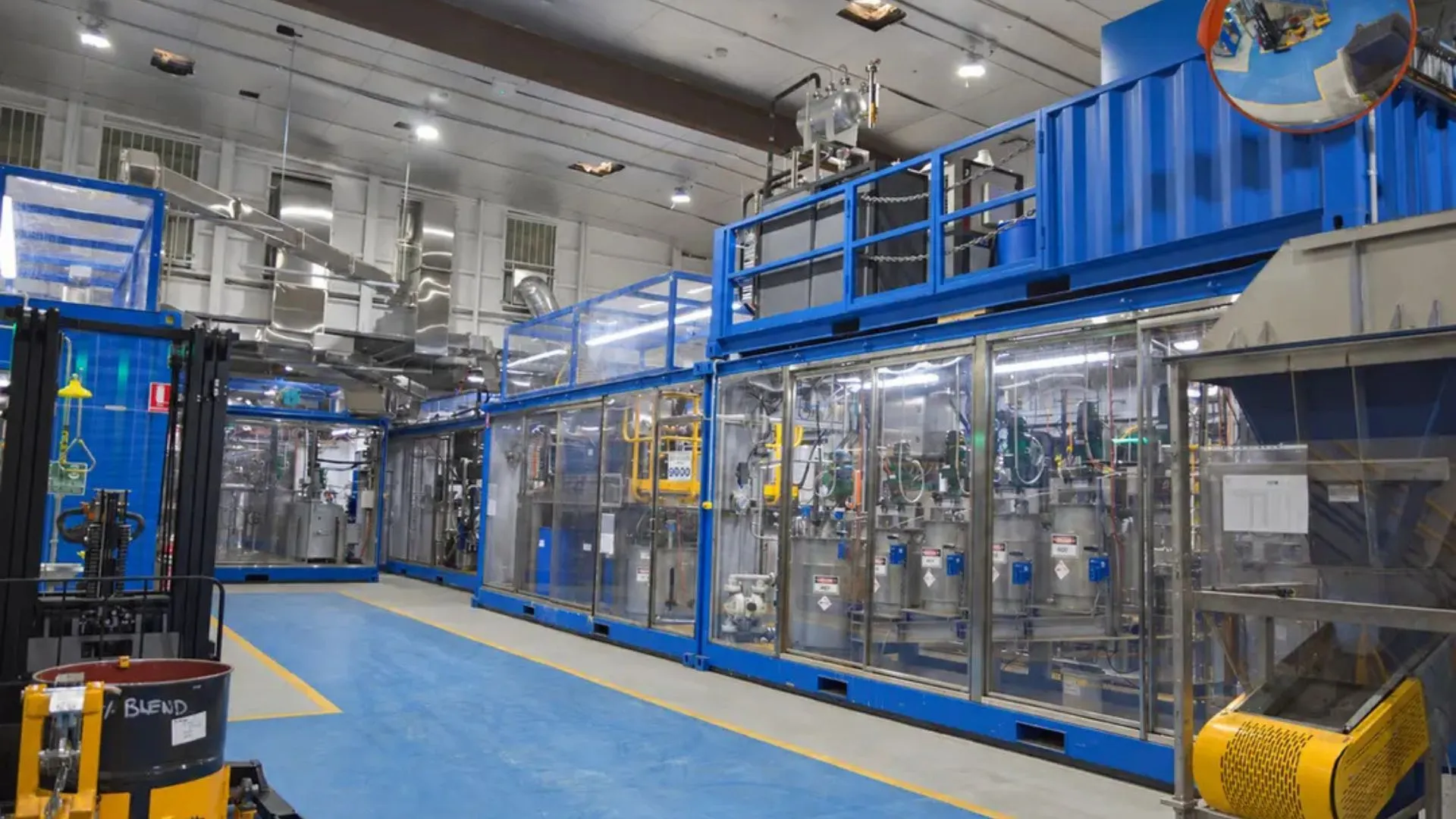
Australian mining giant Fortescue has processed and sold more than 40 tonnes of commercial-grade copper concentrate. It was purified by the firm’s proprietary “world-first arsenic removal technology”: the Toowong Process.
The patented Toowong Process separates toxic arsenic from copper concentrate using a low-temperature, low-pressure hydrometallurgical method. This technique offers a chemical alternative to existing high-heat processing.
Without proper treatment, high-arsenic copper concentrate faces heavy smelter discounts or becomes unsellable.
Notably, the method was tested across seven campaigns and over 3,000 operational hours. It reduced raw feedstock arsenic levels from up to 7.0 percent down to under 0.25 percent, well below commercial penalty limits. At the same time, it maintains a copper recovery rate of over 99.9 percent.
The global copper industry has long struggled with toxic arsenic embedded in rich mineral reserves. Smelters reject or penalize this dangerous contaminant, forcing miners to destroy it using energy-intensive, high-emission furnaces.
Various things depend on copper. Electric vehicles, wind turbines, massive data centers, and expanding power grids all run on the red metal. Global copper demand is projected to skyrocket by over 50 percent by 2050, topping 50 million tonnes annually.
But easily accessible, clean copper deposits are running out fast. To keep the green transition moving, miners are turning to complex ores laced with high concentrations of toxic impurities.
Miners usually use roasting to strip out arsenic, cooking ore at extreme temperatures through an energy-intensive process. This method produces heavy carbon emissions along with dangerous, water-soluble airborne arsenic dust. As a result, facilities have to build costly containment infrastructure to safely manage these hazardous byproducts.
Source link