AMD's Zen 6 processors are out! Well, the EPYC 9006 family of server CPUs is out, anyway. These aren't chips that mere mortals like you and I can reasonably acquire, so there aren't really many third-party benchmarks out there yet, but somebody ran GeekBench 7 on one, and you know what that means: time for some wild speculation, such as the supposed 15% single-threaded IPC increase you might have seen reported this week. However, it isn't quite that clear yet. Well-known enthusiast and occasional leaker HXL (@9550pro) spotted the EPYC 9996 result, and now Russian enthusiast "three twenty six" (@326powah) has done a direct comparison with his Ryzen 7 9700X at the same clock.
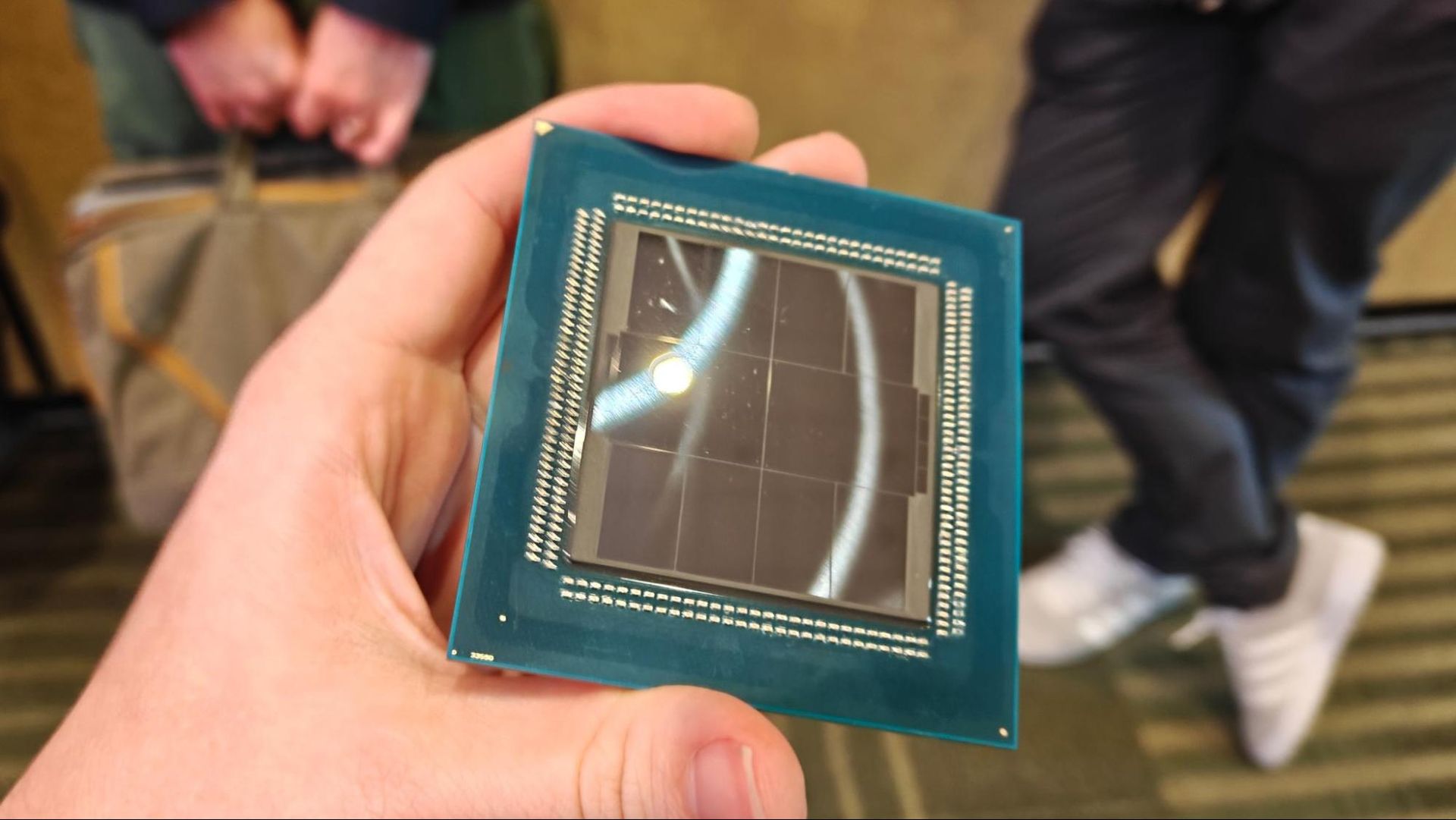
Let's lay out the details: the AMD EPYC 9996 is an absolutely gargantuan server processor with 256 "Zen 6c" cores spread across eight "Monarch" CCDs with 32 cores apiece. Each CCD has 128MB of L3 cache, which is reportedly split into two 64MB domains for each 16-core CCX. This gives us 4 megabytes of L3 cache per CPU core, which happens to be the exact ratio that AMD has maintained since Zen 2. Meanwhile, 326's Ryzen 7 9700X is a desktop CPU with eight Zen 5 CPU cores and 32MB of L3 cache, giving it the same cache-per-core ratio yet an overall smaller local cache for the CPU cores, to say nothing of the 1GB of L3 cache on the full EPYC 9996.
Yes, 1GB of L3 cache. 64 TB/second of memory bandwidth. However, the specific benchmarks we're comparing here are single-threaded benchmarks, and as a result, they aren't likely to be bottlenecked by memory bandwidth on either machine; even 326's relatively pedestrian DDR5 memory at 6000 MT/s CL34 is more than sufficient for a single-threaded, lightly vectorized workload like Geekbench 7.
Source link