This past March, McDonald’s finally gave KPop Demon Hunters the kids’-meal treatment it was practically begging for. The movie, an animated musical about a K-pop girl group, Huntr/X, and a charming demonic boy band, the Saja Boys, had become the most-watched film in Netflix history, captivating even skeptical parents who found themselves watching it dozens of times.
Instead of a cheeseburger and apple slices, fans could choose the Saja Boys Breakfast Meal, with a spicy McMuffin, hash browns, and soda, or the Huntr/X Meal, with McNuggets, Ramyeon McShaker Fries, and purple Demon Sauce. Their selection corresponded to a vote in McDonald’s “Battle for the Fans.” The prize inside was a pack of collectible photocards and a QR code that would later unlock an exclusive video revealing the winner. (Huntr/X, thankfully.)
Analysts estimated that KPop Demon Hunters Meals could bring in $100 million in their first few days. Some fans, though, were confused. “No KPDH Happy Meal toys???” one asked online. But McDonald’s had put it right there in the announcement: These were “dueling adult meals”—a promotion for grownups. (Honestly, the spicy McMuffin or the QR code should’ve been the tell.)
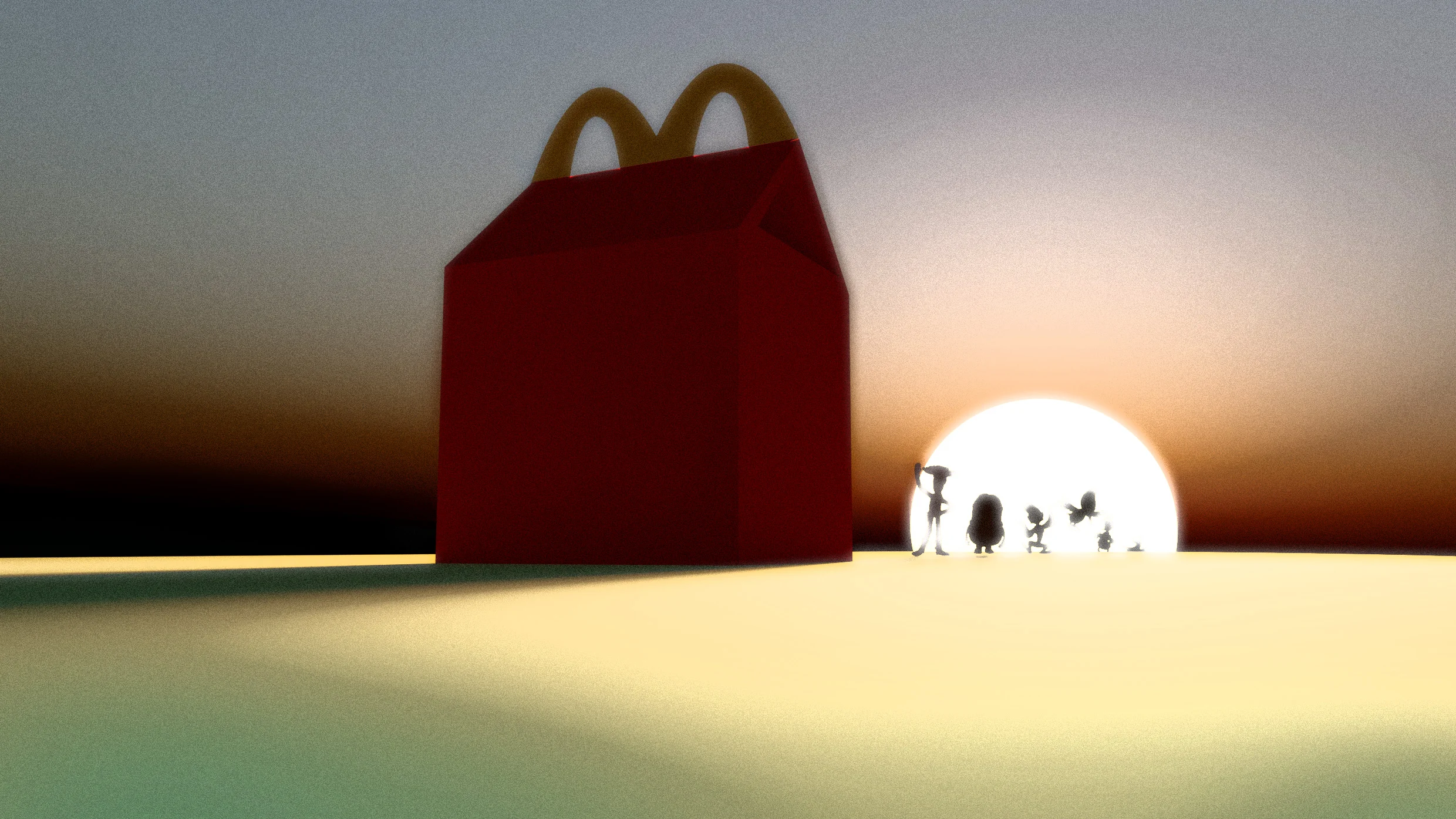
In the nearly 50 years since the burger giant debuted its first Happy Meals (circus wagon-themed boxes featuring McDoodler stencils, McWrist wallets, and McDonaldland character erasers), the kids’-meal offering has expanded through fast food and beyond, with the prizes inside going from physical trinkets to augmented reality portals and hologram cards. Along the way, the value proposition has evolved too.
Source link