Apple has long opposed releasing a touchscreen MacBook, with Steve Jobs himself calling touchscreen laptops “ergonomically terrible” and saying that “touch surfaces don’t want to be vertical.” As recently as 2021, current Apple CEO John Ternus stated that “the Mac is totally optimized for indirect input” and that Apple hadn’t “felt a reason to change that."
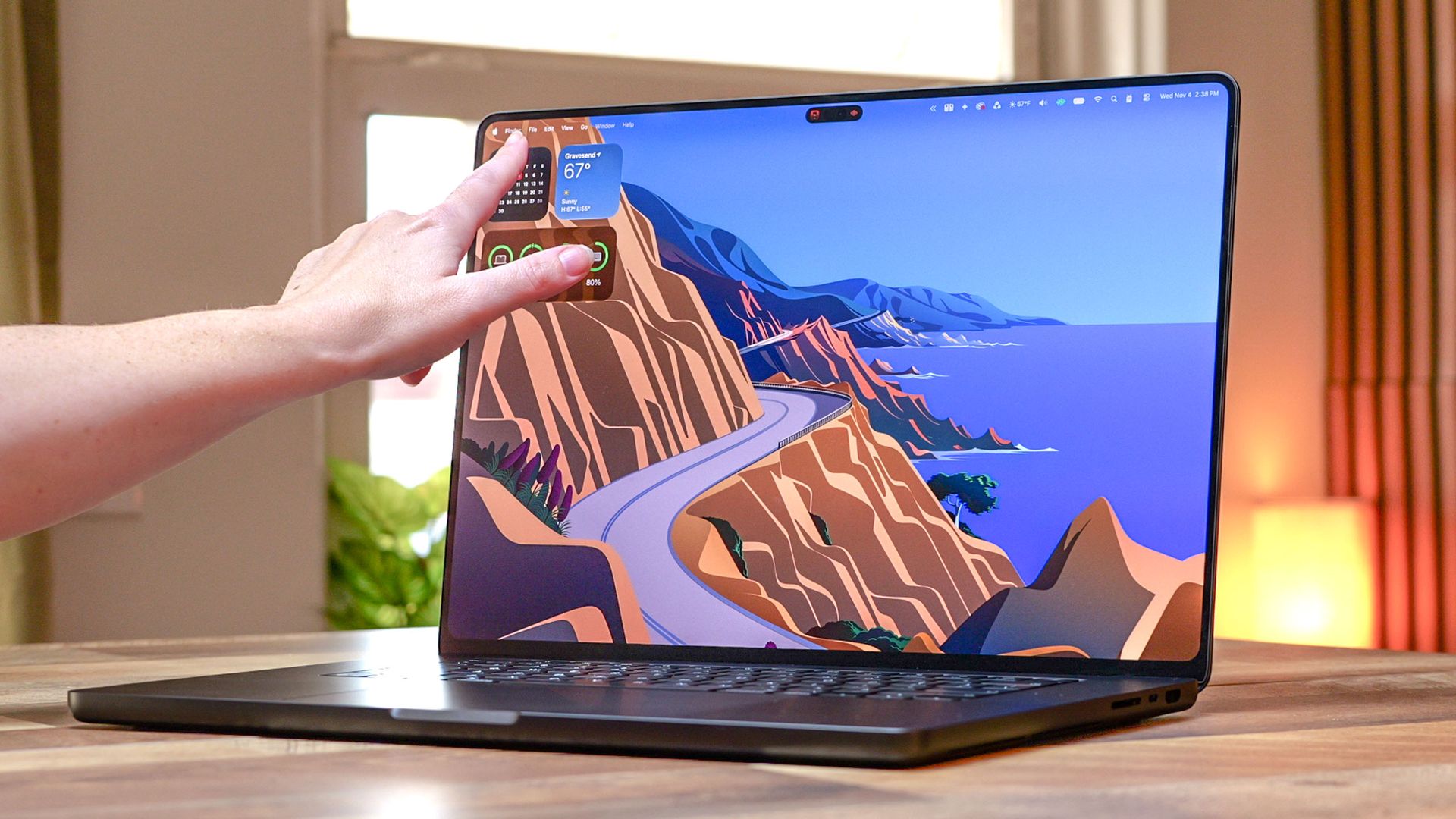
Now, in late 2026, Apple has reversed course by releasing the MacBook Pro with PROLED XDR Display — its very first touchscreen MacBook.
Touchscreen laptops have been around for almost two decades, so Apple is decidedly late to the party here. That said, the wait has arguably been worth it for touchscreen lovers, as the feature works as well as Apple has advertised. As someone who has tested dozens of touchscreen laptops, I can tell you that the MacBook Pro with PROLED XDR Display is easily among the best.
In my MacBook Pro with PROLED XDR Display review, I discussed the laptop’s touch functionality. However, I want to go into more detail here, as the touchscreen experience has been more useful than I expected. I won’t say it’s converted me into a touchscreen laptop enthusiast, but it has certainly made a strong case for a feature I’ve typically dismissed in the laptops I’ve reviewed.
Below, I’ll detail how the MacBook Pro OLED’s touchscreen works and what it’s like to use for everyday tasks. I’ll also cover some of the drawbacks, as this touch display isn’t without faults. With that said, let’s dive in.
Source link