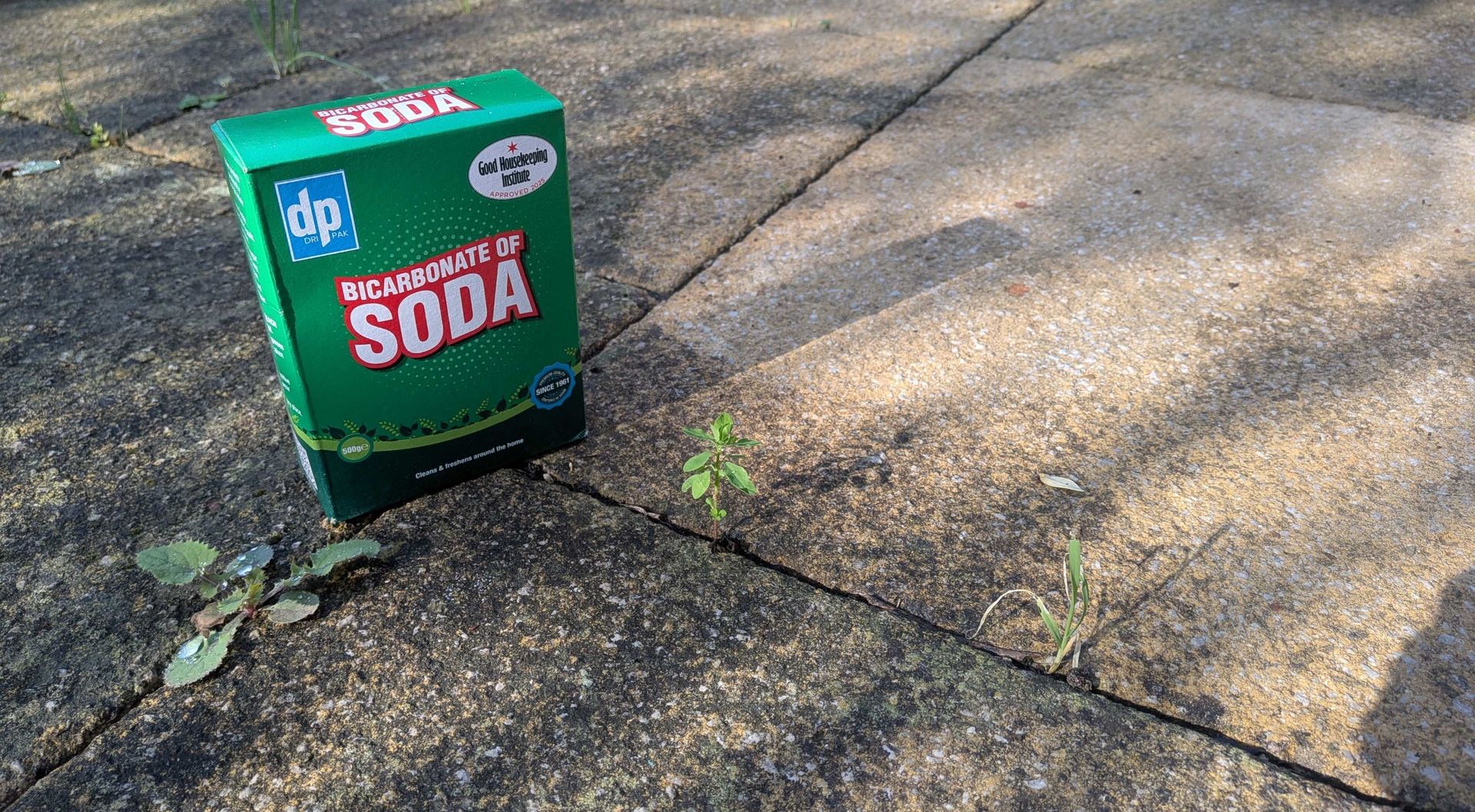
No matter what time of year it is, there seems to be one gardening chore that feels like a never-ending challenge — weeds. This is especially the case in damp fall, when I’m finding my gravel paths and patio pavers littered with unsightly weeds.
And while larger, visible weeds with clear taproots are easy enough to pull out, pesky weeds stuck deep in narrow cracks and crevices are super tricky and time-consuming to remove.
Which is why I was thrilled to discover a kitchen staple that is the ultimate trick for clearing weeds between my pavers.
Baking soda has been a staple in my cleaning routine for years, and there are so many uses for this ingredient — but it can also be used as a homemade, cost-effective weed killer. This is due to its elevated sodium levels, which draw moisture out of plant cells, drying out young weeds. But how effective is this?
I asked gardening experts why baking soda actually kills weeds, and exactly how long it takes.
Similar to commercial weed killers, baking soda acts as a natural bioherbicide that kills weeds on direct contact with foliage. But how fast does it act?
"Visible damage may occur within about 24–48 hours, although results can vary depending on the size and type of weed, weather conditions, and how thoroughly the baking soda contacts the foliage," states Kathleen Hallal, VP of Landcare and Municipalities at FireHawk Bioherbicide.
"Baking soda can be an effective household option for treating small weeds because its high sodium content can draw moisture from plant tissue and cause the weed to dry out."
Source link