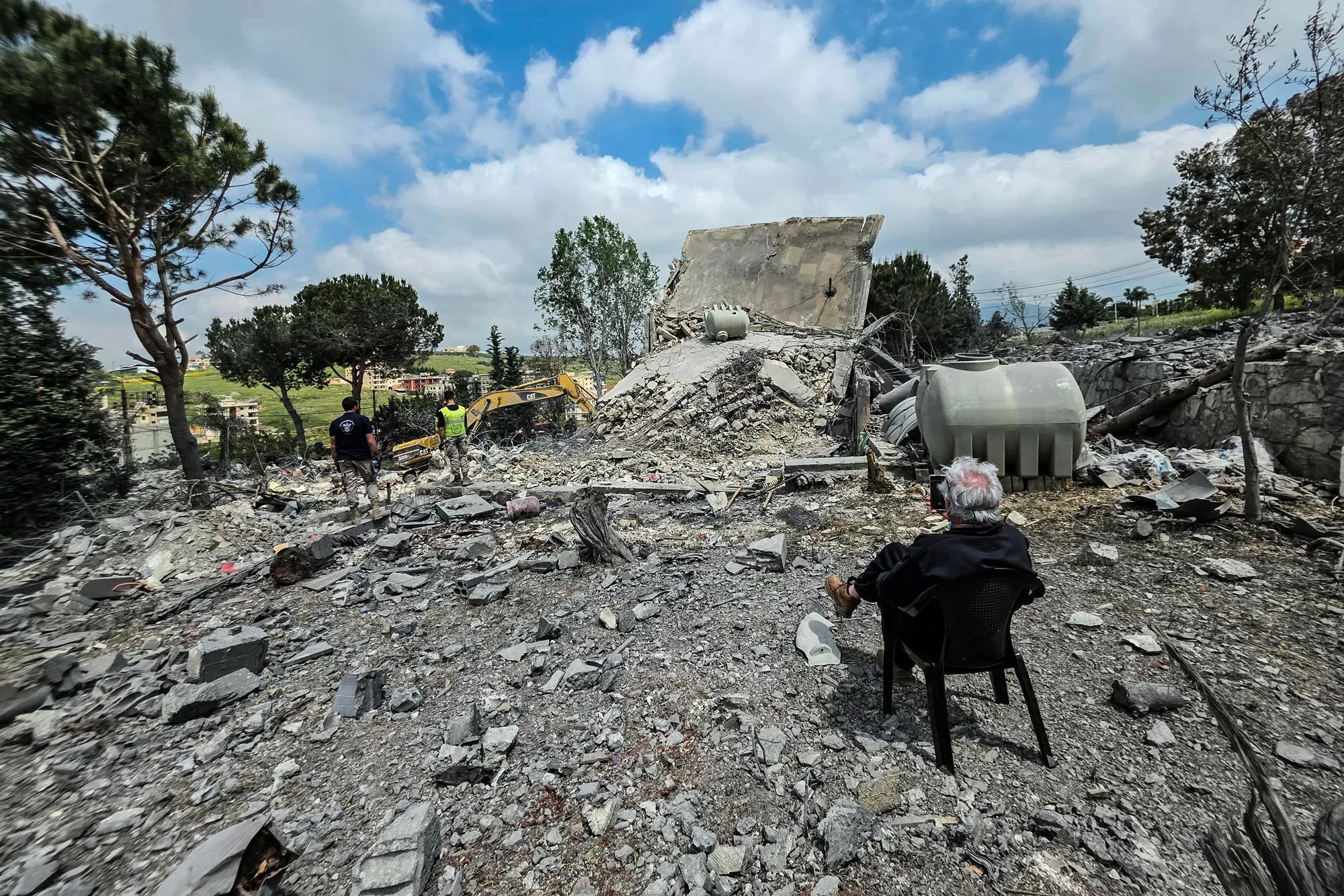
They had bulldozers and excavators, the machines needed to clear the rubble, but they were afraid to use them. Instead, locals began clearing the debris by hand after Israeli strikes hit southern Lebanon throughout 2025. These weren’t just people’s homes; they were also businesses that had construction equipment—the kind that could have made recovering far less arduous—but the machines’ owners feared that bringing them out would invite another attack.
“They felt that just the presence of this heavy machinery that was typically used in reconstruction was a threat,” said Ramzi Kaiss, a Human Rights Watch (HRW) researcher in Lebanon.
Reconstruction depends on more than replacing buildings that have been lost. Roadways need to be cleared, water networks must be restored, and there need to be factories that can supply construction materials and equipment. However, reports from HRW, aid workers, and UN peacekeepers have documented how Israeli attacks have been damaging those systems and how the fear of further strikes has obstructed their repair.
“We did see incidents in which construction equipment was unfortunately targeted, which made it difficult,” said Kandice Ardiel, a spokesperson for the United Nations Interim Force in Lebanon (UNIFIL). “Not just for these repairs and the removal of rubble to happen, but again, for people to return to their lives.”
Many residents did return after the 2024 fighting, “and they did rebuild,” said Ardiel. But afterward, “we’ve seen things just destroyed again.”
In a December 2025 investigation , HRW examined four Israeli attacks on heavy-machinery showrooms and maintenance facilities as well as a factory that produced cement and asphalt.
Source link