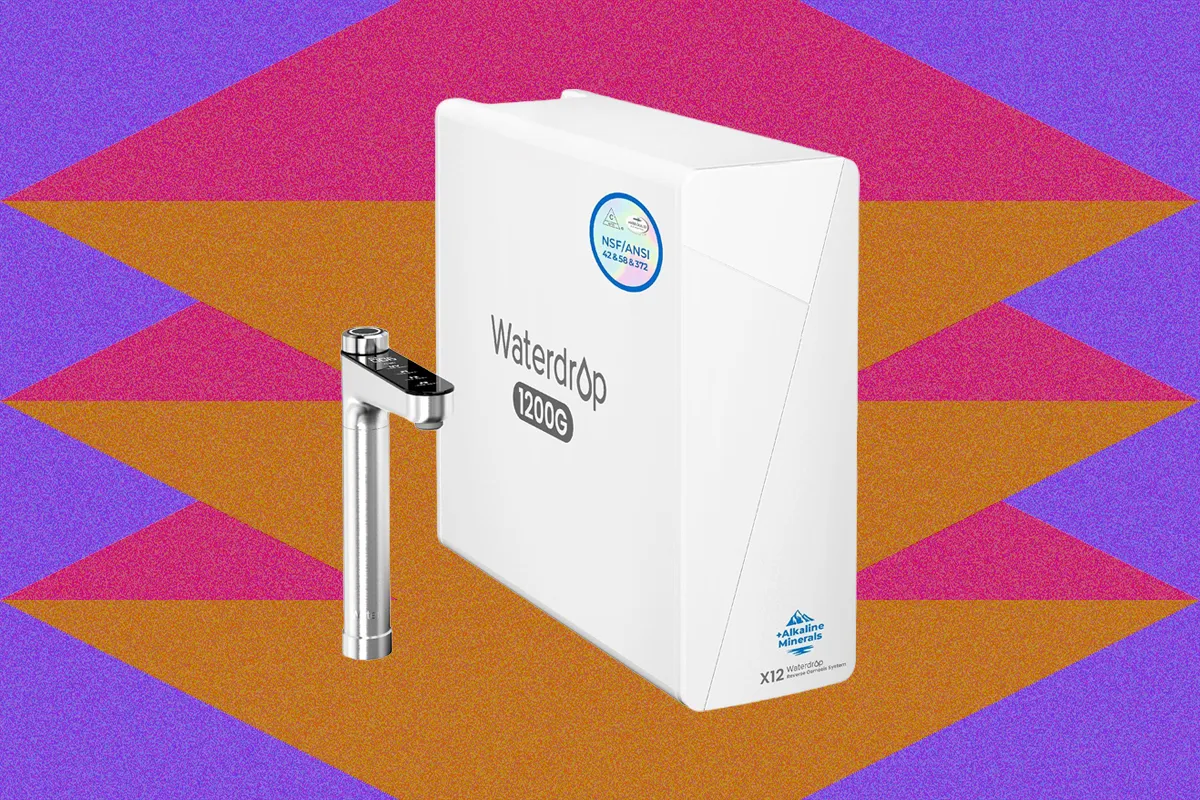
That funny taste in your tap water may be a harmless nuisance—or it may be cause for serious concern. Either way, you can do something about it by installing a reverse osmosis (RO) water filtration system in your home.
Stand-alone RO systems and pitchers sit on your countertop and generally require manual refilling from the tap. You’ll save space and avoid the hassle of constantly refilling the unit by installing an under-sink or under-counter model that connects directly to your plumbing lines. Either way, RO systems aren’t cheap. But for some homeowners, they may be an invaluable investment.
Osmosis is the movement of molecules—usually water—through a semipermeable membrane that blocks larger particles like salts and sugars from passing through. After osmosis, the concentration of particles on both sides of the membrane ends up in equilibrium. It’s how plants get water from the soil, and it’s how your kidneys filter junk out of your blood.
While osmosis is a spontaneous phenomenon that happens naturally, reverse osmosis requires pressure to force water through a membrane in the other direction, effectively removing all of those compounds from the water to render it pure. It’s how salt is removed from seawater to make it drinkable, and it’s one way tap water can be purified in your home.
RO differs considerably from traditional filtration systems, which rely on physical barriers, typically activated carbon, to manually capture particles that pass through. Eventually, these filters become saturated with sediments and other matter and have to be replaced.
Source link