India already has its first space-tech unicorn. Skyroot Aerospace crossed the $1 billion valuation mark in May 2026 and, two months later, its Vikram-1 became the first privately developed Indian rocket to reach orbit. Those milestones confirm that India's private space ecosystem has moved well beyond aspiration.
The more interesting question is what happens next and whether we are looking in the right places for it.
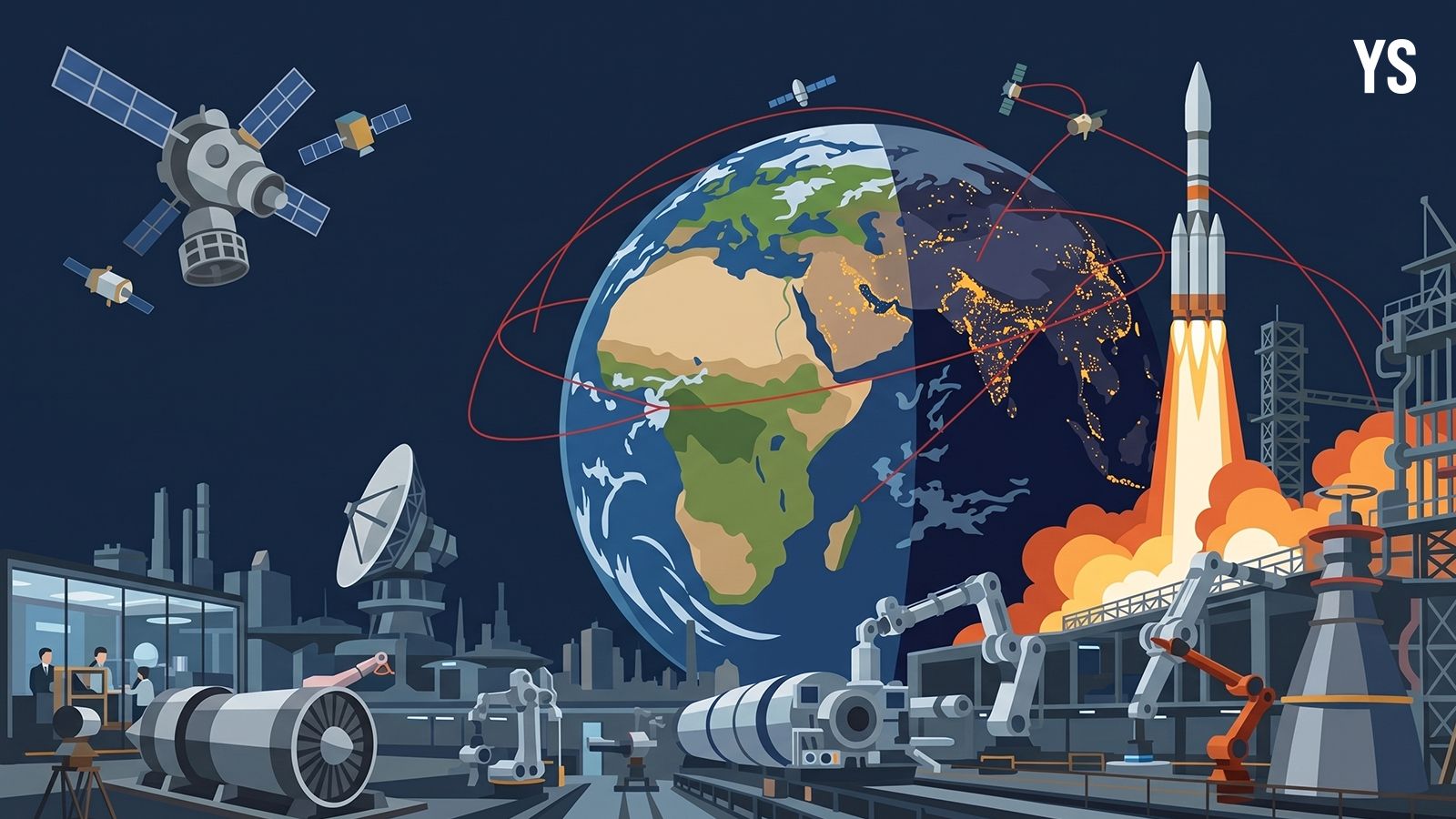
India's opportunity in space is not limited to producing another rocket company. It lies in building an entire space economy: the infrastructure, components, manufacturing systems, robotics, software and services that will make space progressively more accessible, industrial and ultimately habitable.
That economy will not appear in one leap. It will be built in layers.
The first layer is cheaper, more repeatable access to orbit. Reusable launch systems and a growing private launch market can gradually turn space travel from an exceptional event into an economic activity. Once access becomes more reliable, the next layer is orbital infrastructure consisting of more capable stations, platforms, communications networks and servicing systems.
Infrastructure then creates the conditions for industry. Manufacturing and fuelling can move into orbit. The vacuum and microgravity environment may enable forms of precision manufacturing that are difficult to reproduce on Earth, while in-space resources could eventually reduce the need to lift every material from the ground. Components, fuel and equipment will have to move through a supply chain that extends beyond Earth.
Robots will be the first workforce in that economy. They will construct, maintain and operate facilities in conditions where a permanent human presence is still impractical.
Source link