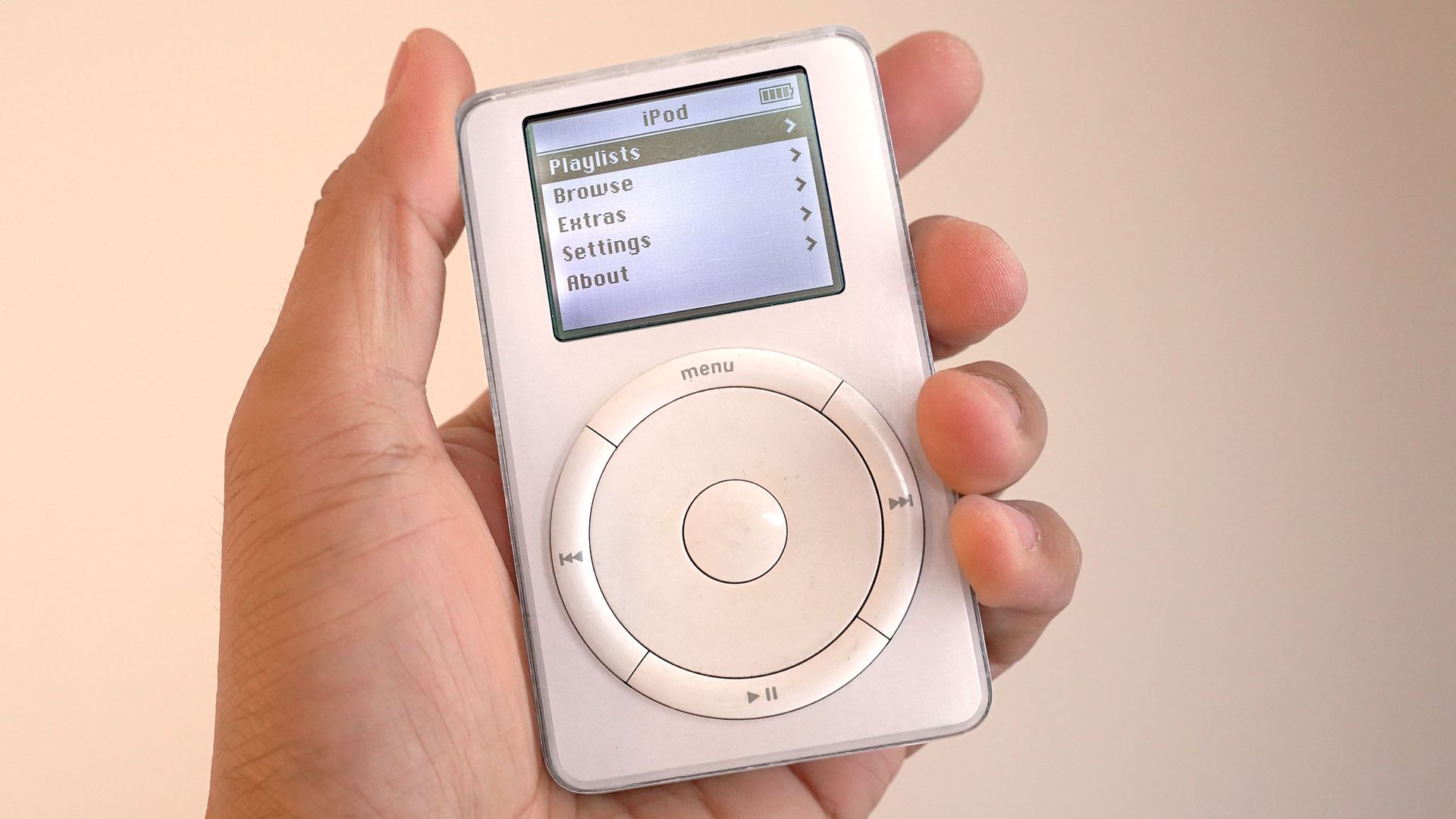
To mark the 25th anniversary of Steve Jobs unveiling the first iPod on October 23, 2001, Apple slipped a brilliant, nostalgic easter egg onto its website.
Instead of serving a generic "Page Not Found" screen, the web version of Apple Music now hosts a fully interactive, functional replica of the original 2001 monochrome breakthrough, complete with its iconic mechanical scroll wheel.
It makes for a fun slice of early-noughties nostalgia, but it also highlights just how far hardware has drifted from doing one thing beautifully.
Accessing it is simple: open a desktop browser and head to music.apple.com/tomsguide.
Doubling as a digital time capsule, you can click around the mechanical scroll wheel, the physical menu buttons, and spin through nostalgic staples from Gorillaz to The Ting Tings and Daft Punk, with 90-second audio previews playing right in your browser.
It is a clever tribute, and it was hard not to lose time absent-mindedly clicking through the virtual iPod. But the novelty also serves as a revealing mirror for how consumer technology has evolved over the past quarter of a century.
Today, we live squarely in an era of bottomless hardware complexity. Between multi-screen designs like the iPhone Duo and annual iOS updates (like iOS 27) that pile on new feature after feature, today's devices exist to capture every spare second of human attention.
Every device is an omni-tool designed to blur boundaries: work, streaming, social media, messaging, and finance all collapse onto a single pane of glass. The iPod came from a radically different school of design, one that mastered a single purpose rather than chasing every conceivable distraction.
Source link