For the past couple of years, the Lucid Air has consistently been one of the most efficient EVs I’ve tested. By reaching that golden 4 mi/kWh average during my testing, Lucid didn’t just set the benchmark for what an electric sedan could achieve — it also proved that range anxiety is a thing of the past. While its all-electric luxury sedan is one of the best electric cars on the market, relying on a single model hasn’t helped the company broaden its brand recognition.
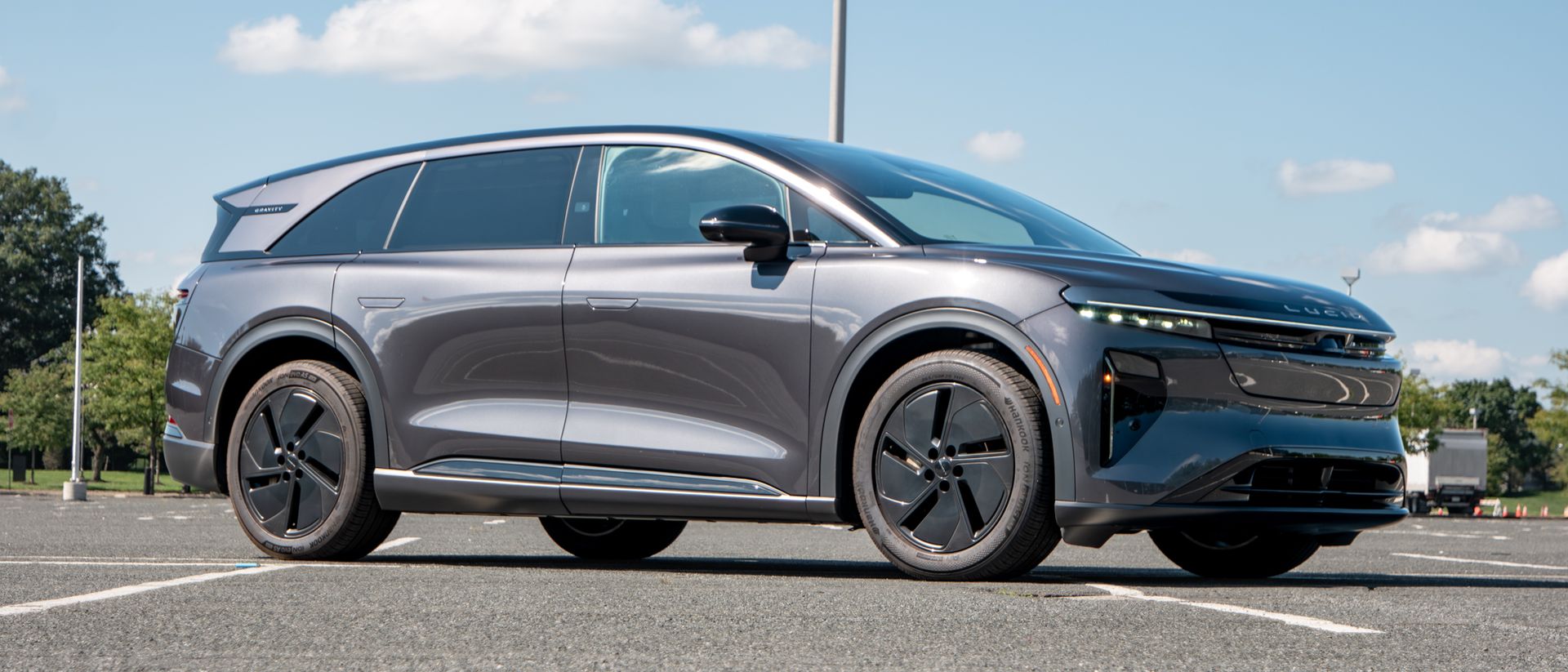
Enter the 2026 Lucid Gravity, a bold electric crossover that reimagines what a 3-row SUV can be. The California-based EV maker is finally stepping into a new category, but with a base price of $79,900 that balloons to a staggering $123,950 as-tested price for the Grand Touring trim I tested for a week, it faces a steep uphill battle to prove it’s worth that kind of money.
In fact, it’s competing against other notable 3-row luxury SUVs I’ve put to the test, like the Rivian R1S and Cadillac Vistiq — in addition to ultra-practical alternatives like the Kia EV9 and Hyundai Ioniq 9. Here are my pros and cons of the 2026 Lucid Gravity Grand Touring.
I drove a total of 236.8 miles during my week of testing the 2026 Lucid Gravity Grand Touring, achieving an average efficiency of 3.24 mi/kWh. Just like its sedan sibling, the Gravity proves it’s ultra-efficient where it matters most, easily outclassing its key three-row rivals.
This class-leading efficiency stems from its 123-kWh battery, 900V+ electrical architecture, and low-slung, aerodynamic design that significantly cuts drag compared to the blockier, high-riding stances of the Cadillac Vistiq and Rivian R1S.
Source link