Nvidia RTX Spark laptops are here. See where HP's OmniBook Ultra was strong and on which tests it was less successful.
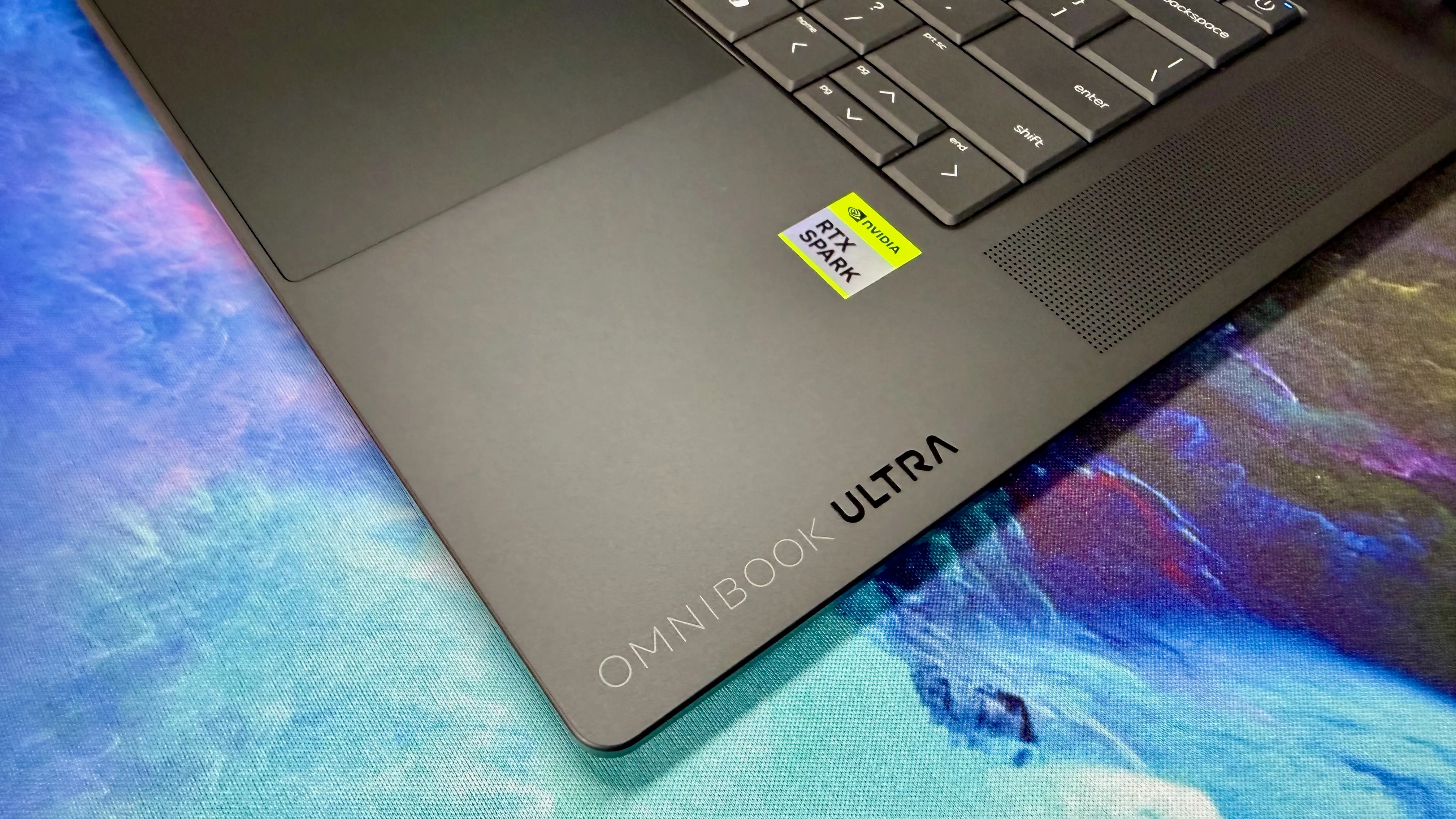
The HP OmniBook Ultra 16 helps introduce Nvidia’s RTX Spark platform of high-powered (and high-priced) laptops for creative pros and AI developers. Gamers, too, will find something to like with the OmniBook Ultra 16 and other RTX Spark laptops from Asus, Dell, Lenovo, Microsoft and MSI, but these are not gaming laptops first and foremost. Using Nvidia’s new RTX Spark N1X system-on-chip that integrates an Arm-based processor and Blackwell RTX graphics and can access up to 128GB of unified memory, these laptops are built primarily to power agentic AI and content creation workloads — and to bring would-be MacBook Pro buyers to the Windows side of the aisle.
The OmniBook Ultra 16 packs this power inside a thin-and-elegant design that also introduces a new thermal architecture and display hinge design. But even the most valuable company in the world can change the rules of thermal dynamics: the OmniBook Ultra gets hot and loud when it really gets going, just as Apple’s similarly thin-and-powerful MacBook Pro does with the second-most valuable company in the world’s M-series silicon.
You’ll need to be financially solvent yourself to afford an RTX Spark laptop. The OmniBook Ultra 16 starts at $3,200 for a configuration with 32GB of RAM and a 1TB SSD. With double the RAM and storage, the price jumps to $5,000. And if you want to max out the RAM to 128GB, the price rises to $6,200.
Source link