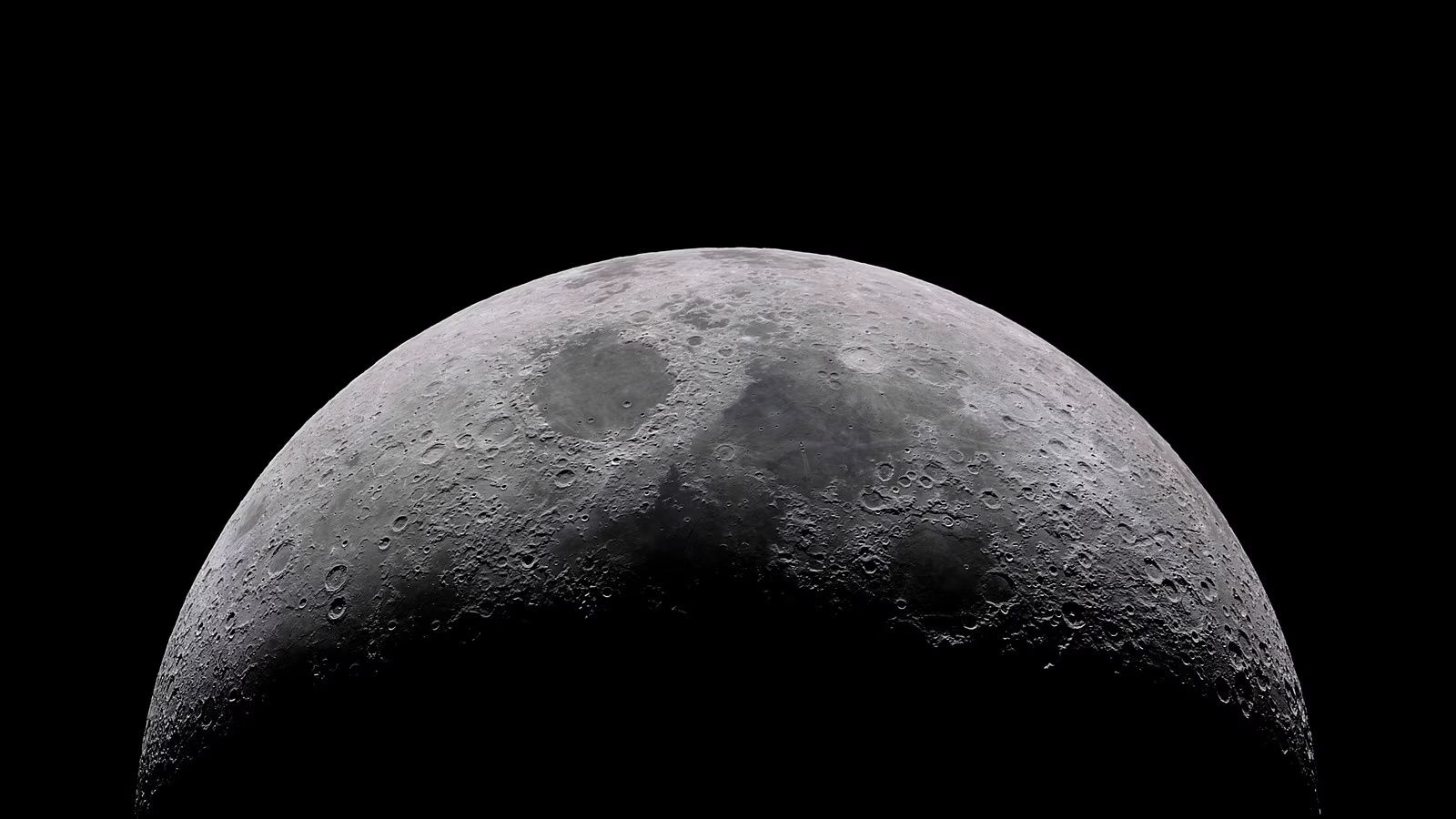
A fanless compute module will head to the Moon for supercomputer benchmarking, AI testing, and additional experimentation by NASA and Deloitte, as detailed in a Hewlett Packard Enterprise (HPE) release. The company’s Spaceborne Computer-4 will run what HPE calls “the first high performance computing (HPC) benchmarks on the surface of the Moon,” riding on an Astrolab FLIP rover to the lunar south pole. The launch is slated for late 2026 under NASA’s Commercial Lunar Payload Services initiative for a Moon Base program mission, in conjunction with a Voyager Technologies Griffin-1 lander.
Named benchmarks include High Performance Conjugate Gradients (HPCG), a supercomputing metric that complements High Performance LINPACK (HPL). AI testing will involve large language model (LLM) retrieval-augmented generation, vision inference, LiDAR processing, and an AI services container for AI app deployment. The LLMs “will deliver insights, analyze visual data, and support autonomous monitoring,” while the LiDAR processing involves mapping, navigation, terrain analysis, and infrastructure development.
Scott Wiest, HPE’s vice president, fellow and global sales chief technologist, said, “The next chapter of lunar exploration will depend on the ability to turn data into insights at the point of discovery.” HPE says “no other company or organization” has conducted such benchmarks on the Moon, with a presumption that no other parties’ planned HPC missions will get there first. HPE also assembled a software suite that handles the link to Earth-side systems and the secure delivery of results.
HPE’s “lightweight, self-contained, and fanless” advanced compute module is “built for space environments,” bringing AI and HPC “to the lunar edge,” as Wiest put it, or the “far-edge,” as HPE calls it.
Source link