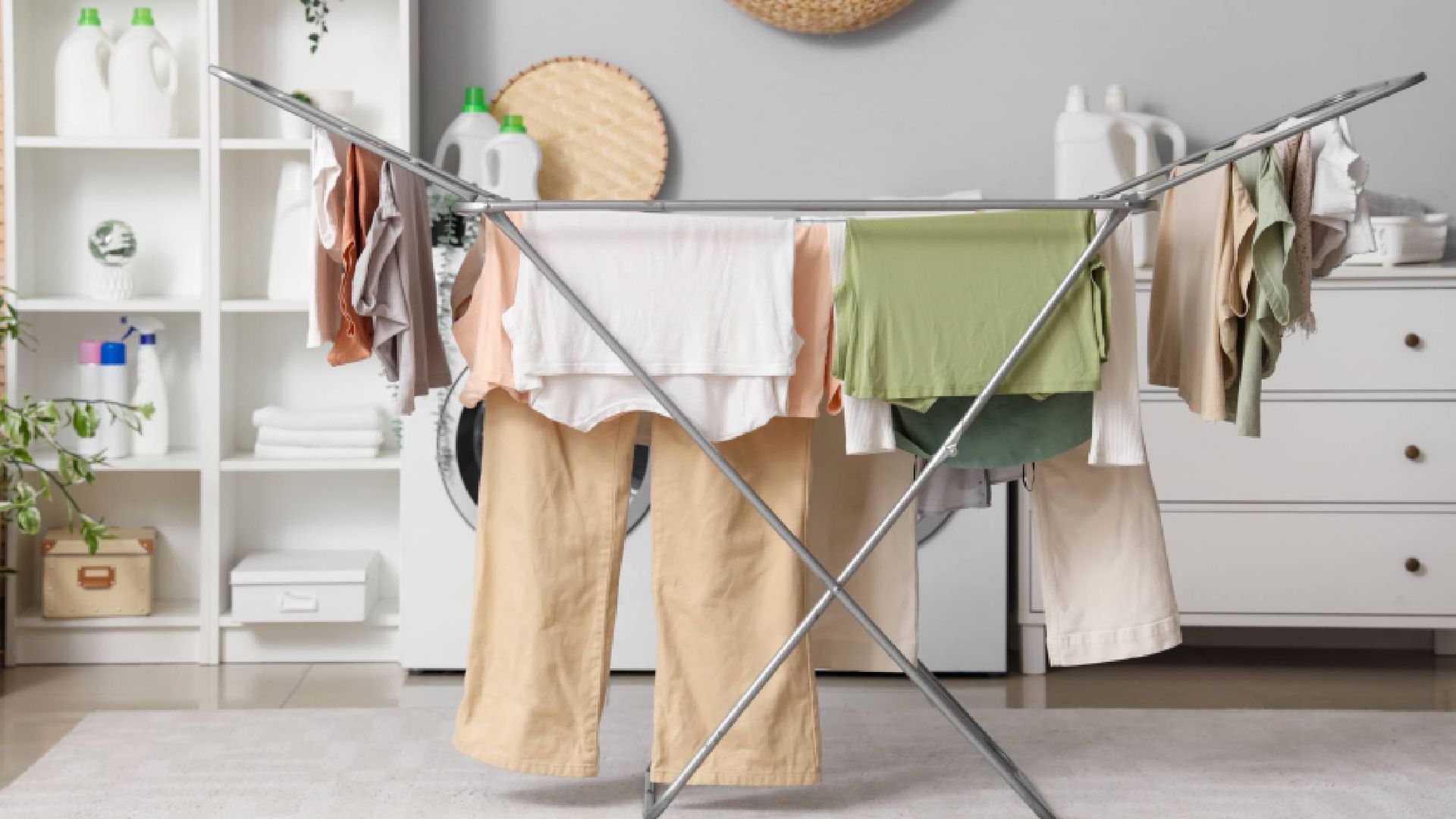
When cold, wet weather rolls in, drying laundry indoors without a clothes dryer often turns into a multi-day ordeal. Piles of damp fabric draped across clothes airers bring chilling humidity into your living space, leaving garments smelling stale and walls prone to condensation and mould.
The secret to slashing indoor drying times lies not in cranking up the central heating to full blast, but in mastering air movement, extraction, and strategic placement. Here is how to dry your clothes indoors quickly and cleanly this winter, without inviting damp, mold, or musty smells into your home.
The single most effective shortcut begins before your clothes even leave the washing machine drum. Most spin cycles leave substantial moisture trapped deep inside thick cottons, heavy jeans, and knitwear.
Running a dedicated second spin cycle at your machine’s maximum spin speed pulls out surprising amounts of excess water without adding heat or risking fabric damage.
Shaking each item out vigorously immediately after unloading loosens compacted fibres and opens up airflow pockets that otherwise trap dampness for hours.
Where and how you hang wet laundry makes the difference between fresh clothes in hours and musty garments after two days. Cramming items closely onto a clothes drying rack restricts air circulation, trapping damp air directly between layers of fabric.
If you can, space each garment across two rungs rather than one, or slip button-up shirts and tops onto sturdy coat hangers suspended along the outer frame to keep fabrics exposed to circulating room air.
Moisture evaporates only as fast as the surrounding air can absorb and carry it away.
Source link