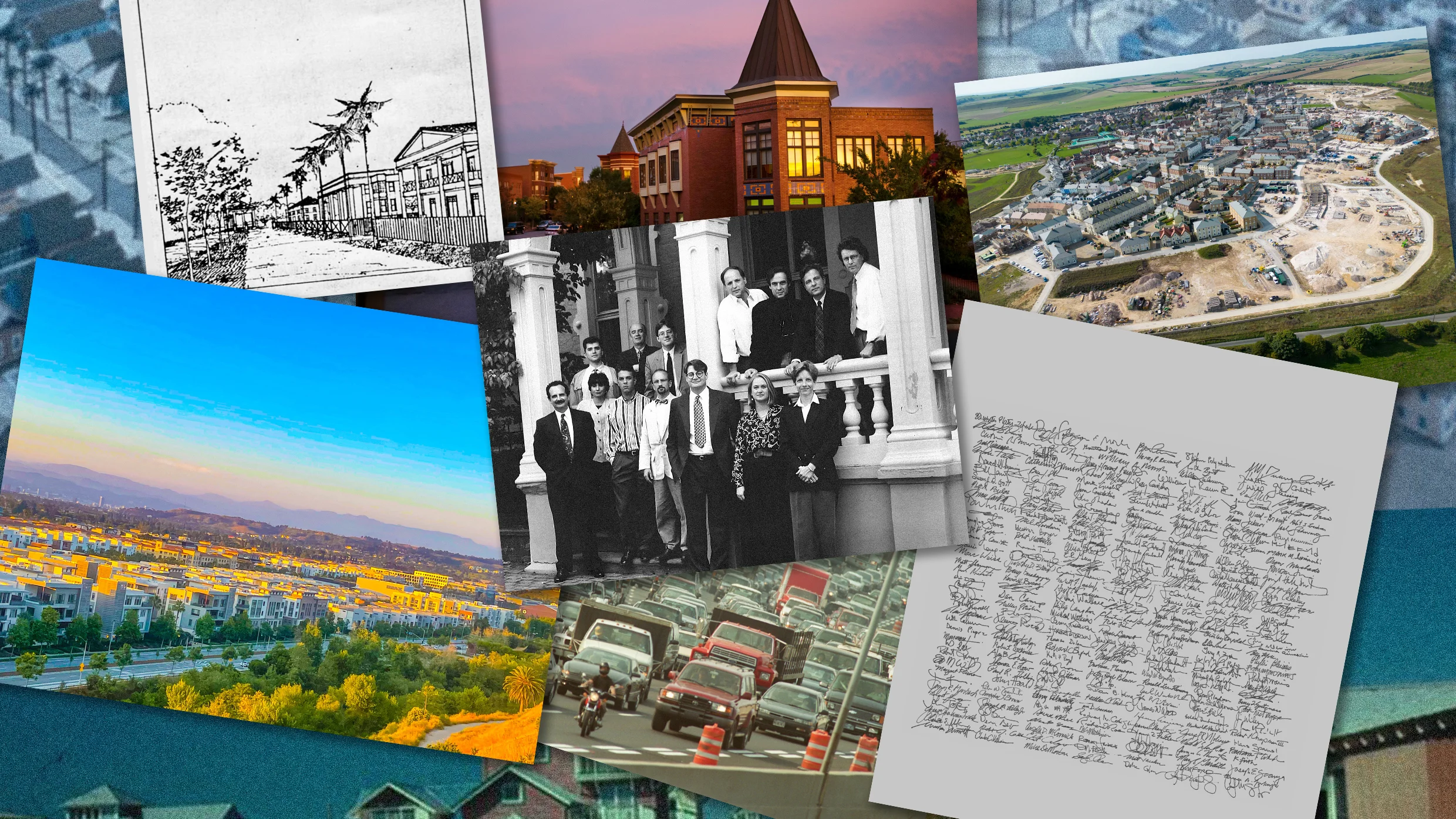
It’s 1996. You just moved to a suburb of Atlanta, to a roomy house on a quiet street. Every morning at dawn, you kiss your family goodbye, and then hop in your car to drive 35 miles to your office in the city. It takes more than an hour to get there.
You have plenty of company on the road at that hour, as you’re one of the more than 600,000 people who moved to the northern outskirts of Atlanta over the last six years. Between the traffic and constant construction, the swelling suburbs are starting to show their fault lines.
Its rapid growth during the 1990s makes Atlanta the quintessential story of suburban growth gone awry, though it is far from alone. Between 1950 and 1990, the share of Americans who lived in suburbs jumped from 23% to 46%. Decades of post-World War II expansion had transformed the American landscape from one built around small-scale neighborhood development and center city density to tabula rasa growth on the edge. Families moved to cul-de-sac subdivisions spread across car-dependent exurbs. These places were not so much cities as they were lily pads of domesticity, linked together by steadily growing interstate highways.
For many Americans, a suburban lifestyle was an outward signal of success: big house, good schools, safe streets. But that wasn’t the case for everyone. In the 1990s, at the peak of suburban sprawl , a small but vocal group of detractors began to take shape. Comprising progressive urban planners, designers, architects, and policymakers, this group coalesced around the idea that there should be an alternative way to live—one that embraced the charms of small town centers, the convenience of walkable neighborhoods, and the diversity of mixed-use and mixed-income districts.
Source link