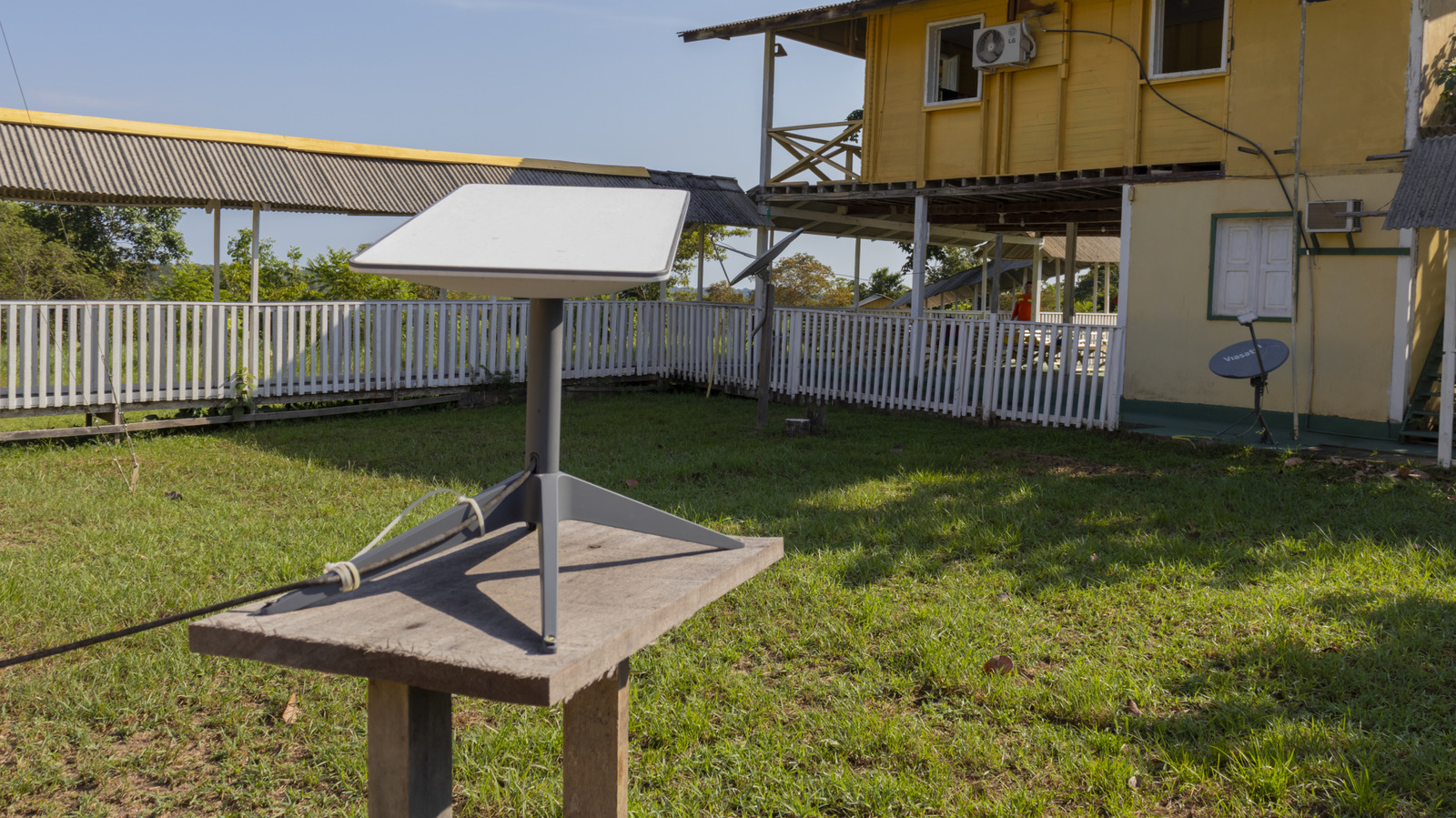
Accessing the internet has come a long way in the last two decades, but only if you live somewhere that cable and fiber providers actively serve. When you're living somewhere rural, the best you might get are speeds as low as 1 Mbps, while in a city you could get 1 Gbps or more. That leaves you with 5G and alternative internet providers like Starlink as your next best chance for faster internet at home, although these are two very different technologies.
5G is the internet you'll receive over a mobile network, through your phone or through a 5G router at home. Starlink, meanwhile, is a broadband service that connects your home via a satellite dish. There's no one-size-fits-all experience. A strong 5G connection can beat Starlink in some places, while a satellite connection might work best if you don't have a strong mobile signal. You'll need to consider what speeds you might actually get, and whether you're able to connect at all in your area.
There isn't a single speed that'll give you a benchmark for either service. Starlink, for instance, offers US residential options that include plans capped at 100 Mbps and 200 Mbps, along with Residential Max, which gives download speeds of 400 Mbps or more. Compare and contrast with a provider like T-Mobile, which lists typical download speeds of 170 Mbps – 498 Mbps for some of its 5G Home Internet plans.
These figures do overlap, but they're averages. You can't really trust them as a benchmark for what you'll get in your local area, and neither Starlink nor a 5G provider like T-Mobile will hard promise speeds.
Source link