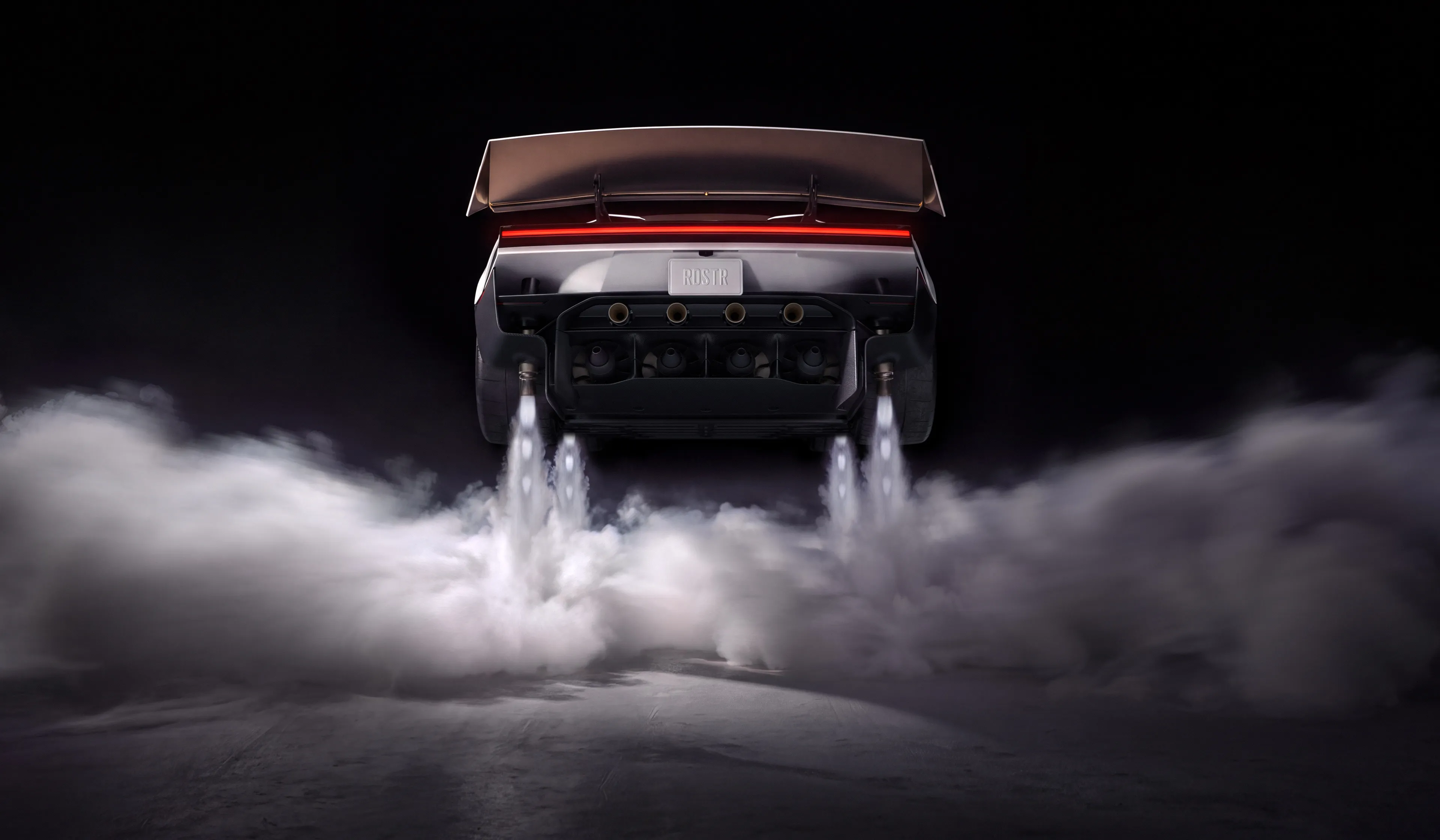
Last night, with considerable showmanship, Tesla CEO Elon Musk proudly unveiled the Roadster 2 just nine years after first announcing the car, and made it “fly.” While undeniably impressive, you could also describe the spectacle as Tesla making its long-delayed luxury car “do a big hop” and then, as Buzz Lightyear would say, “fall with style.”
During the reveal in McGregor, Texas, at SpaceX’s rocket development and testing facility, the two-seater Roadster 2 launched itself over the automaker’s entire lineup, shot from 0 to 60 mph in less than a second, and then drove upside down off a high ramp to then flip over mid-air and land back down on the ground, cushioning its rapid descent using on-board thrusters.
All this was pure gold for social clips (though at the time of publication, Tesla’s stock price was down after the event), but how did Tesla make its new EV prototype perform these tricks? Tesla vehicle engineering head Lars Moravy went into detail with auto lifestyle and insurance brand Hagerty before yesterday’s event, explaining how the Roadster 2 works.
The Roadster 2's gravity-defying demonstration in Texas used a combination of suction and rocket thrust.
Franz von Holzhausen, Tesla’s chief designer since 2008, designed the angular exterior. He also helmed the aesthetic of the Cybertruck , Models S, X, 3 and Y, as well as the Semi . Blacked-out windows obscured any view inside the EV, which carried no human driver anyway because, as Musk said, Tesla wanted “to make sure we don’t kill anyone” during the gravity-defying demonstration.
Source link