

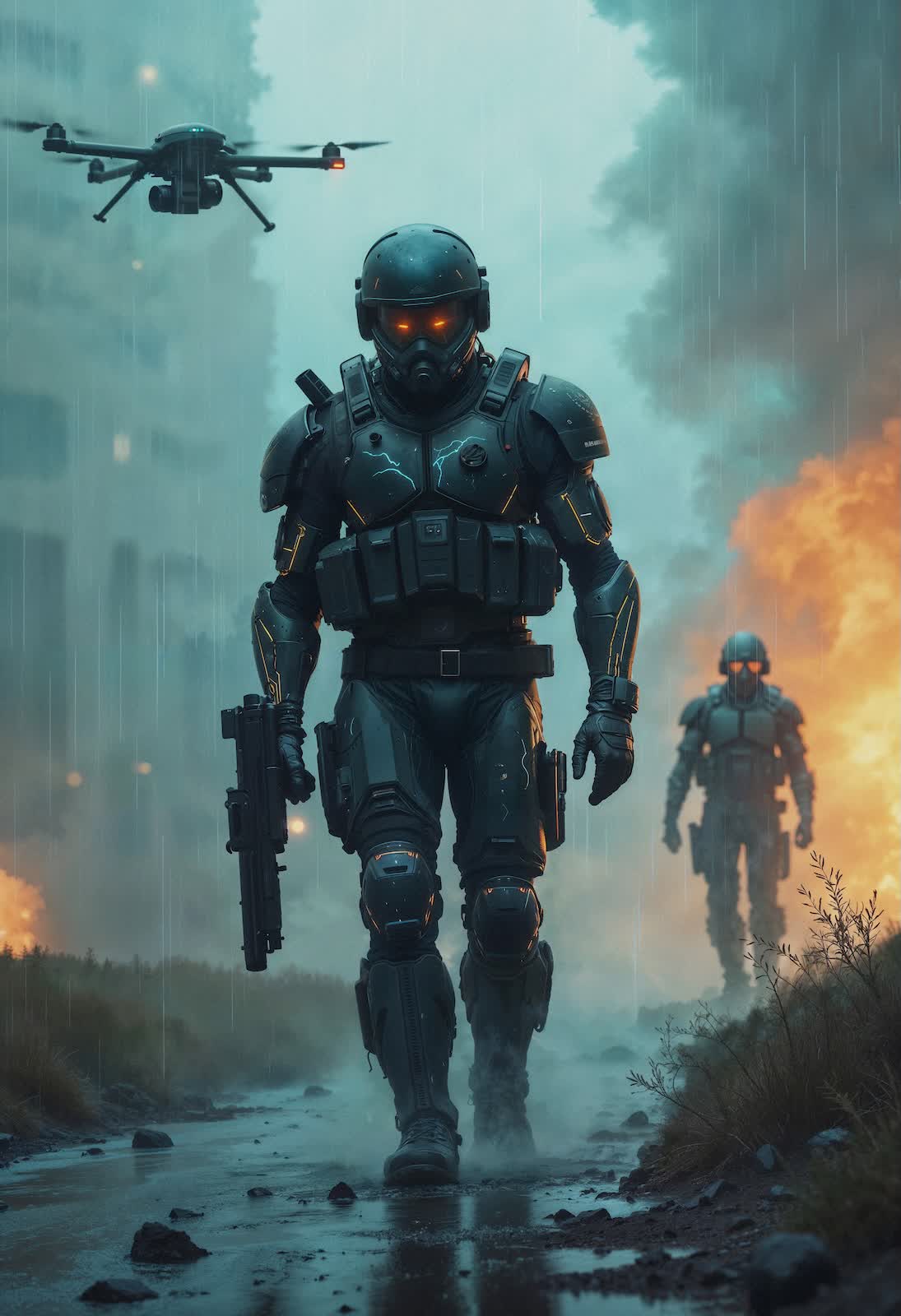
Looking ahead: AI could begin directing networks of battlefield sensors and weapons by 2030, according to retired US Gen. David Petraeus, who expects military use of the technology to expand from analyzing data to making decisions with little or no human input. The former CIA director's forecast centers on AI staff officers and autonomous command systems that could coordinate multiple machines. Rather than operating drones independently, militaries would connect them through a command network able to gather information and direct operations.
"Just four years from now, we will have autonomous systems, and I think we will have the beginning of autonomous systems of autonomous systems; we will have AI agents, so you'll have agentic AI staff officers," Petraeus told investor Finn Murphy on the Forecast2050 podcast.
Petraeus outlined how such a network could operate during a CNBC interview in May. Autonomous sensors would collect battlefield data and relay it to a central command system, which would then direct weapons with little or no human involvement.
That would give AI a broader role than controlling a single drone or sorting information for a human commander. The software would help run operations across groups of machines. Petraeus has previously said autonomous systems could soon work together in platoon- or battalion-sized units, sharing information and coordinating without human intervention.
He described the prospective AI staff officers as "generic artificial intelligence staff officers who will never sleep, never eat, never take a break."
Petraeus also cited recursive learning, in which an AI model uses its own data and processes to improve itself.
Source link





