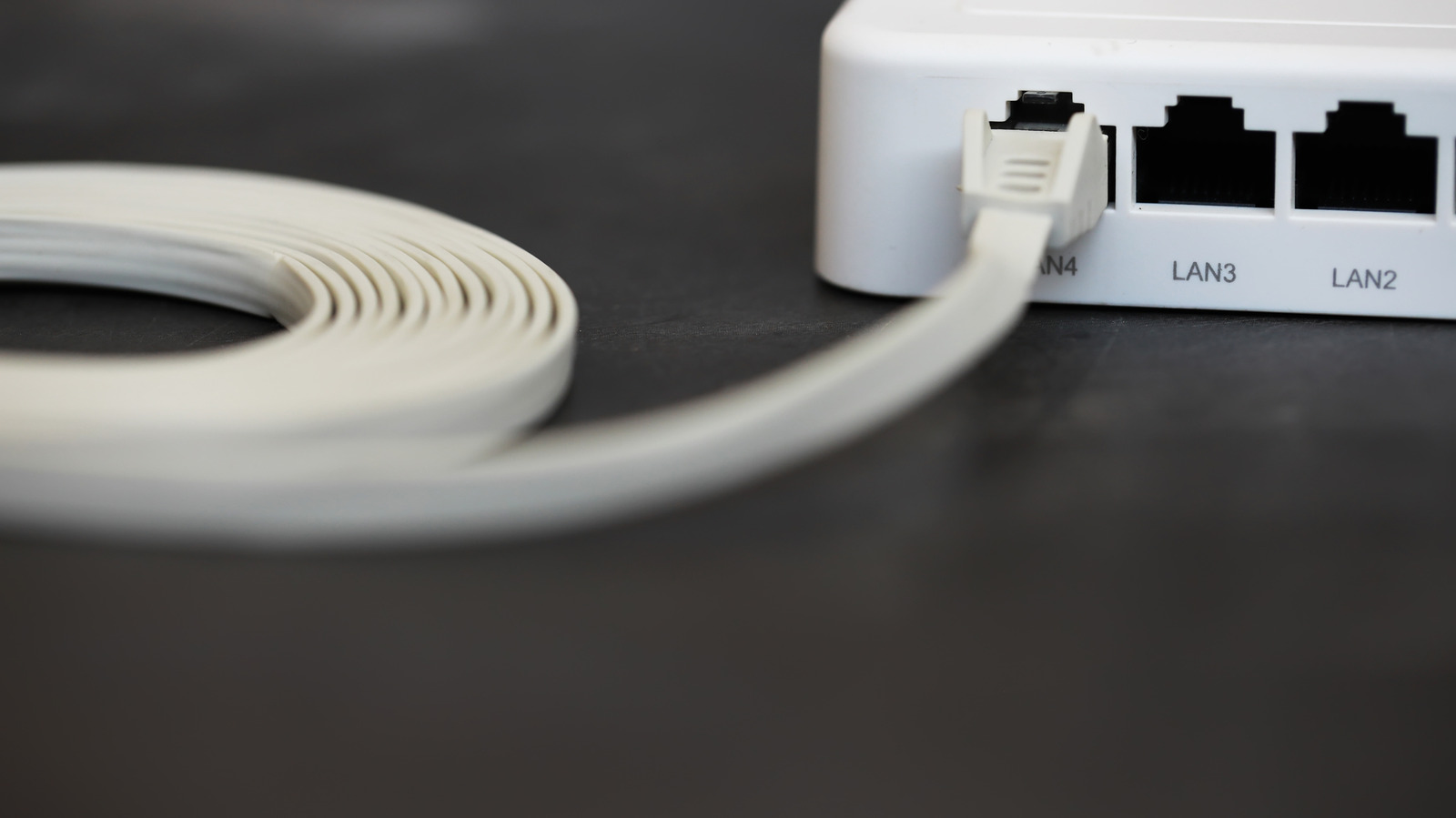
Unless you're relying entirely on Wi-Fi, chances are you've had to wrangle an unsightly mess of Ethernet cables at some point in your life. One way to make your home internet setup a little easier on the eyes is to use flat Ethernet cables, which have become much more popular in recent years. Flat Ethernet cables can be easily bent and hidden from sight, making it possible to wire a home for internet without causing an eyesore.
But before you trade out all your chunky old Ethernet cables for aesthetic flat ones, there are a few tradeoffs you should be aware of that might not be obvious at first. While round and flat Ethernet cables rated for the same speed will have nearly identical performance under perfect conditions, the real world is full of complications that often make round cables a better choice even if they don't look quite as good. It all comes down to why Ethernet cables are round in the first place and what it takes to turn them into that more pleasing flat shape.
Standard Ethernet cables consist of multiple sets of wires twisted into pairs, with each pair then twisted around each other. The twisting actually serves an important purpose, preventing the signal running through one pair of wires from interfering with the others, which could cause slow internet speeds and unstable connections. Flat Ethernet cables still contain twisted pairs of wires, but those pairs are laid out in a line, which makes them more susceptible to interference from each other.
Source link