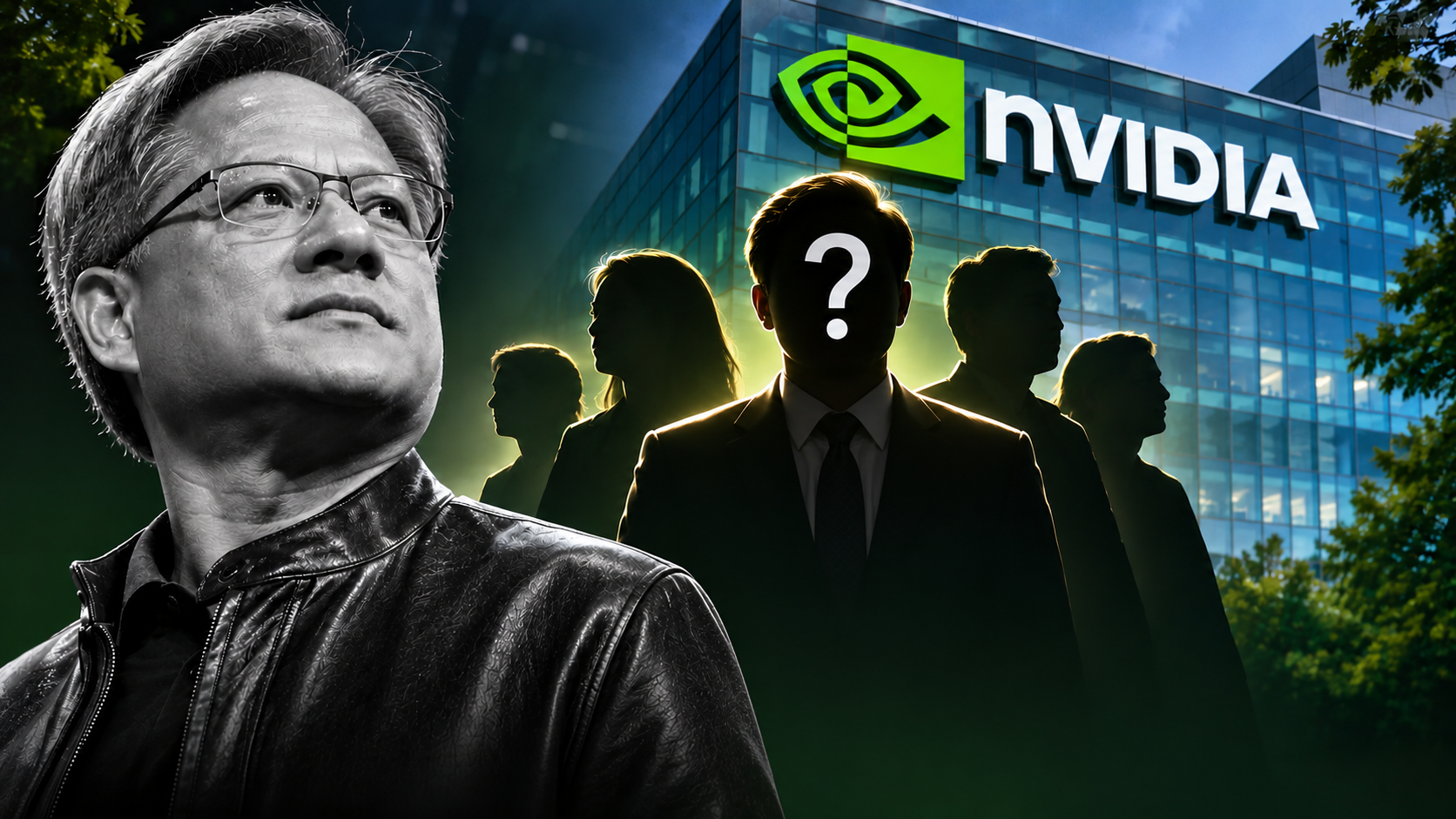
If you’re not in the tech world, you might only have been vaguely aware of Nvidia—and CEO Jensen Huang’s leather jackets—until he admitted to having an affair with a woman accused of being a Chinese spy. On November 12, a day after revelations of a second affair, this one with an Nvidia executive, Huang resigned. Here’s why the company’s future could affect the entire AI industry.
Nvidia is at the center of the AI boom, as the world’s largest supplier of chips used in AI data centers. By some estimates, the company controls 80% of the market. As of November 3, it was the most valuable company in the world, with a market cap of around $5 trillion. By the morning of November 12, as Nvidia’s stock continued to plummet, that figure dropped to $4 trillion. (Huang’s own net worth had fallen $7.4 billion by that point.)
Huang and cofounders Chris Malachowsky and Curtis Priem launched the company in 1993. They started making graphic processing units, better known as GPUs, for video games. In 2006, they rolled out a platform that enabled other uses for GPUs. In 2012, researchers used the company’s chips to train AlexNet, a breakthrough AI program that taught computers how to recognize images. By the time that ChatGPT launched, Nvidia’s tech was fundamental to AI development.
A large data center might have tens of thousands of Nvidia GPUs that run calculations to train AI models and generate responses when you type a question into ChatGPT or Claude.
Source link