

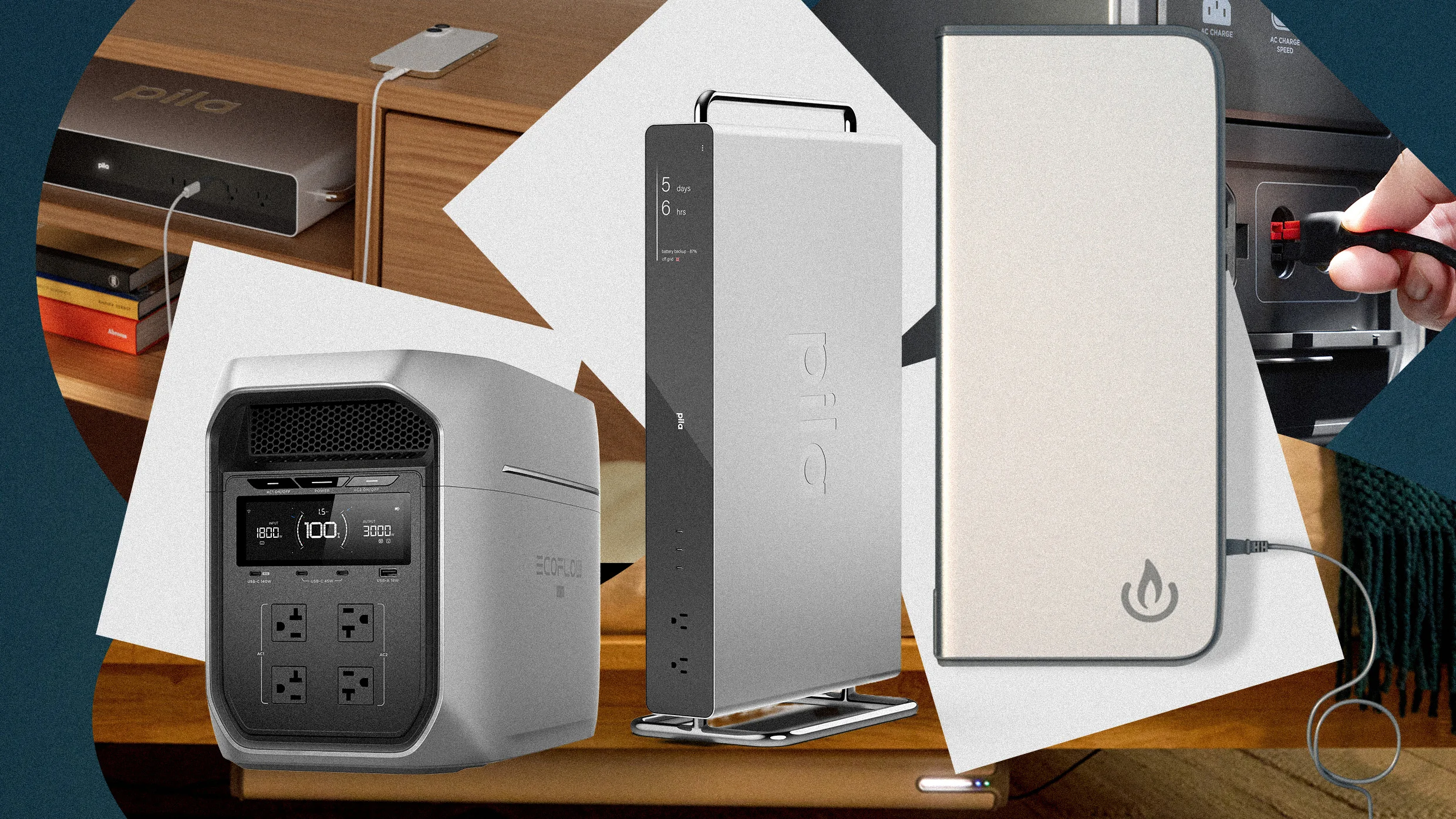
I spent the last few weeks hoping that my power would go out.
I’ve been testing three new portable home batteries designed to make backup power more accessible—and help save on energy bills. In the past, using battery backup for a home often meant spending $10,000 or more on equipment, and thousands more to hire an electrician and upgrade your electrical panel. The smaller devices I tested don’t need professional installation; they just have to be plugged into a wall. And because they’re portable, renters can use them, not just homeowners.
Grid outages are becoming increasingly common, thanks to climate change and aging infrastructure. If you live in California, where electric utilities have sparked major wildfires, your power might be shut off when the fire risk is high. In other areas, stronger hurricanes and storms have made outages more frequent and longer lasting. Extreme heat can cause blackouts when AC use surges, and can damage grid infrastructure directly. Having battery backup makes sense. For many people, a whole home system or gas generator isn’t necessary. What matters is keeping the most important devices running, so you won’t have to throw out hundreds of dollars of groceries or lose your internet connection.
I tested three new batteries: the Pila Mesh Home Battery , the Biolite Backup Core , and the EcoFlow Delta 3 Max Plus . I hooked up my fridge and simulated outages to see how they’d perform when the grid goes down. Then I tested their potential for energy arbitrage.
Source link